Greater urgency for peatland protection in South-east Asia
The delicate issue cuts across domestic politics, regional diplomacy and protecting farmer livelihoods
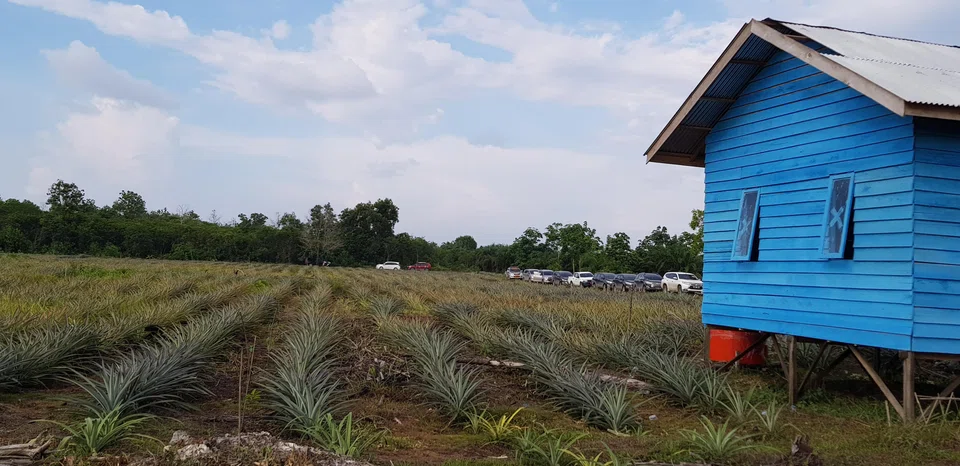
THE muddy, swampy peatlands of South-east Asia may not seem like much, but these wetlands are in fact a crucial element of the fight against climate change. New research has added urgency to the need to protect these ecosystems from degradation.
Peatlands are a type of wetland that form over thousands of years, as decomposing plant matter turns into an organic, carbon-rich substance known as peat. While peatlands cover just 3 per cent of the earth’s surface, they store about a third of the world’s carbon, double that in all the forests worldwide. More than half the world’s peatlands are in South-east Asia, particularly in Indonesia.
The value of peatland has unfortunately been underappreciated, with 25 million hectares of these ecosystems destroyed in South-east Asia over the past 30 years, according to a 2022 report by the World Resources Institute (WRI). They are typically drained to make way for palm oil plantations and other agricultural activities.
Draining peatlands is detrimental to the environment. As peat dries up, it decomposes and releases carbon dioxide into the atmosphere, contributing to about 5 per cent of anthropogenic greenhouse gas emissions each year. The burning of peatlands likewise contributes to carbon emissions and shrouds communities in haze.
New research now shows that disturbed peatlands also release carbon through another hidden source – via water in the drainage canals. Based on experiments in the peatlands of West Kalimantan, Indonesia, scientists found that each square metre of a drainage canal releases about 70 milligrams of carbon dioxide per day. This means that the carbon emissions generated from draining out peatlands may be more than previously estimated.
The findings call for greater action to protect peatlands. Regional governments have already launched efforts, with Indonesia and Malaysia both developing their own peat maps. Asean has also come up with a peatland management strategy, calling for the mapping and rehabilitation of these ecosystems.
But there is room to do more. A 2023 study published in the Journal for Nature Conservation found that in Sumatra, Kalimantan and Papua, only 15.6 per cent of the peatlands in need of conservation measures are currently protected, and that protected areas need to be expanded by about 84 per cent. That said, conservation efforts will also need to be undertaken collaboratively with smallholder farmers, who depend on the land for their livelihoods. Community-level education on sustainable peatland management will be essential.
More capital can also be invested in satellite mapping and other technologies that can provide scientists a better understanding of the region’s peatlands and how they can be effectively restored. Some progress has been made on this front recently – with Singapore scientists developing a new method to measure carbon in peatlands using elevation data from satellites.
Protecting peatlands is a delicate issue that cuts across domestic politics, regional diplomacy and protecting farmer livelihoods. Navigating these issues can be as tricky as wading through muddy waters, but is increasingly critical if the region is to meet its carbon reduction targets. Time is of essence to protect peatlands and help them remain a vital environmental resource.