

The green transition has a surprising new home
Forget about northern Europeans with their coalition governments and love of cycling
PICTURE a country where renewables are being rapidly rolled out and electric vehicle (EV) sales are surging, and you will probably have in mind somewhere smug and northern European; a place with tall people, coalition governments and a yen for cycling holidays. Or perhaps the first thing that pops into your head is the sheer scale of China, which manufactures the bulk of such equipment and last year contributed more than half of the global increase in solar and wind installation.
Think again. For a wave of Chinese-made EVs is flooding new markets. In the past year, sales of EVs have more than tripled in Turkey, where Togg, a local brand, is also popular – they now account for 27 per cent of all cars sold, making the country the fourth-largest European market. Last year, more than 70 per cent of cars imported into Nepal were electric. Some 60 per cent of new cars sold in Ethiopia were battery-powered, after the state banned sales of internal-combustion-engine vehicles altogether. EV sales have doubled in Vietnam over the past year owing, in part, to VinFast, a local carmaker. Two- and three-wheelers are surging in popularity, too.
The International Energy Agency (IEA), a forecaster, reckons that across developing countries in Africa, Asia and Latin America, EV sales rose by 60 per cent in 2024.
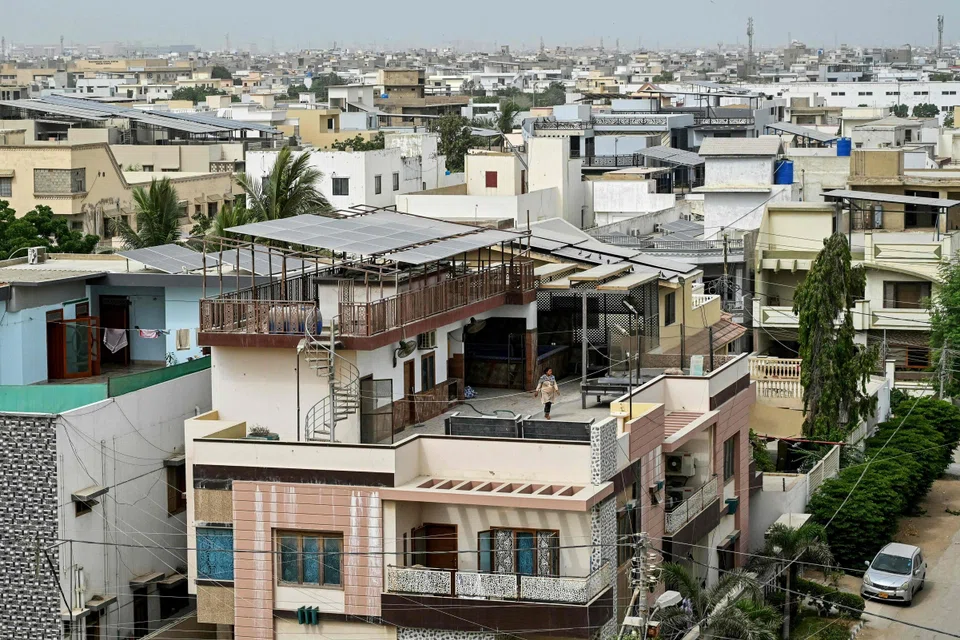
It is a similar story with renewables. In the first six months of the year, Pakistan generated 25 per cent of its electricity from solar power – not far below the 32 per cent managed by California, a clean-energy pioneer. The country’s battery imports are booming as well. Indeed, the Institute for Energy Economics and Financial Analysis, a think-tank, estimates that on current trends, battery storage will cover 26 per cent of Pakistan’s peak electricity demand by 2030.
Meanwhile, over the past year, Morocco has increased its wind generation by 50 per cent, becoming the country with the ninth most. India has seen four months of decline in coal-power generation, aided by an increase of 14 per cent in renewable generation.
Lust for power
Although the principles of international climate diplomacy suggest that poorer countries, being less responsible for climate change, have less duty to go green, many face strong economic incentives to do so anyway.
Most countries in the global south are energy importers, and therefore must use scarce foreign currency to buy oil and gas. China and India have coal reserves that play an important role in their economies and power generation, but neither has significant oil or gas reserves. For its part, Ethiopia’s ban on internal-combustion engines was not a green measure – it was designed to cut spending on fossil fuels and save foreign currency.
Moreover, across emerging markets, Chinese-made EVs are now about as cheap as traditional vehicles. In some places, they are even cheaper. The IEA reckons that last year the average Chinese EV sold for around US$30,000 in Thailand, compared with US$34,000 for the typical petrol-engine car. At the bottom end of the market, old-fashioned vehicles still have an advantage, but only a relatively modest one.
Government policies have also made a difference. In Turkey, purchasers of EVs typically paid a tax of only 10 per cent, compared with one of between 45 and 220 per cent for petrol-powered vehicles. The recent surge in part reflected car-buyers getting ahead of a reduction in the generosity of the policy.
Clean technology generally requires more upfront investment than fossil-fuel tech, even if it has lower lifetime costs. This has historically held it back in places where the cost of capital is high. The IEA has calculated that the typical cost of capital for a solar project in India, for instance, is 11 per cent, compared with around half that in rich countries.
But the Rocky Mountain Institute, an American pressure group, now estimates that, owing to falling prices, many clean technologies have reached “capex parity”, where initial costs are the same as fossil fuels on a per-unit basis. As a consequence, they have become more attractive in large parts of the world.
Tariffs have been helpful, too. As America and the European Union attempt to shut out Chinese EVs, they are finding their way to other markets – at even cheaper prices. For the most part, emerging markets lack legacy manufacturers that will lobby their governments to keep out Chinese imports. Yet, this relatively free trade is at risk as protectionism begins to spread.
Until recently, Brazil allowed EVs into its economy tariff-free; now it is gradually raising import taxes to 35 per cent by 2026. India’s imports of finished solar panels have stagnated as the country seeks to build its own supply chain. Nigeria is considering banning solar-panel imports altogether in an effort to support domestic manufacturers.
Governments are at least also creating loopholes that allow Chinese imports to continue so long as the companies in question commit to local production. Brazil has carved out an exemption for carmaker BYD while it establishes a factory in the country. Indonesia has reduced value-added tax on EVs from 11 per cent to 1 per cent for vehicles that meet a 40 per cent local-content requirement; foreign manufacturers, meanwhile, can bring in equipment duty-free so long as they promise to increase domestic production by 2026 and provide a guarantee for the forgone tariffs if they do not follow through.
Such policies are far from perfect – but they are better than the alternative. Well-heeled northern Europeans have something to learn. ©2025 The Economist Newspaper Limited. All rights reserved
TRENDING NOW

From legacy to launch: Francis Yeoh and Yeoh Pei Xien on family unity and YTL’s next‑gen ventures

Things to know about DBS’ incoming chairman Anthony Lim
Wealthy Indonesians snap up government bonds as yields near 8%: OCBC

From local AI partnerships to global opportunities: How MNCs help Singapore firms scale

