

Green vs growth: Can Singapore’s maritime sector decarbonise without losing pace?
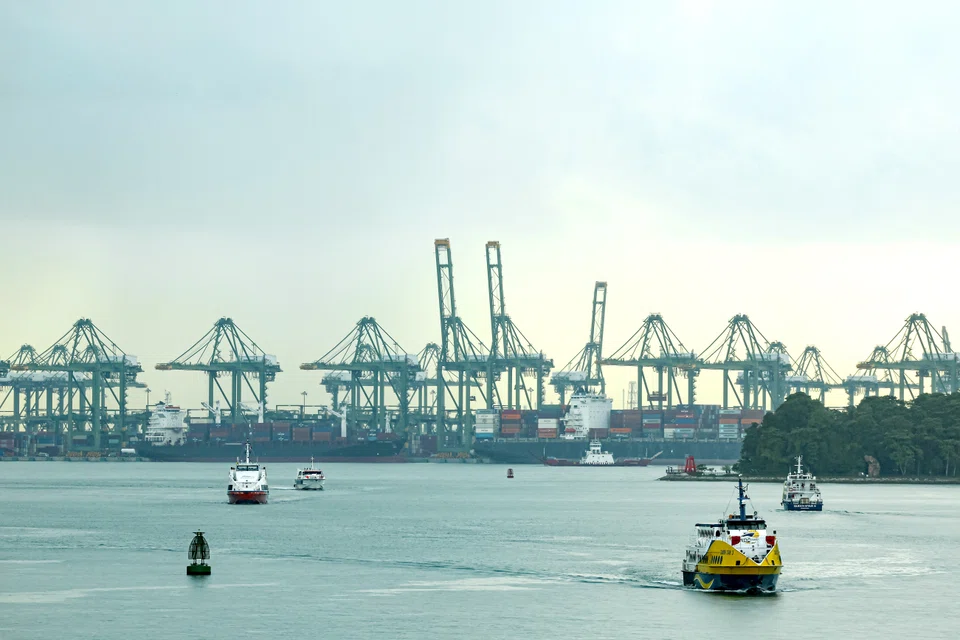
SINGAPORE’S ports bustle with activity, reflecting their historical significance as a hub for maritime trade. Evolving over time, these ports have grown to accommodate rising demand, solidifying their role as a cornerstone of the nation’s economic advancement. However, with the sector poised for strong growth, a new imperative has emerged – the need to decarbonise.
The global shipping industry, currently responsible for 2 to 3 per cent of global emissions, is racing towards an equitable transition and a 20 to 30 per cent reduction in shipping discharges by 2030.
This incentivises players to embrace measures such as the creation of “green” shipping corridors for vessels using clean fuels, the FuelEU maritime decarbonisation regulation and related incentives through the US Inflation Reduction Act.
Locally, Singapore’s Maritime Cluster Fund has received an S$15 million injection to boost sector sustainability by 2030, aimed at incentivising the early adoption of sustainable solutions for shipping. This allows Singapore’s ports to balance their role as a major bunkering hub with their commitment to decarbonise, while also accommodating rising activity levels.
In 2023, Singapore’s annual vessel arrival tonnage rose 9 per cent year-on-year to 3 billion gross tonnage across diverse segments. This growth mirrors the nation’s bunkering activity, which saw nearly 52 million tonnes of bunker sales in 2023. While this progress strengthens Singapore’s global maritime leadership, it also underscores the nation’s responsibility to tackle decarbonisation.
Recognising this, Singapore’s ports have set ambitious targets to collectively reduce port operation emissions by 60 per cent by 2030 and achieve net-zero emissions by 2050, compared to 2005 levels.
Despite Singapore’s recent commitments, several challenges remain on the path to greening the sector as it wrestles with increased activity, profitability and sustainability.
The shipping industry’s aim to reach net-zero emissions by 2050 has sparked a need to switch to fuels produced with electricity from renewable sources, dubbed e-fuels. So far, however, fuels such as e-ammonia, e-methanol and e-methane are not sufficiently available, scalable, safe or affordable to compete with traditional marine fuels.
While tighter regulations from the EU and the International Maritime Organization may incentivise the adoption of these cleaner fuels, the substantial price gap between established and emerging fuels is a major hurdle, especially over the decade ahead.
Rystad Energy’s analysis showed that e-ammonia and e-methanol sourced from Australia could cost more than four times per tonne over the period up to 2035. Due to the price and availability of alternative fuels, shippers are reluctant to invest in alternative fuel engines.
According to Rystad Energy research, liquefied natural gas (LNG) currently holds the top spot in terms of cleaner marine fuels, accounting for over 90 per cent of vessels (963 vessels) with alternative fuel capabilities in the order book.
While orders for new ship options such as methanol and ammonia are gaining traction, technical and cost challenges remain. Interestingly, most shipowners are hedging their choices by making their vessels “fuel-ready” instead of fully running on these alternative fuels.
Despite challenges such as limited feedstock supplies and high costs, Singapore has made notable progress, with alternative fuels accounting for about 1 per cent of its total bunker sales volumes. Local players such as FueLNG (LNG) and Vitol Bunkers (biofuels) have been instrumental in driving this momentum, with Singapore preparing for ammonia bunkering by 2027.
While support is available from the Singapore government, in the form of discounts for ships using cleaner fuels, there is still a lack of sufficient port and storage infrastructure to support faster fuel transition.
This is due to diverse priorities and complex challenges faced by stakeholders, including local governments, ports and fuel suppliers, which is hindering coordinated action on crucial aspects such as regulation consistency and infrastructure development.
Coordination among stakeholders is also required to achieve operational efficiency, by optimising routes, speeds and port stays to reduce fuel consumption, enabling “just-in-time” arrivals using weather-routing software.
The Maritime and Port Authority of Singapore (MPA) has shown commitment to port automation and digitalisation as it embarks on initiatives aimed at replacing older harbour craft with cleaner electric or hybrid models.
The MPA is aiming for “green ships” to comprise roughly half of the Singapore Registry of Ships fleet by 2050. While technological advancements reduce fuel consumption through vessel upgrades, their suitability varies across ship segments, with shippers facing capital constraints and uncertainty about future fuels.
To chart a clear course through these challenges, governments must set clear regulations and champion collaborative research. Shippers are also urged to embrace cleaner fuels and cutting-edge technologies. Meanwhile, bunker suppliers and port operators should diversify and invest in sustainable infrastructure.
The pivotal roles of financial institutions and regulatory bodies cannot be overstated – they are essential in funding and implementing eco-friendly standards.
Singapore’s pioneering efforts in advancing progressive shipping practices will illuminate the path to a brighter, cleaner future for global maritime trade.
The writers are from Rystad Energy. Sam Chua is principal, and Jo Friedmann is vice-president, supply chain research, at the firm.






