GuocoLand should shrink its geographical footprint and focus purely on Singapore

GUOCOLAND has built a substantial footprint overseas, but with very little return to show for it. At the company’s upcoming annual general meeting on Friday (Oct 27), shareholders may want to push the company on its strategy overseas.
Unless the company can come up with a way to improve the profitability of its overseas operations, it may be better off focusing on Singapore.
Undoubtedly, the Singapore property market has waned in attractiveness over the years.
Projected profit margins in property development in Singapore are thin. Land costs are high, and competition for sites can be stiff.
The private housing market is relatively small as nearly 80 per cent of residents live in public housing. And housing developers here have to navigate tough property cooling measures.
Acquiring commercial properties at home is tricky – yields are low, and many assets are tightly held.
Gaining exposure to other markets can help property groups to diversify risks and offer scope to grow in more populous countries.
Still, a look at the group’s numbers makes one wonder if its geographic diversification is worth the effort.
Weak overseas contribution
GuocoLand has experience in China, where it has been operating for nearly three decades. It is a member of leading Malaysian-based conglomerate Hong Leong Group, whose backing should help GuocoLand’s Malaysian business.
GuocoLand also owns 27 per cent of Bursa-listed EcoWorld International (EWI), which is a property developer in the United Kingdom and Australia.
For the financial year ended Jun 30, 2023, GuocoLand’s Singapore operations raked in a profit of S$307.8 million, or 90 per cent of profit from the three geographic segments.
Segmental profit from China stood at S$19.9 million (6 per cent) for FY2023, while Malaysia contributed S$15 million (4 per cent).
In comparison, Singapore contributed 81 per cent of combined profit from the three markets for FY2022.
In FY2023, return on assets was 3.5 per cent for Singapore versus 0.9 per cent for China and 2.6 per cent for Malaysia. The figures for FY2022 for Singapore, China and Malaysia were 5.1 per cent, 3.6 per cent and 2.5 per cent, respectively.
Meanwhile, EWI is a loss-making group that trades substantially below book value. However, EWI has recently made progress on a plan to distribute excess cash to its shareholders after the completion of a capital reduction exercise.
Saving resources
Running geographically diversified operations requires much effort. With better technology, it is easier today to conduct meetings virtually and monitor the progress of projects in real time.
Still, top management needs to spend time understanding various markets, as customer demand for homes and other real estate varies across markets and evolves constantly.
Top management also needs to physically visit markets to interact with the teams on the ground, build local relationships and get a good read of market developments.
Any group operating overseas also has to manage issues such as foreign currency, taxes and regulations.
Add to that the costs of owning foreign-listed groups, such as in GuocoLand’s case. Besides its interest in EWI, GuocoLand has interests in two other Bursa-listed groups – subsidiary GuocoLand Malaysia and associate Tower Reit.
Moreover, a business with international ambitions needs to groom talent in overseas markets, build corporate culture across geographies and invest in brand building in target markets.
GuocoLand’s foreign ventures may not be worth its management’s time and energy. Singapore contributes the bulk of profits, and the Singapore assets appear to be more productive than the overseas ones.
Scaling back
GuocoLand has a recent precedent of reducing its geographical footprint.
While Vietnam is a key growth market for some Singapore groups, GuocoLand inked an agreement in October 2020 to sell its Vietnam business. The group was the developer of The Canary, located next to the Vietnam Singapore Industrial Park in Binh Duong Province, just outside Ho Chi Minh City.
Possibly, GuocoLand’s operations in Vietnam lacked scale. The group may also suffer from insufficient scale in the overseas markets where it currently operates.
Also, it could make sense for GuocoLand to exit the China market, which might take an extended period of time to work through an oversupply of homes and the loss of confidence of many potential home buyers.
Sure, executing market exits are tricky. One should aim for a clean exit by selling lock, stock and barrel and not have buyers cherry-pick the juicy parts. Additionally, a vendor should ensure that a new owner looks after the interests of employees.
Home comforts
While Singapore’s property market is challenging, GuocoLand may do better by focusing solely on Singapore. After all, the group is a good operator here.
In recent years, GuocoLand has added to its reputation in the local market as a strong housing developer.
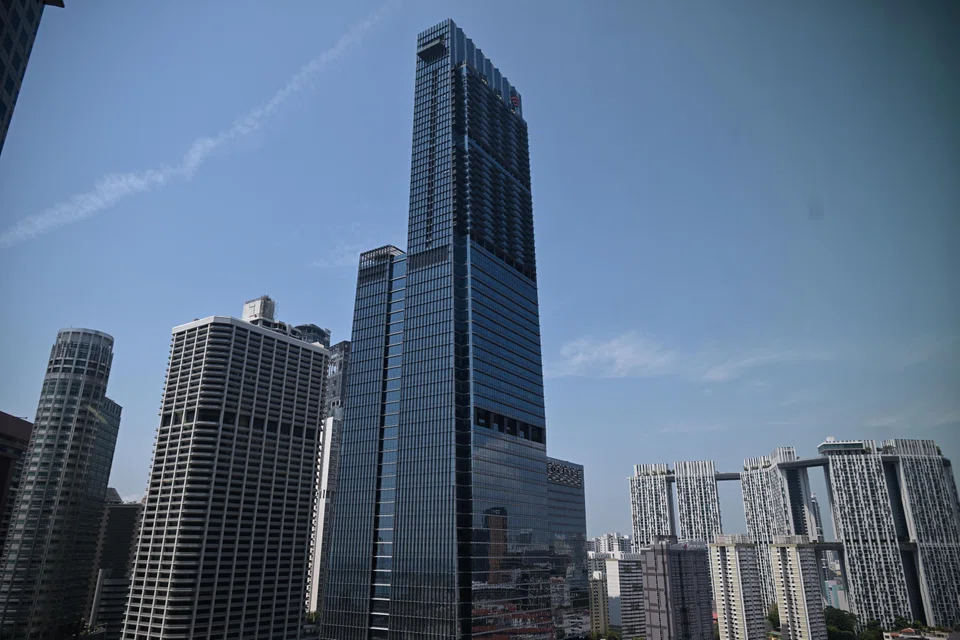
As the developer of Guoco Tower in Tanjong Pagar and Guoco Midtown along Beach Road, the group is now also seen as a leading developer and manager of integrated developments.
While Singapore is small by land mass and population, gross development values of projects here are sizeable.
And there are opportunities to build a land bank by buying sites via government land sales as well as en bloc sales.
Developers can secure large sites, such as the 6.5 ha white site in the Jurong Lake District, which the Urban Redevelopment Authority has launched for tender. This site can house a mixed development with gross floor area of over 3.9 million square feet.
By concentrating on Singapore, GuocoLand can continue to grow as a developer of homes and integrated developments, or build new capabilities in other property asset classes.
Shareholders could gain as a Singapore-focused GuocoLand saves costs and delivers stronger operating performance.
Still, changing strategy alone will not rectify its market valuation. As at Oct 24, GuocoLand traded at a 61 per cent discount to its end-June net asset value of S$3.85.
GuocoLand’s board and management should concurrently review its geographic strategy and work to unlock value for shareholders.
The writer owns shares in GuocoLand
TRENDING NOW
Fed hike throws Singapore banks a margin lifeline; UOB most likely to feel impact
He built the Vingroup empire. Now South-east Asia’s richest man is handing some key roles to his sons
Real-estate veteran Desmond Sim quits from CEO roles at Realion, ETC
Chagee, Mixue and Luckin won the market. Sustaining their edge is the harder part