

Has Warren Buffett lost his touch?
Assessing Berkshire Hathaway’s recent performance
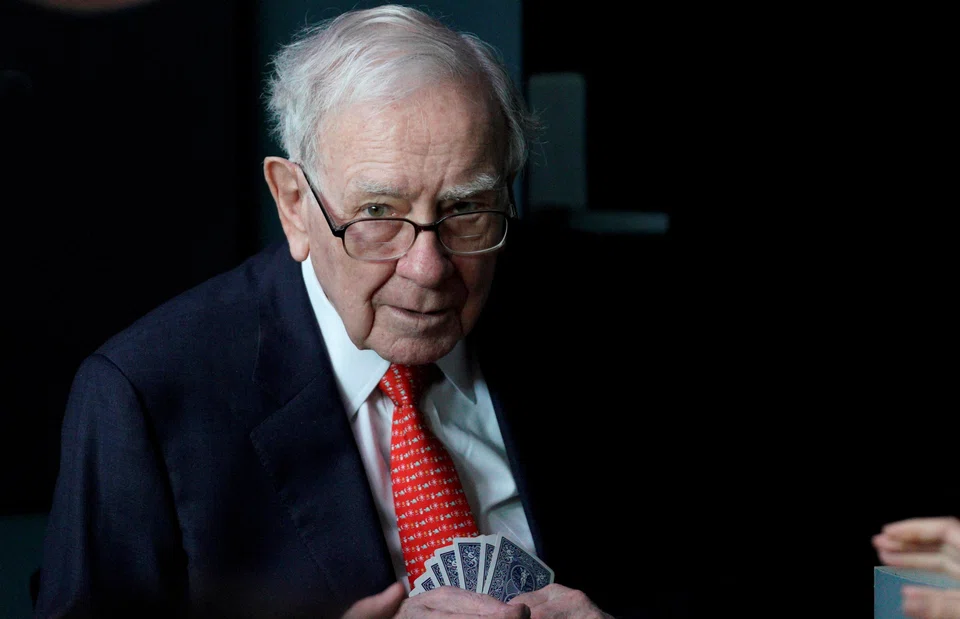
WARREN Buffett’s birthday present arrived early this year. On Aug 28, two days before America Inc’s favourite great-grandpa turned 94, his bricks-to-motor-insurance conglomerate, Berkshire Hathaway, reached a market value of US$1 trillion. It became only the eighth American company to claim that title and, as a child of the Nebraskan heartland, the first not to emerge from the West Coast tech scene.
Its class-A shares now change hands for US$715,000 – 55,000 times what they were worth when Buffett took control of a struggling textile mill in 1965. In that period, the total return, including dividends, of the S&P 500 index of America’s biggest firms has risen just 400-fold. When Berkshire’s longtime shareholders wish Buffett many happy returns, his customarily folksy response might be: Right back at ya.
Amid all the celebrating, though, spare a thought for those who poured their savings into Berkshire shares more recently. If you blew US$200,000 on one 10 years ago, you would have more than trebled your money. That would have been a better investment than buying a house in America, whose average value has doubled in that time. But it is roughly what you would have got if you had put the cash in the S&P 500. If you invested instead in Apple, as Berkshire did in 2016, you would be a millionaire nearly twice over.
Look at most individual years since the financial crisis of 2007-2009 and the picture is similar. Between 2009 and 2023, Berkshire’s annual return averaged 13 per cent, compared with 15 per cent for the S&P 500. As Buffett himself admitted in his latest letter to shareholders: “We have no possibility of eye-popping performance.” Investors would be forgiven for asking: Why not? And if not, some may wonder, then what is the point of Berkshire?
Buffett has a simple response to the first question: “Size did us in.” He is not wrong. Among Berkshire’s operating units are America’s second-biggest freight railway (BNSF), its third-biggest auto insurer (Geico), one of its largest electric utilities (BHE), plus a plethora of manufacturing and retail brands (from Duracell batteries to Pilot lorry stops). Together, these employ nearly 400,000 people (albeit only 26 at Berkshire’s head office in Omaha).
In 2023, the group brought in sales of US$360 billion and a profit of US$37 billion (on its preferred operating measure). When the sums get this huge, it gets hard to make them huger. And earnings this rich are hard to reinvest profitably.
Buffett’s knack for doing so, time and time again, explains his mythical status among American capitalists. Now his method – find a good business run by capable managers, let them get on with it, pocket the cashflows, repeat – is showing its age. Good businesses big enough to move the needle at Berkshire are scarce. Worse, Buffett appears to be losing his touch.
A US$32 billion takeover in 2016 of Precision Castparts, a maker of aircraft components, was a flop. When it comes to Berkshire’s sizeable portfolio of publicly traded shares, a deal to take control of Kraft-Heinz, a pedlar of ketchup, has left a red stain. Exclude its investment in Apple and the value of its stock holdings rose by just 50 per cent between the start of 2019 and June this year, compared with an increase of around 120 per cent for the S&P 500.
But size isn’t the only problem. Just look at those West Coast tech firms. Apple and Microsoft generate roughly treble the profits of Berkshire. Nor is it just a question of age – both giants are just a decade younger than Buffett’s Berkshire. The problem is that he and his company are stuck in the past.
Berkshire’s operating units and its equity portfolio are (with the exception of the Apple stake, which Buffett has been selling down) proudly old-economy. Berkshire, in Buffett’s own words, is “not big on newcomers”. Yet what counts as entrenched and reliable – the sort of old that Berkshire is big on – changes constantly.
The conglomerate’s reluctance to digitise things like rail scheduling or deploy software that lets safer drivers pay lower premiums has dented its margins relative to nimbler rivals. Microsoft’s business software, Amazon’s e-emporium, Google’s search and the trio’s data centres are no less integral to 21st-century infrastructure than a railway or a power plant, and far more lucrative.
The world around Berkshire has changed in other ways. The information advantage Buffett once enjoyed by doing the legwork to identify takeover targets is gone when you can Google any company’s 10-K filing, says Gregg Warren of Morningstar, a research firm.
Berkshire’s cash is no longer the only source of succour for big companies in a spot of bother, now that US$2.2 trillion in dry powder is burning a hole in private-equity barons’ pockets.
More candlelight, please
Berkshire’s corporate governance looks even more out of date – and not because the average age of board members is 68. Buffett’s straight-talking shareholder letters conceal an opaque organisation that discloses no more than the regulatory minimum and rarely engages with investors (besides an annual love-in when the boss takes questions from a fawning audience). Its bare-bones corporate website offers no e-mail address or phone number; any questions or comments can be posted to an address in Omaha.
Buffett is likely to leave any big moves to his anointed successor, Greg Abel, who currently oversees Berkshire’s non-insurance businesses. But the nonagenarian looks spry and rejects unforced retirement. If he believes Berkshire’s shares look too pricey to buy back (as a slowing pace of repurchases hints he does) then he should drop his refusal to pay a dividend (which Berkshire did once, in 1967).
This may have made sense when he could redeploy excess capital effectively. Now that his firm is sitting on nearly US$280 billion in cash, has no idea how to spend it and no debt to speak of, insistence that he is a better steward of shareholders’ money than they are seems questionable. As birthday-party favours go, a fat payout would work a treat.
©2024 The Economist Newspaper Limited. All rights reserved
TRENDING NOW

Two Singapore-listed palm oil firms named in Greenpeace report on Indonesian plantation fires
Singapore Airlines flight returns to San Francisco after ‘unruly’ passenger incident
Singapore looking into which companies responsible for haze-causing fires: PM Wong
Deluge IPO 3.86 times subscribed ahead of SGX debut

