To hold or sell deeply undervalued stocks, leave it to fate
Deciphering if, when, and how controlling shareholders will unlock value is difficult

PEOPLE love bargains. They get a thrill when they manage to score a good deal.
I like bargains, too. Thus, I invested in reputable property groups that traded at large discounts to net asset value (NAV), such as City Developments Ltd , Frasers Property , GuocoLand , Ho Bee Land , Hongkong Land , Singapore Land Group , UOL Group and Wing Tai Holdings .
However, stocks seen as bargains often continue to be bargains, as these counters persistently trade at yawning discounts to book value.
Blame factors such as insufficient free floats, unexciting returns on equity (ROE), modest dividend yields, and lack of concrete actions to unlock shareholder value for the predicament of many undervalued counters stuck in the doldrums.
Very occasionally, owners of deeply undervalued Singapore-listed shares receive a pleasant surprise.
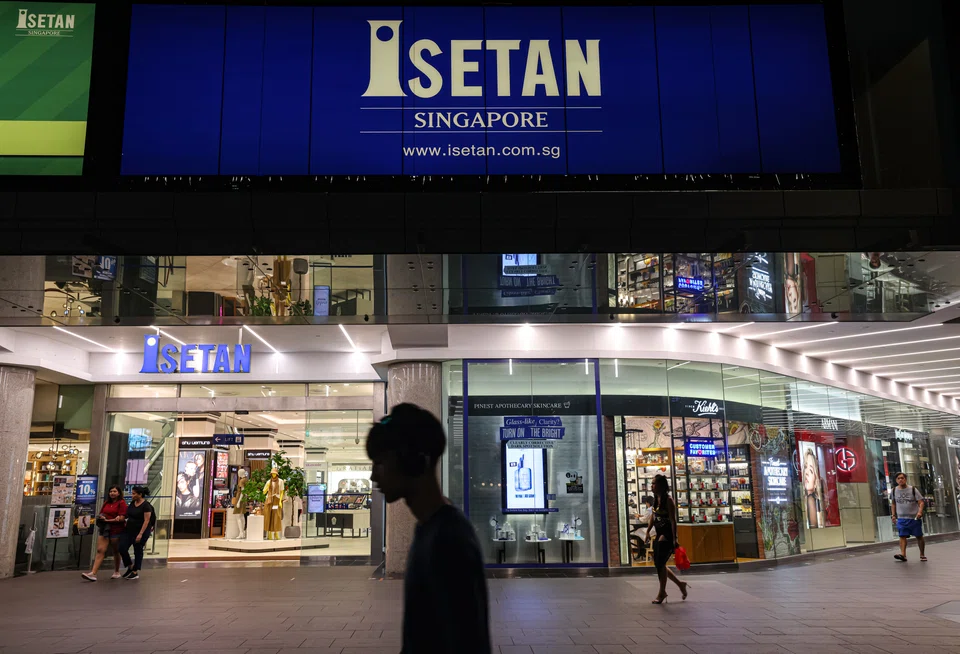
Isetan Singapore
Recently, Japan’s Isetan Mitsukoshi launched a privatisation bid for Isetan Singapore , where it is the controlling shareholder.
The offer price of S$7.20 per share represented a 37.4 per cent premium over the counter’s highest closing market price of S$5.24 in a five-year period, and a 153.5 per cent premium to the last traded price of S$2.84 prior to the offer announcement.
I hold a very small position in Isetan Singapore. I patted myself on the back for not divesting my shares earlier this year, when I was tidying up my underperforming securities. Put simply, I got lucky.
Isetan Singapore’s financial performance is dismal. In 2023, the group posted a drop in revenue from a year ago and a net loss of S$1.2 million.
The company’s shareholders received no dividends for the financial year ended Dec 31, 2023. As at end-2023, its NAV per share was S$2.58, down 17.6 per cent from S$3.13 as at end-2019.
Department stores here are struggling. Isetan Singapore, which runs department stores at Scotts Road, Tampines and Serangoon Central, makes losses in its retail segment.
Yet, Isetan Mitsukoshi is being rational in trying to privatise Isetan Singapore.
The Singapore-listed group owns valuable investment properties – namely, the podium block at Wisma Atria along Orchard Road, with a strata area of 104,733 square feet and around 37 years of land lease remaining, as well as freehold warehouse 5 Kallang Pudding Road, which has been partially classified as an investment property.
Isetan Singapore carries its investment properties at cost less accumulated depreciation and impairment losses. The fair value of the investment properties, as determined by independent valuers, was S$308.9 million at end-2023, or S$283.1 million above book value of S$25.8 million.
The valuation uplift amounts to about S$6.86 a share, based on the number of shares per the latest annual report.
Role of controlling shareholders
With the proposed privatisation of Isetan Singapore, minority shareholders will receive what better represents the true value of the company due to the controlling shareholder’s action.
While Isetan Mitsukoshi has good reasons to privatise Isetan Singapore, it took years for the group to launch a privatisation bid.
Indeed, whether minority shareholders of deeply undervalued local-listed groups see their shares fetch prices close to the entities’ fair value may depend largely on the actions of the controlling shareholders.
And minority shareholders often have little clue on if, when, and how controlling shareholders will unlock value at listed groups.
For example, there was little inkling that OCBC would announce a S$1.4 billion voluntary unconditional general offer for the 11.56 per cent stake in Great Eastern that it does not currently own, with the aim to delist the insurance arm, on the morning of May 10.
Various listed property groups that trade at large discounts to NAV have wealthy families as controlling shareholders.
Some families may not be motivated to address share price weakness. They may prefer to keep the listing status of said groups for reasons such as prestige, or providing family members some liquidity for their shares. They may also be unfazed by having a lower net worth because of the weak market value of their listed holdings.
Alternatively, some families which are keen to privatise their listed companies might hold back due to uncertainty of success in a privatisation bid, or lack of funds.
While there are financial institutions which will partner families in privatising listed groups, some families may resist working with them on privatisation bids, as they loathe sharing control with such entities.
Currently, many boards of listed groups do not share their plans to narrow share price discounts to book value. Still, could more wealthy families start doing right by minority shareholders in unlocking shareholder value – because of generational changes in leadership?
When one buys into a deeply discounted listed entity hoping that the controlling shareholder will privatise it, or support moves to unlock shareholder value, one is often taking a punt.
One can justify buying or holding an undervalued stock as there is a deep underlying value to one’s investment.
Nonetheless, it may be best to avoid or divest such stocks as money can be better deployed in counters with superior growth prospects and trading liquidity.
As with shopping for goods and services, paying for high-quality listed counters may trump buying bargains.
Think of the flight-to-quality aspect of high-quality large-cap stocks with good trading liquidity, such as the banking trio – DBS , OCBC and UOB . The banks pay decent dividends, have strong ROE, boast solid financial track records, and have robust balance sheets.
Controlling shareholders of undervalued listed property groups have plenty of skin in the game. They will be vigilant in ensuring prudent business management and focused on creating long-term value. Some of these groups build great developments at home and abroad.
Still, investors have abundant investment choices. And as the cost of equity rises amid higher interest rates, investors are rightly more selective in their investments.
Perhaps investors should view the opacity surrounding what owners of deeply discounted listed property companies will do to address share price weakness as major red flags. Ultimately, some bargain buys may simply not be worth pursuing.