Home stretch in Singapore’s leadership succession
The country is now in the most critical phase of leadership renewal, with little room for error or misjudgement
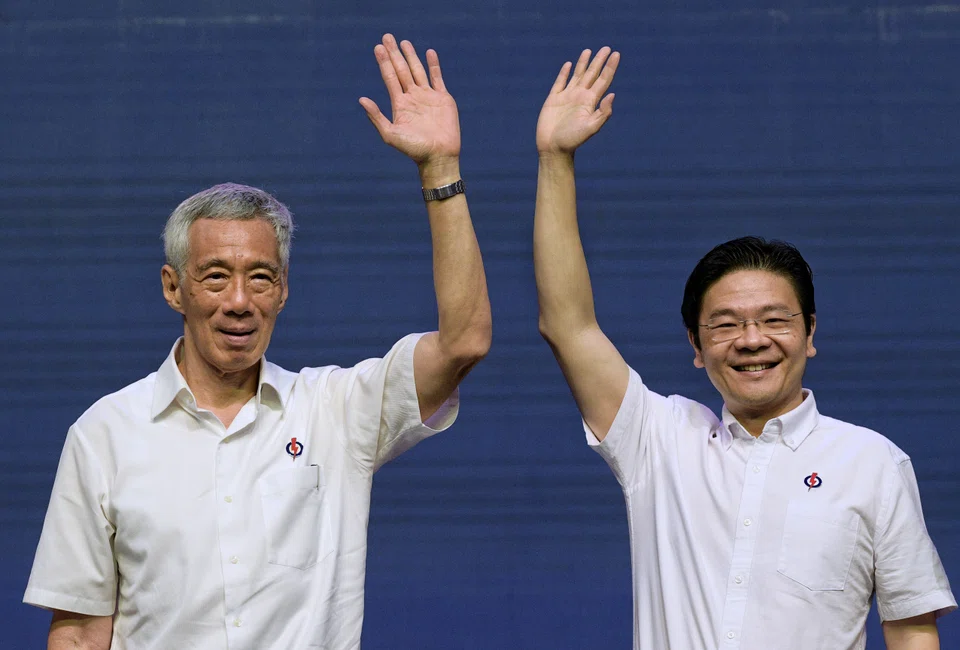
AT THE National Day Rally (NDR) on Aug 20, Prime Minister Lee Hsien Loong appeared to have made a short valedictory speech of sorts towards the end of his address.
Declaring that succession plans are back on track, he referred to his original plan to step down as prime minister before his 70th birthday in February 2022, and reminded the nation of his promise when the Covid-19 pandemic struck in early 2020 that he would see the country through the crisis. He affirmed his confidence in Deputy Prime Minister Lawrence Wong and the fourth-generation (4G) leaders.
PM Lee also reiterated that “integrity and incorruptibility are fundamental to Singapore”, and a clean and effective government is needed to deliver results for Singaporeans. He vowed, regardless of the embarrassment or political cost, to do his utmost to keep the system clean.
This public declaration of the commitment is crucial. In also stating that recent controversies involving ruling-party parliamentarians would not delay the timetable for renewal, it was imperative that PM Lee did not shy away from the issue of trust and confidence in, and within, the ranks of government.
Singapore’s leadership succession would not resonate with Singaporeans should there be a nagging suspicion, or even the loss of trust and confidence, over the government’s commitment to honest and clean government.
A smooth transition is imperative
PM Lee did not give a timeline on the handover of leadership to the 4G team. It is certainly not cast in stone, and there is also the intent not to be bound by timelines. Should a date be pinned down and the handover does not take place as scheduled, it would be politically damaging and raise legitimate questions over whether the 4G team will ever be ready, or whether there remain deep internal divisions over Lee’s successor.
In any case, any inordinate delay could be misinterpreted as a lack of confidence in his successors, something he would be keen not to burden them with. Despite the best-laid plans, the pandemic had thrown a spanner in the works, with Deputy Prime Minister Heng Swee Keat putting himself out of contention despite being the then-presumptive successor.
With President-elect Tharman Shanmugaratnam scheduled to be sworn into office on Sep 14, PM Lee and Wong would be keen to establish a healthy and purposeful working relationship with him. This recognises the immense importance of both parts of the executive carrying out their constitutional duties independently, even as the interdependence at the highest rung of government is crucial.
The focus of the government’s agenda outlined at the opening of the second session of the 14th Parliament in April this year is to deliver on the full agenda of action. Moreover, with a host of issues to be tackled, time is of the essence in making headway in resolving them so that they can be tangibly felt on the ground before going to the polls, which are often treated as a referendum on the government’s performance.
It is likely the handover will still be shortly before or after the next general election, which must be held by November 2025. PM Lee and Wong may co-lead the ruling party in the next general election in a highly significant gesture of continuity amid change. If this pans out, PM Lee may well pin down a date for the handover at the start of the electoral campaign. This will seek to impress upon voters the importance of a smooth transition and an appeal for a strong mandate from the electorate.
He may step down as prime minister before the next election but continue as the People’s Action Party’s (PAP) secretary-general. This was the case when the leadership transitioned from Lee Kuan Yew to Goh Chok Tong. Goh succeeded Lee Kuan Yew as prime minister in November 1990 and assumed the ruling party’s top post later in 1992.
For a smooth transition, issues that have bedevilled the government in this current term would have to be put to bed before the next election. Some of these issues were under the microscope in PM Lee’s NDR speeches, where he sought to provide reassurance amid anxieties on costs of living, housing affordability and accessibility, and retirement adequacy.
Enabling the best possible start for the 4G
What is clear is that we are now in the most critical phase of the leadership renewal, with little room for error or misjudgement. Lee shared that “more and more, my task is to support the 4G team and their agenda. I want to get them off to the best start possible”. As such, the announcements he made at the NDR on public housing and retirement adequacy should be seen in this light as well.
To this end, as the outgoing prime minister and the ruling party leader, PM Lee regards one of his final responsibilities as helping secure reasonably strong support from voters for the next generation of leaders. There is no alternative to contesting the next election as one where it is critical for the 4G team to secure a firm mandate. The party must go to the polls with a strong report card as a bare minimum.
An election outcome that results in several 4G leaders not being elected will severely affect the political leadership in the next decade or so. The PAP will be desirous to avoid such an outcome, and so has its work cut out to secure the requisite mandate from Singaporeans. The backdrop of Singaporeans’ desire for greater political diversity and competition as well as good, effective government will weigh on voters’ minds at the next polls.
In the less than two years that remains of the current term of Parliament, the PAP government will not only have to deliver on its election pledges but also rebuild trust and confidence with Singaporeans. How it governs in these remaining years will be closely scrutinised as well.
The 4G-led Forward SG consultation will conclude in a few months’ time with a much-anticipated report on its recommendations, which will signal the extent of policy changes. The implementation of subsequent policy shifts will likely form a key plank of the PAP’s election manifesto in the next general election.
Tharman’s presidency and role in political transition
Tharman’s overwhelming mandate from Singaporeans at last Friday’s (Sep 1) presidential election provides an additional ballast in a more complex and challenging future, where Singaporeans face profound global risks and uncertainties, as the former senior minister had put it on the campaign trail.
Tharman said a day after his victory that he recognised the president’s role in the ongoing “very important (leadership) transition”, and it was one of the reasons he had put himself forward for the presidential role.
He also said: “It’s actually a new era that we’ve entered. Singapore society is changing, Singapore politics is changing, and I think the relationship between the president and the prime minister – the new prime minister – should be a constructive one; and I believe we can make that work… As you know, I have a high regard for him (Wong), and I believe that we will have a very constructive relationship.”
The strong mandate endows Tharman with the makings of one of the most consequential Singapore leaders in the coming decade. It is clear, however, that voters who chose Tharman would not necessarily vote for the PAP. Voters demonstrated that they do not want a presidency to be treated by political parties and politicians as a prize to be captured for instrumental ends. Put simply, the results of the presidential election did not necessarily reflect the overall political mood in Singapore.
At the presidential election, however, voters were arguably signalling indirectly that the government can do better in winning the trust and confidence of voters, especially in how it governs and shapes the ethos of society. And perhaps it’s also a signal of the manner of political discourse that is preferred by all parts of the political spectrum.
Ensuring a smooth leadership transition would feature prominently in the next general election. With the succession plan on course again, the 4G leaders have the urgent but monumental task of earning the trust and confidence of Singaporeans in the limited time that is left of the current term of government.
In stating that succession plans are back on track, PM Lee is signalling that he does not intend to prolong his tenure as prime minister than necessary. He may not have delivered his final NDR, but the countdown to the handover of power has already begun in earnest.
The writer is an associate professor of law at the Singapore Management University and a former Nominated Member of Parliament