

Hong Kong makes a push to integrate global carbon markets
The city wants to be a hub for climate finance worldwide
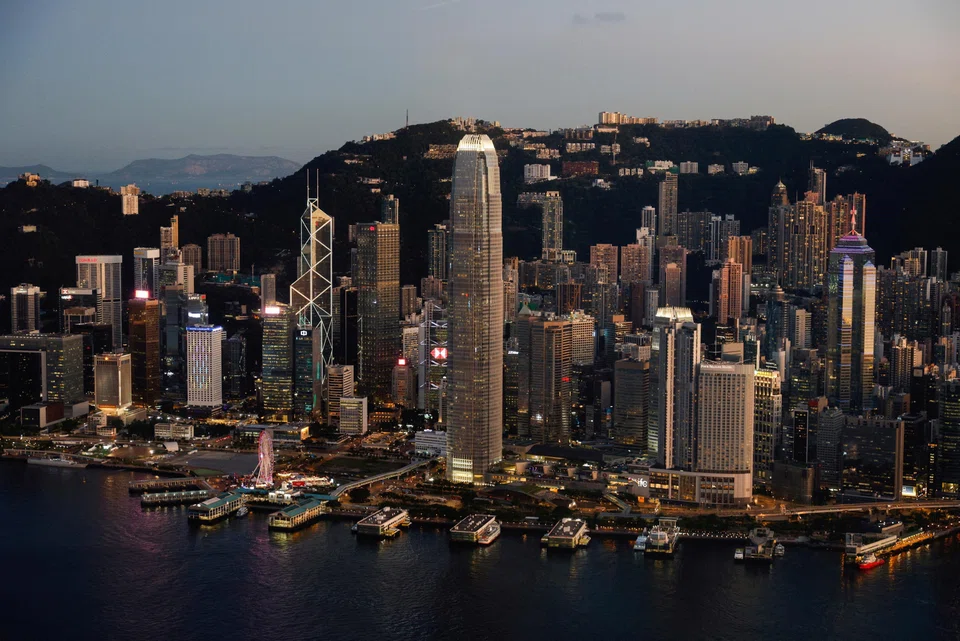
BETWEEN Jul 7 and 9, Hong Kong hosted, for the first time, the International Emissions Trading Association’s Asia Climate Summit – the region’s premier event for sustainability.
However, the focus this year was less on environmental issues per se, and more on the business of carbon markets. The summit culminated in the announcement of a new Hong Kong platform that will link climate finance pathways globally.
Specifically, financial service firm CGS International and digital infrastructure provider Verdana HK signed an agreement with the Global Carbon Council to develop the Hong Kong Carbon Register and Services Body, a new carbon register and independent carbon finance facilitation platform.
It aims to connect carbon markets and climate financing – a goal aligned with Article 6 of the 2015 Paris Agreement – with a view to facilitate Chinese investment, in particular.
This development and the hosting of the summit reflect Hong Kong’s goals of becoming a major green and climate finance hub, amid growing concerns about the effects of climate change across the Asia-Pacific.
A McKinsey Global Institute report published on Mar 5 highlighted how Asean is particularly susceptible to climate challenges, in part because many of its economies are dependent on outdoor work.
In Cambodia, Indonesia and Thailand, for instance, agriculture accounts for between 8 and 15 per cent of the economy, compared with a global average of around 4 per cent.
Moreover, around half the geography and population of South-east Asia are vulnerable to at least one climate hazard, such as riverine flooding and heat stress conditions.
To combat this, the report recommended that the region increase investments into adaptation measures, including early warning systems, stormwater systems and irrigation, to the levels spent by the industrialised world. This would require a fiscal uplift each year from around US$12 billion to US$37 billion.
Echoing McKinsey’s warning, non-profit organisation Climate Central on Jun 24 released a major study that highlighted how parts of South-east Asia now suffer at least six months of so-called “dangerous” humid heat days annually.
This includes large parts of the northern and central regions of Vietnam, including Hanoi, and areas of Thailand such as Bang Na in south-east Bangkok.
Connecting carbon markets
Governments, businesses, investors and civil society are not taking these warnings lightly. Data published by the Grantham Research Institute at the London School of Economics shows that the number of climate laws and policies in the more than 100 countries under review has grown from just over 50 in 1997, at the time of the Kyoto Protocol climate treaty, to more than 7,000 today.
The next logical step is to harmonise laws and establish a truly global carbon trading market, a goal galvanised by the new Hong Kong initiative.
Already, dozens of countries across the world use carbon-pricing mechanisms or are planning to do so, raising more than US$107 billion in public budgets, according to the World Bank. While much attention focuses on the 27-country EU Emissions Trading System (ETS), the first such international scheme, similar developments are accelerating across the world.
Take, for instance, China’s national ETS. It is now the world’s largest in terms of covered emissions – estimated to account for around eight billion tonnes of carbon dioxide equivalent, or more than 60 per cent of the nation’s CO2 emissions.
China is far from alone in its development of carbon trading. Other countries which have their own carbon market schemes include Vietnam, Indonesia and Singapore.
As these examples underline, at the heart of these developments is the belief that using the carbon market is the most economically efficient way to reduce greenhouse-gases emissions.
These disparate carbon trading systems may be linked by Hong Kong’s recently launched platform and, in turn, connect with the EU scheme. In the future, they could even be combined into an even wider network with the Americas and the continent’s state-level schemes such as the Regional Greenhouse Gas Initiative in north-eastern US.
Hong Kong’s carbon initiative, and wider climate legislation elsewhere, suggest the increasing possibility of a global carbon market emerging – which could be the most economically and politically feasible mechanism to tackle climate change.
The writer is an associate at LSE Ideas at the London School of Economics
TRENDING NOW

Government to bring forward raising of retirement age, give employers more financial support to create flexi-load jobs
Former minister Maliki Osman, Revolut chairman join Asia Gulf Holdings advisory board

Is Manila Asia’s new dining hot spot?
Simba at risk of losing operating licence over spectrum misuse

