Hong Kong’s Link Reit should consider listing a Singapore-centric Reit on SGX
This might allow it to achieve a better trading multiple and grow its fund management business

[SINGAPORE] The size of Hong Kong’s real estate investment trust (Reit) market pales in comparison with Singapore’s. However, Hong Kong-listed Link Reit is a leader in the Reit universe.
Managed by Link Asset Management, the Reit lays claim to being Asia’s largest by many measures, including asset value. The trust has been entirely owned by independent investors since listing in November 2005 as the first Reit in Hong Kong.
Starting with a portfolio of shopping centres and car parks in Hong Kong at the time of going public, Link Reit’s portfolio today includes retail facilities, car parks, offices and logistics assets which span Hong Kong, China, Australia, Singapore and the UK, with a total valuation of around HK$237 billion (S$40.7 billion) as at end-September 2024.
However, despite its size, high free float, inclusion in key stock indices, wide coverage by equities analysts and ample trading liquidity, the trust is trading poorly versus its book value.
Perhaps investors are wary of prospects for Hong Kong properties because of economic challenges facing the city. Amid retail headwinds in the territory, tenant sales at Link Reit’s Hong Kong retail spaces fell year on year for the six months ended Sep 30, 2024, while occupancy cost of retail tenants rose.
Listing a Singapore Reit
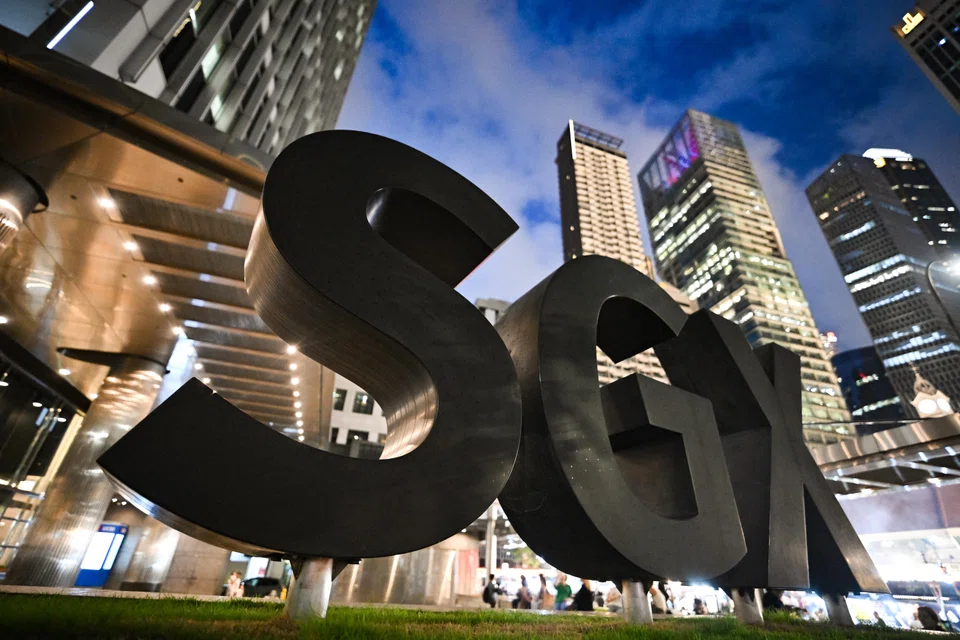
Link Asset Management could find a Singapore solution to create value for Link Reit’s unitholders. Consider listing a Singapore-centric Reit on the Singapore Exchange (SGX) comprising Singapore and possibly Australia and UK properties that are spun off from Link Reit.
As at Mar 19, Link Reit traded at a 44 per cent discount to its end-September 2024 net asset value (NAV) per unit of HK$66.80.
In contrast, Singapore-listed CapitaLand Integrated Commercial Trust (CICT) and Frasers Centrepoint Trust (FCT) traded at much narrower discounts of about 2 per cent and 4 per cent to their latest reported NAV per unit, respectively. CICT owns properties that are largely for office and/or retail use, which are located largely in Singapore, while FCT is a major local suburban mall owner.
Link Reit owns office and retail properties in Australia, Singapore and the UK with a total value of about HK$26.4 billion as at end-September 2024. The Singapore properties account for around 54 per cent of this total value.
The trust owns leading suburban mall Jurong Point and retail property Swing By @ Thomson Plaza, which were acquired from Mercatus Co-operative. Link Asset Management also provides asset and property management services for AMK Hub, a mall in Ang Mo Kio that Mercatus owns.
Perhaps, a potential Link Singapore Reit can be even more attractive if Mercatus injects AMK Hub into the said trust in exchange for units which it can hold onto or place out.
Listing Link Reit’s non-Hong Kong and China properties on the SGX via a distribution in specie of units in the potential Link Singapore Reit to Link Reit’s unitholders can achieve two objectives.
One, an SGX-listed Link Singapore Reit, anchored by high-quality Singapore retail properties, might command a better trading multiple relative to NAV than Link Reit.
Assume Link Singapore Reit has NAV of HK$21 billion, based on debt to total assets of slightly over 20 per cent. If this said Reit trades at a 15 per cent discount to NAV, the value creation to Link Reit’s unitholders – computed by the difference between a 15 per cent NAV discount and Link Reit’s 44 per cent NAV discount – amounts to about HK$6 billion.
Moreover, Link Asset Management broadens its investor base by accessing the Singapore Reit market.
Growing fund management revenue
Two, besides creating value for Link Reit’s unitholders through property ownership, Link Asset Management also seeks to grow its investment management business.
Link Asset Management, which is owned by Link Reit’s investors, can scale up its fund management business by owning the manager of Link Singapore Reit. The said manager can earn recurrent fees from managing the Singapore-listed trust – possibly over S$20 million per annum initially. There could also be ad-hoc fees earned from investing and divesting properties in future.
In short, launching a Singapore Reit would help turbocharge Link Asset Management’s ambitions to grow in the lucrative fund management business for the benefit of Link Reit’s investors.
Link Reit will soon report its annual results for the financial year ended Mar 31, 2025. This could be an opportune time to unveil a move to spin off the trust’s Australia, Singapore and UK properties into an SGX-listed Reit.
As interest rates stabilise, conditions are looking more favourable for new Reit listings. And amid much global economic uncertainties, investors may veer towards defensive Singapore assets such as large and well-located suburban malls like Jurong Point, which sits at the heart of the integrated transport hub connecting Boon Lay MRT Station and Boon Lay bus interchange.
Eng-Kwok Seat Moey, who was DBS’ group head of capital markets and instrumental in the growth of Singapore Reits, joined Link Asset Management’s board as an independent non-executive director in November 2024. Might Eng-Kwok’s board appointment indicate Link Asset Management has ambitions in the Singapore Reit space?
Concerted efforts are being made to grow Singapore’s equities market. Drawing high-quality businesses to list here will help boost the local bourse’s vibrancy.
Link Reit’s unitholders, the SGX and local Reit investors should have much to celebrate if Link Reit lists a Singapore-centric Reit on the exchange hopefully as soon as this year.
The writer owns units in Link Reit