

Hong Kong’s tycoon-owned property giants could take a leaf from Singapore groups

THE Hong Kong Exchanges and Clearing is valued at several times that of the Singapore Exchange , which perhaps reflects the greater vibrancy of the territory’s public equities market versus the Republic’s.
However, Singapore clearly leads Hong Kong in the real estate investment trust (Reit) space. There are around four times as many listed Reits and property-related business trusts in Singapore compared with Hong Kong.
The territory’s Reit market started slightly later than Singapore’s – in 2005 versus 2002. Over the years, while leading Singapore property groups such as CapitaLand Investment (CLI) and Mapletree Investments have embraced listed Reits and private real estate funds, big Hong Kong property groups have generally been slow at becoming capital light and growing fund management.
As at end-September, CLI had S$90 billion of funds under management, comprising S$61 billion from listed funds and S$29 billion from private funds. For its latest financial year ended March, Mapletree’s assets under management (AUM) was S$77 billion, of which about 78 per cent was third-party AUM.
To date, Hong Kong giants such as Sun Hung Kai Properties and Swire Properties have yet to launch Reits, despite owning large portfolios of high-quality investment properties.
There is a cost to property groups of holding investment properties on corporate balance sheets instead of via Reits and private funds. The groups miss out on selling stakes in the properties to free up capital for more productive use and building a new fund management business, which offers attractive recurring fee income.
Hongkong Land
Could a shake-up in Hong Kong’s property scene be in the works with the upcoming change of chief executive at 134-year-old Hongkong Land, which is bringing in an external hire who is a Singapore-based Singaporean from Mapletree?
Starting on Apr 1, 2024, Michael Smith will be chief executive of Hongkong Land, succeeding Robert Wong, who has served the company for over 38 years.
Hongkong Land is a member of diversified Asian-based Jardine Matheson Group. Its chairman Ben Keswick is a fifth generation member of the Keswick family, who are closely associated with Jardine.
While Hongkong Land is listed in London, Bermuda and Singapore, its roots and the bulk of its assets are in Hong Kong.
As at end-June, the territory accounted for about two-thirds of the group’s gross assets. Excluding cash, Hongkong Land’s gross assets amounted to US$38 billion.
The group’s crown jewel is its portfolio of 12 interconnected prime commercial buildings forming the heart of the financial district in Central, Hong Kong, providing over 450,000 square metres of Grade A office and luxury retail space.
Hongkong Land is mainly a landlord. Investment properties and development properties accounted for 82 per cent and 18 per cent of gross assets as at end-June.
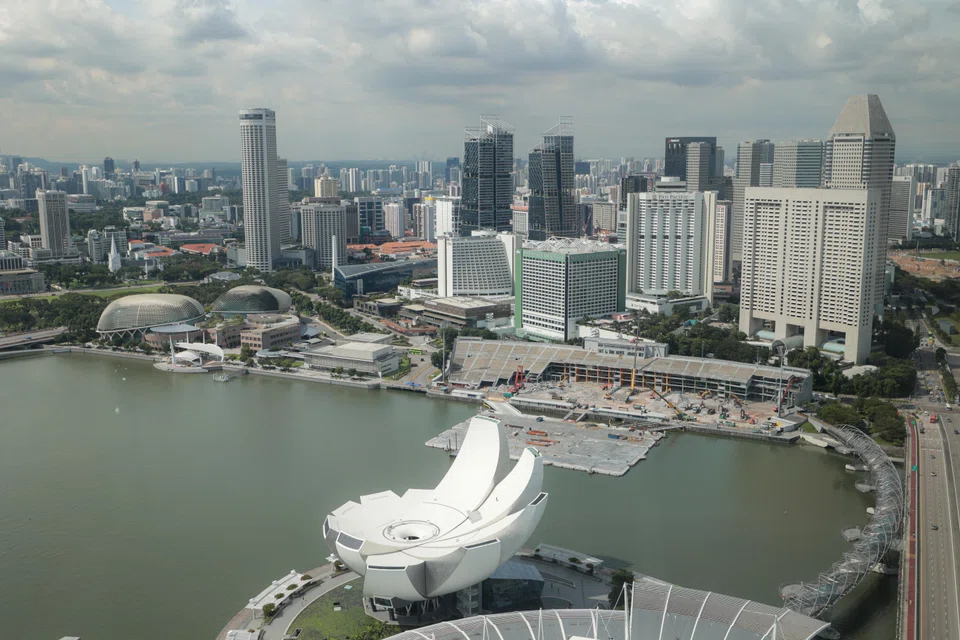
The group’s investment property portfolio here consists of its interests in premier Central Business District buildings Marina Bay Financial Centre, One Raffles Quay, One Raffles Link and CityLink Mall.
Smith will join Hongkong Land from Mapletree where he helped grow the Europe and US portfolio across asset classes including logistics, data centres, business parks and student housing.
Smith has vast experience in investment banking, having been a partner at Goldman Sachs, and was deeply involved in developing Singapore’s Reit market.
The stars look aligned for Hongkong Land to make a major push into real estate fund management. The group trades at below a quarter of its end-June net asset value per share of US$14.51. It owns a large top-quality investment property portfolio and will have a new chief with deep real estate capital markets knowledge. It could create value for shareholders by injecting assets into Reits in Hong Kong or Singapore. While Reits have been hit by high interest rates, investment properties are likely much more efficiently held in listed Reits versus listed property groups – Reits typically trade at a better book value multiple.
Hong Kong-Singapore rivalry
Much has been said about the Hong Kong-Singapore rivalry. Post World War II, both cities prospered by embracing the free market and being international gateways.
In recent years, Singapore has seized much of the momentum in the rivalry. The Republic grew rapidly as a wealth management centre for super-rich Asians.
In the property space, Singapore’s housing market has shown great resilience while Hong Kong’s has been roiled by high interest rates.
Meanwhile, office buildings here have gained from the country being a top choice for housing regional operations of international groups from diversified sectors.
In contrast, Hong Kong has struggled with some companies de-emphasing the city amid rising US-China geopolitical tensions and national security concerns in the territory.
However, do not count Hong Kong out. It is a pre-eminent “live, work and play” destination in the economically vital Greater Bay Area, which spans megacities of China’s Guangdong province: Guangzhou, Shenzhen, Zhuhai, Foshan, Dongguan, Zhongshan, Jiangmen, Huizhou and Zhaoqing, as well as Hong Kong and Macau.
Nonetheless, property players in many places must navigate a tricky environment of higher interest rates. This implies a need to be smarter in managing capital.
Many large Hong Kong property groups are owned by very wealthy families.
These businesses are increasingly seeing younger third-generation leaders, who studied at top universities in the US and the UK, playing leading roles.
These younger leaders likely possess the intellect to effectively marry capital with real estate.
The property heirs can ensure the family business thrives, and leave their mark by transforming the likes of Sun Hung Kai Properties, Sino Land, Wharf Real Estate Investment Company and New World Development Company into capital-efficient vehicles with strong fund management businesses that are fit for the next leg.
Singapore and Hong Kong are rivals who can prosper by learning from each other. Big Hong Kong family-owned property groups stand to reap bountiful rewards by looking to the Republic to learn from CLI and Mapletree.
The writer owns shares in Hongkong Land
TRENDING NOW

DBS remains analysts’ pick ahead of Q3 earnings after Singapore banks’ share slump

Singapore identifies 7 firms responsible for haze fires, notices issued urging action: Grace Fu

Good Class Bungalow market activity picks up pace on ‘realistic’ pricing

High Court rules against Julius Baer’s Singapore trust arm in US$50 million family trust dispute

