Hormuz crisis makes Asean’s push for sustainable aviation fuel more urgent
The region’s aviation must break its overdependence on jet fuel
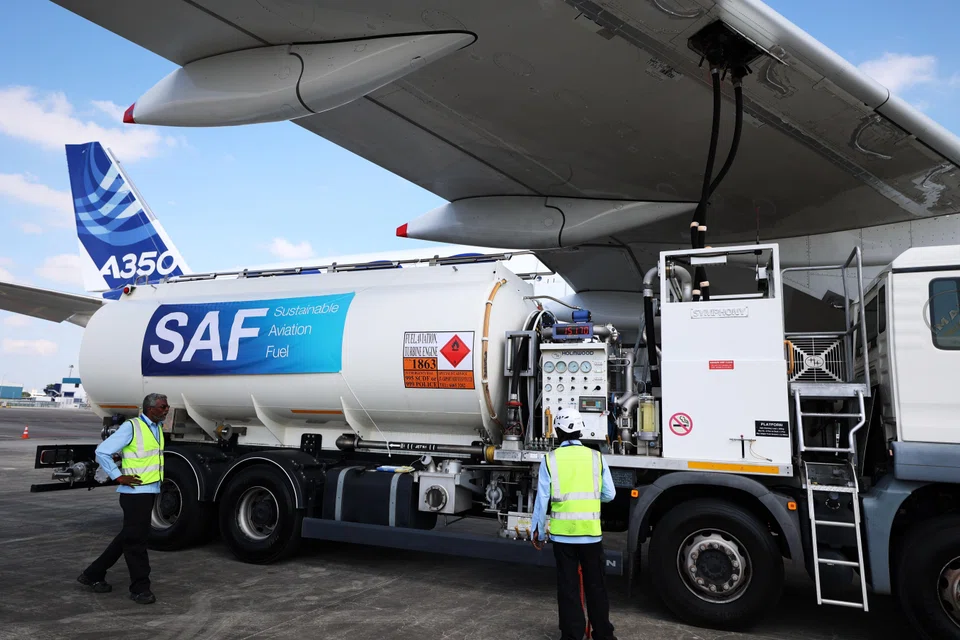
THE Middle East war and the Hormuz blockade are a strategic warning about how easily a geopolitically-exposed choke point can ripple into grounded flights, higher fares and economic friction across continents.
When the Strait of Hormuz was closed, evidence of stress showed up quickly in airline decisions. Roughly one‑fifth of the world’s traded oil normally transits that narrow corridor, and disruptions reverberated quickly across crude and refined products, including jet fuel.
The International Air Transport Association’s jet fuel price index showed prices surging to around US$200 a barrel, more than double the levels at the start of 2026, which forced airlines to raise fares and cut capacity.
What makes aviation uniquely vulnerable is not simply that fuel is expensive, but it is operationally existential. Fuel shortages translate into cancelled routes, reduced frequencies and lost economic activity.
This matters deeply for Asean, where aviation is not a luxury, but is socially and economically critical – connecting people and moving goods, perishables and time‑sensitive cargo across an archipelagic, trade‑dependent region.
Yet, the industry’s heavy dependence on imported conventional jet fuel leaves Asean exposed to price spikes and supply constraints that originate far beyond its borders.
Airlines have begun trimming schedules in visible ways: Batik Air Malaysia made deep reductions to protect cash and conserve fuel, cutting a significant share of its near‑term flying by focusing on frequency reductions rather than abandoning destinations.
Vietnamese airlines cut close to 5,000 flights in April from the previous month, said the Civil Aviation Authority of Vietnam, as jet fuel shortages and rising prices began to bite.
The pressure is also spilling into Asean’s inbound demand channels: During the peak May travel, Chinese carriers cancelled China-South-east Asia services.
This disrupted travel flows into Asean gateways, and underscored how quickly a fuel shock could become a connectivity shock for tourism, business travel and regional supply chains.
Treating sustainable aviation fuel as strategic capability
Instead of hoping that the choke points remain calm, Asean must build resilience into the fuel system itself. Energy security and decarbonisation are converging agendas, and sustainable aviation fuel sits at the intersection.
That means taking such fuel out of the “nice‑to‑have climate tool” category and treating it as a strategic capability.
The greener fuel offers Asean the ability to regionalise a portion of aviation’s fuel supply, producing closer to where the demand is within the region and diversifying away from single‑route dependency.
South-east Asia is not starting from scratch.
The Asean SAF 2050 Outlook report by GHD, supported by the Asean Secretariat and with Boeing as knowledge partner, highlights that the region, with a substantial feedstock base from agricultural and sustainable forestry biomass, can build competitive sustainable aviation fuel supply chains.
The headline estimate is striking: Asean could potentially produce up to 8.5 million barrels a day of the fuel by 2050, based on publicly available biomass and waste‑residue assessments.
Such waste and residue sources are already embedded in the region’s real economy, including used cooking oil, rice husk residues, palm oil mill effluent, cassava waste and forestry residues.
This matters for resilience because these inputs are domestic, distributed and far less exposed to maritime choke points than imported crude.
A region with diversified sustainable aviation fuel production in multiple states is inherently less vulnerable than a system that must rely solely on uninterrupted flows through faraway geopolitical choke points.
There is also an underappreciated regional dimension.
The report projects strong import pull from the wider region’s aviation hubs: For instance, Japan, Singapore and South Korea’s combined demand for sustainable aviation fuel could grow to about 607,000 barrels a day by 2050.
This underscores the potential for Asean to build a regional trade ecosystem for this greener fuel, and stabilise supply for Asia‑Pacific aviation hubs. Beyond defending its own connectivity, Asean could become a strategic supplier to the wider region.
Rethinking the cost argument
Cost is the most common objection for using sustainable aviation fuel.
The Hefa (hydroprocessed esters and fatty acids) process – currently the only broadly commercial greener fuel pathway and the least expensive among alternatives – costs more than double that of conventional petroleum‑derived jet fuel.
But the Hormuz crisis exposes why the “fossil is cheaper” premise is incomplete: Geopolitics can make conventional fuel prices spike sharply, compressing or reversing the assumed advantage within weeks.
In resilience terms, price volatility is a cost, and so is forced capacity reduction. A fuel strategy that dampens exposure to geopolitical shocks has great economic value, especially in the longer term.
Asean must act now
More importantly, as highlighted in the GHD report, Asean must act now and work towards a regional coordination agenda that is aligned with global standards and the International Civil Aviation Organization.
With harmonised certification, sustainability criteria and trade frameworks, sustainable aviation fuel can scale as a reliable commodity rather than a patchwork of pilot projects.
The Asean Sustainable Aviation Action Plan is a good start. But sustainable aviation fuel is as much a supply chain initiative as a refinery project.
More can be done to plan and aggregate logistics and feedstock, especially in regions with archipelagos, where transport complexity can raise costs and investor risk.
This is where Asean’s comparative advantage can be converted into a bankable reality. The region can pair abundant residues with clear demand signals through blending targets, long‑term offtake and credible sustainability rules, to crowd in investment.
It can also build “green trade lanes”, linking feedstock-rich producers with aviation hubs to foster a vibrant cross‑border ecosystem for the fuel.
To translate Asean’s sustainable aviation fuel potential into deployable action, the Asia Pacific Sustainable Aviation Centre (APSAC) is convening stakeholders, fostering discussions and closing implementation gaps.
The inaugural Sustainable Aviation Forum, held during the Singapore Airshow 2026, brought together policymakers, industry and investors to explore opportunities and lessons.
The APSAC also conducts joint studies and pilots, provides technical assistance, and offers training on sustainable aviation policies, cleaner aviation fuels, carbon accounting, carbon markets and green financing.
The Strait of Hormuz will not be the last choke-point crisis for aviation. As geopolitical fragmentation deepens, disruptions will recur, and aviation will remain one of the fastest channels through which energy shocks become economic shocks.
Sustainable aviation fuel is strategic capacity – built at home, traded regionally, and scaled with the seriousness that aviation resilience demands.
For Asean, producing greener jet fuel at scale may be the most pragmatic insurance for its skies, economies and future connectivity.
The writer is deputy CEO of the Asia Pacific Sustainable Aviation Centre