How fintech drives international financial centres and regional cooperation
THE development of fintech in recent years has been nothing short of fast and furious. Among others, artificial intelligence, big data, blockchain, and cloud technology have now begun to be widely used in the financial industries of various countries, further expanding the width and depth of financial services, and helping the rapid development of regional investment and financing cooperation.
For international financial centres, fintech can improve the operational efficiency, productivity, and international connectivity of financial markets, thereby enhancing competitiveness, expanding international networks, asserting international influence, and maintaining status as global financial hubs in the new digital age. Driven by fintech, there are two possible development trends of international financial centres that merit attention.
Fuelled by digital assets
With the emergence of new digital technologies such as distributed ledger technology and tokenisation, the development of digital assets is in full swing in some countries and regions. Tokenisation involves representing the ownership rights of real-world assets as digital tokens on a blockchain, which are stored, transferred, and traded electronically via computer networks.
Apart from financial assets, many valuable things in our physical world can be tokenised, which will activate and convert many of the previously illiquid physical assets (or “dead” capital or resources) into tradeable and “live” assets.
With the development of blockchain and Web 3.0, digital assets can be traded across borders and regions. Investors in any part of the world can easily access and focus their digital-asset trades on the most efficient digital-asset-trading platform in the world. This would thereby promote the growth of an international digital financial centre, one that provides digital-asset trading, investment, custodial, financing, and other related services.
Enhanced by sustainable financing
The world is undergoing a paradigm shift to achieve economic growth in an environmentally sustainable manner. This has created new opportunities in fields such as green finance and carbon services, and brought new impetus to the development of international financial centres, which can catalyse and support the greening of our current “brown” economy through the use and intermediation of capital. New technologies can play an integral role in mobilising capital towards the credibility of sustainable development.
For example, to become an efficient and internationally credible carbon credit pricing and trading centre, we can use new technologies such as blockchain, data analysis and secured information-sharing techniques to ensure the quality and easy access of data around decarbonisation efforts. This can also address issues related to “greenwashing”, the act of providing the public or investors with misleading or false information about the environmental impact of a company’s products and operations.
With better and more reliable data, the public or investors can more accurately identify and measure the negative impact on the environment, track progress of rectification, and understand how companies have progressed on decarbonisation and how close they are to their goals. The benefits brought by these new technologies will better protect the interests of carbon credit project investors.
Transforming the regional cross-border payment system
Fintech is also helping to promote regional financial cooperation.
Take for example the multiple-central bank digital currency (M-CBDC) Bridge project that supports peer-to-peer cross-border digital payments. It allows financial institutions from participating countries in the project to use their own countries’ CBDCs to trade with each other on a shared platform based on distributed ledger technology without the need for correspondent banks – the agent banks acting as intermediaries in traditional cross-border payments. Cross-border digital payments can now be made directly, quickly, and cost-effectively between payer and payee bank.
Another important feature is that the use of a third-party currency is not required; this helps with “de-dollarisation”, which is attractive to many countries.
In Asia, there are currently two such projects. One is the M-CBDC Bridge project named “Inthanon-LionRock”; the participants are China, Hong Kong, Thailand and the United Arab Emirates. The other M-CBDC Bridge project is called “Dunbar”, involving Singapore, Australia, South Africa and Malaysia.
These two projects have achieved phased results, proving that their concepts are technically feasible. At some point, at the right time, these two projects can be combined or developed in tandem to promote interoperability between the two systems and create wider coverage and a more efficient “pan-Asia” peer-to-peer cross-border digital payment system for the entire region.
Promoting regional inclusive finance
In 2018, the Monetary Authority of Singapore, the Asean Bankers Association, and the World Bank’s International Finance Corporation (IFC) jointly launched the non-profit Asean Financial Innovation Network (AFIN).
The goal of this network is to help banks in Asean cooperate with fintech companies to broaden and deepen the use of digital financial services across the region and provide financial services to the unbanked or under-banked Asean population. It’s a meaningful collaborative network, because according to estimates in a report by accounting firm KPMG, only 27 per cent of the more than 680 million people in Asean have bank accounts.
AFIN launched the world’s first cross-border open platform, API Exchange. The 117 Asia-Pacific financial institutions and 1,691 Asia-Pacific fintech firms currently registered on the platform can connect with each other, share data through the real-time application programming interface, conduct collaborative experiments in the sandbox, and have the opportunity to offer applications for financial services in a realistic environment faster.
The ultimate objective is to promote digital transformation and financial inclusion in Asean and even beyond, across the Asia-Pacific region.
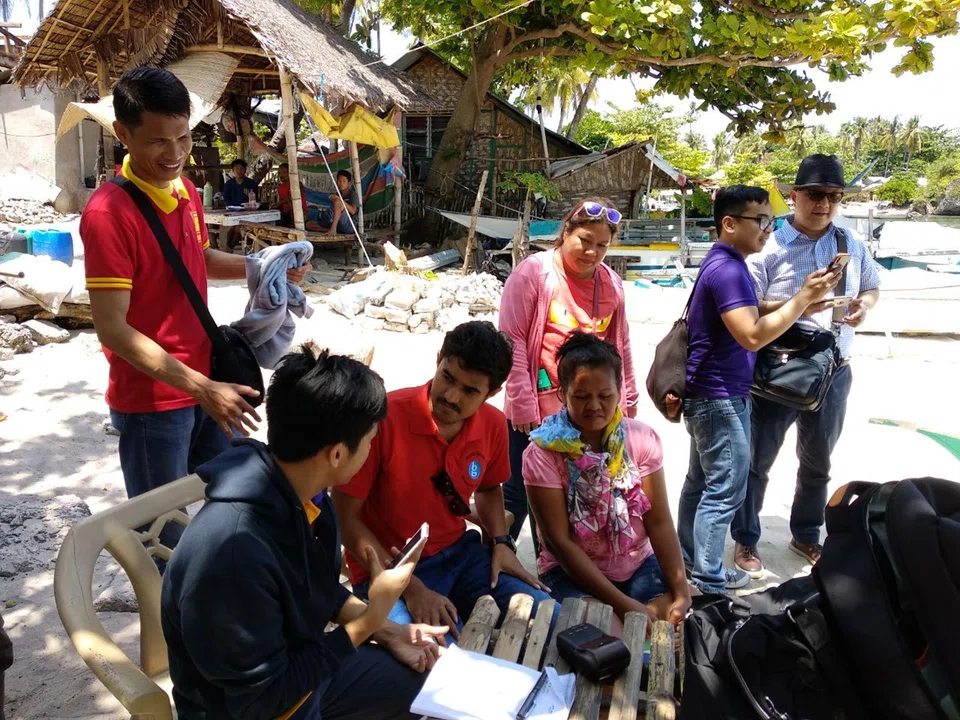
For example, Cantilan Bank, a rural bank in the Philippines, used the APIX platform, and with the support of the Asian Development Bank, IFC and the Australian fintech company Geniusto, successfully launched a new mobile banking application software to offer 24/7 access to electronic payments and other financial services in the country’s under-banked rural areas and communities.
The writer is an adjunct professor at four Singapore universities – NUS, NTU, SMU and SUSS. He was formerly director of banking supervision at the Monetary Authority of Singapore (MAS) and director of MAS Academy.