How one of America’s most storied CEOs destroyed his legacy
Jack Welch spent his last few years regretting the most important decision of his career
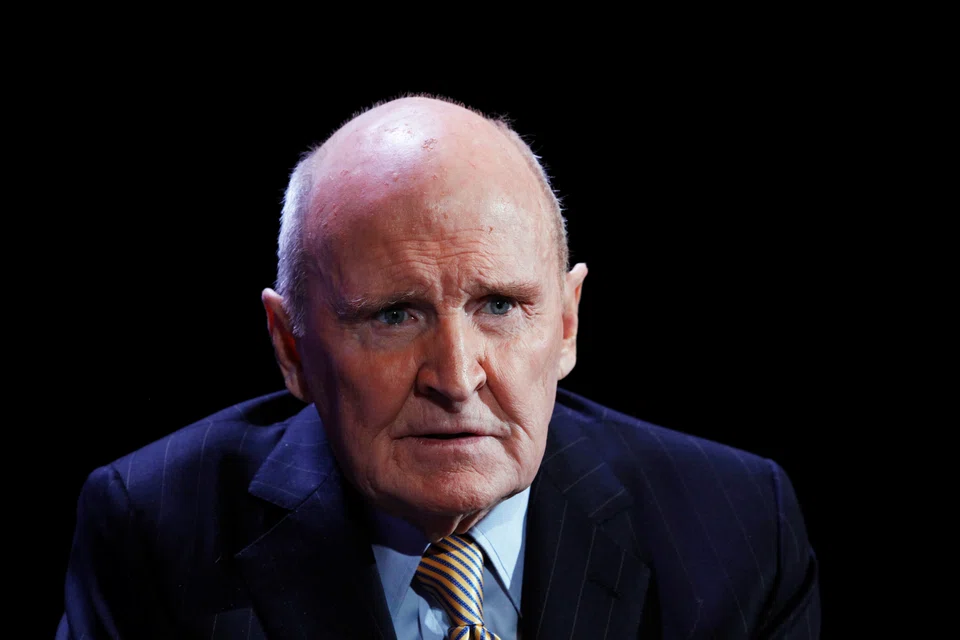
JACK Welch, one of the most celebrated corporate chieftains of his time, spent the last few years of his life profoundly regretting what he believed was the most important decision of his career: his choice of successor.
This angry admission came flying at me before I could even sit down to join Welch, who was the chairman and CEO of General Electric from 1981 to 2001, for lunch at a Nantucket golf club in August 2018. For all of his much-celebrated prowess, he believed he had made what may be one of the most common management mistakes around: falling for a candidate’s charm and political skills rather than choosing the person who was likeliest to do the best job. Choosing the wrong CEO was a theme Welch returned to often during our many conversations before his death in March 2020, at 84.
He felt responsible. He felt guilty. He wanted me to know that he made a major mistake.
Welch’s need to own what he felt was the biggest error of his career adds another dimension to the ongoing debate that surrounds his legacy. Did he break capitalism by prioritising GE’s quarterly profits and stock price over its employees? Is the revisionist history accurate that Welch did more damage than good and made GE unmanageable?
I think Welch was an amazing leader who inspired his colleagues to accomplish more than could have reasonably been expected of them while generating an incredible amount of value for GE’s shareholders and employees. But I also think he messed up the succession process, no doubt about it.
He was certainly a prodigy, rising swiftly up the ranks from his start in GE’s plastics business in Pittsfield, Massachusetts. Under his 20-year reign, GE grew to become the most respected and valuable company in the world — by 2000 it was worth more than US$600 billion. GE was also fundamental to American life, producing everything from light bulbs to jet engines. It had the most influence of any corporation on Wall Street and in Washington. In its heyday, GE was Microsoft, Apple and Google combined in terms of prestige, technological prowess and management expertise.
Welch knew that choosing his successor was the most important job he had. By tradition, GE’s leaders put the names of possible future leaders in an envelope in case something unexpected happened. But Welch hated the process by which he was selected. His predecessor, Reginald Jones, demanded that Welch decamp to corporate headquarters in Fairfield, Connecticut, some two years before the final decision was made so Jones could watch him in action. Welch told me he felt like he was “walking on eggshells”.
When it was his turn to choose his successor, Welch allowed the three finalists to keep doing their jobs in the field. It wasn’t a bad idea, except for the fact that whenever the three men did meet with Welch, they were in overdrive suck-up mode. The most polished politician was Jeff Immelt, a former Dartmouth offensive tackle, fraternity president and graduate of Harvard Business School who seemed out of CEO central casting. Some board members warned Welch against Immelt, arguing that the more accomplished Jim McNerney would be the better choice.
But Welch had made up his mind. And he was used to getting his way. Immelt took the reins of GE days before Sept 11, 2001.
What surprised me most during my conversations with Welch was how eager he was to share what he thought of as Immelt’s mistakes running GE: He freaked out during the financial crisis and sold GE’s majority stake in NBC Universal, which included the television network and Hollywood studio, too cheaply; he overpaid for acquisitions; he dismantled the highly profitable but risky GE Capital and failed to replace its lost earnings; he drove away talented executives because he didn’t listen to them. And on and on.
Immelt was a “know-it-all”, Welch told me. “And you couldn’t be a know-it-all and run a company that size. That’s it in a nutshell. He had the answer to everything. He knew who was buried in the unknown soldier’s tomb, OK? He didn’t listen to anybody,” Welch said. “If you want to pin failure on me, I missed it.”
Immelt was loath to criticise Welch, but suffice it to say that their relationship was rocky. Whereas Welch told me he thought he had left Immelt a royal flush to play, to Immelt it felt more like a losing hand. Immelt couldn’t get GE out of the insurance businesses fast enough. Whereas Welch loved NBC, Immelt found it an expensive albatross. Immelt instead pushed GE into renewable energy, oil and gas, water, software development and digital connectivity.
Some of Immelt’s big initiatives worked; most didn’t.
Today, GE is nearly irrelevant. Its market capitalisation has shrunk to US$95 billion on a good day, not much higher than that of Mondelez International, the maker of Oreo cookies and Triscuit crackers. In early 2023, GE will begin a historic dismantling into three separate companies, leaving only a jet engine business. It will be stripped of its once grand corporate headquarters in Boston and much of its exceptionalism.
It’s a cautionary tale of hype and hubris, and one that underscores the critical importance of choosing the right CEO. This may seem like an obvious point, yet it’s amazing how often the wrong person is chosen. (Need I mention Kenneth Lay, Bernard Ebbers or John Sculley?)
Why did Welch choose Immelt as his successor when he could just have easily chosen McNerney, who wound up a successful CEO of both 3M and Boeing, or Robert Nardelli, who had a decent run as the CEO of Home Depot and Chrysler? Or he could have retained David Cote, whom he forced out in 1999 and who went on to become a brilliant leader of Honeywell, which soon enough surpassed GE in market value.
If you conduct a corporate autopsy on GE, as I have, it’s easy to see that Jeff Immelt presided over the demise of what once was the world’s most influential and powerful company. But by his own crass admissions to me, so did Welch. NYTIMES
William D Cohan is a founding partner of Puck and the author of “Power Failure: The Rise and Fall of an American Icon”.