

How open data and gamification can make Singapore’s urban travel greener
Providing data on the carbon footprint of transport choices can help change commuter behaviour
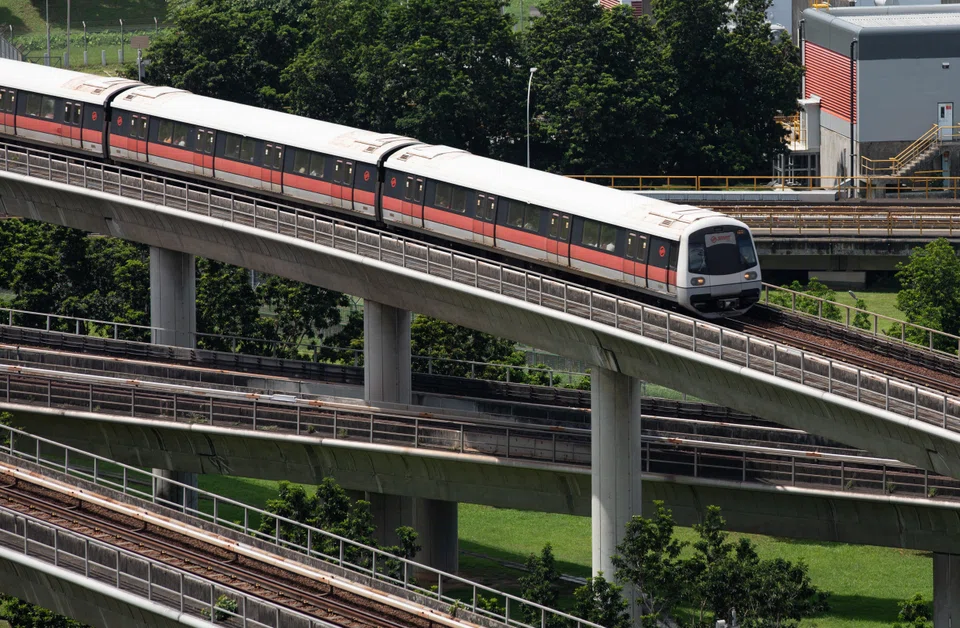
AROUND the world, governments have embarked on open-data initiatives such as open banking and open retail, where collected data is freely shared. In Singapore, one example is SimplyGo, a fintech platform developed by the Land Transport Authority.
Any user of public transit in Singapore can freely register an account with SimplyGo. Based on the payment cards used when tapping in and out of buses and MRT gantries, users can download data on their bus and train rides over the past 180 days.
The platform provides the origin, destination, and time of each transit ride. The user is free to share these transactions or combine them with transactions from other platforms in any way that might be useful.
Such rich open data can be used as part of a policy mix, to build an urban travel system fit for the future and help Singapore meet its climate targets.
Smart incentives
Singapore pioneered road pricing in the 1970s, to the envy of peer cities that were mired in traffic. Today, the city-state can continue leading the way by designing smart demand incentives consistent with the Singapore Green Plan 2030.
To ride the wave of gamification, SimplyGo could expand from its current focus on public transit to an open-data platform that covers all urban travel transactions.
With a user’s consent, all retailers in the land transport space – not just bus and rail operators – could then report transactions associated with the user’s NRIC-linked cards.
This means the additional participation of ride-hailing platforms such as Grab and Tada, as well as fuel retailers such as Shell and SPC. With an expanded SimplyGo, these urban travel players could send records of a participating user’s transactions.
These digital transactions, currently available to users in an ad hoc way, would record the origin and destination of ride-hailed cars or the petrol quantity sold.
From the OCBC Climate Index surveys, we’ve learned that Singaporeans are concerned about climate change but find it difficult to convert intentions into individual actions. A comprehensive open-data initiative centered on each person’s urban travel choices could help close this intention-action gap.
Every month, users can find out their “urban travel carbon score”, measured in grams of carbon dioxide equivalent or CO2e per kilometre travelled.
Calculating an average carbon score per km of urban travel is straightforward. Every individual choice matters. For example, a diesel bus ride would contribute 80 grams of carbon per kilometre travelled. An electric bus ride would contribute about half of that, and an electric MRT train ride even less.
In contrast, those commuters choosing the luxury and convenience of a private car ride would add about 200 grams per km to their urban travel carbon score. This would depend on the size and fuel efficiency of the car associated with the ride.
Ride-hailing firms might see a sudden interest in car-pooling, because gamified riders would now split the carbon, on top of splitting the fare.
The government could then introduce rewards for participants who stay below a certain target each month: for example, a S$5 consumption voucher if you remain below 80 grams per km travelled. Did all those car rides blow up your score this month? Well, no problem, try again next month!
Going green via gamification
Details would need ironing out. For example, carbon scores can be tweaked so that buses are not penalised vis-a-vis trains, or to account for the differential cost of road congestion of buses versus cars, beyond the climate-changing carbon emissions.
Should reductions in personal carbon emissions be rewarded too? Aggregating all our individual choices, should we track progress toward a national pledge, helping instill a sense of pride? And so on.
With this fintech innovation, we would be educating consumers on the carbon footprint of how we choose to get around, and rewarding those who are greening their lifestyles.
The game would be voluntary, hopeful, and positive, not shameful and negative. In time, participants could even form teams to increase social support or drive inter-group competitions to further motivate others.
More ambitiously, the education-rewards platform could eventually link up with non-motorised travel – such as step trackers and bicycle distance trackers – as well as other health, food, and housing choices which similarly affect our wellbeing and that of the planet.
With all this, the next time I choose between getting a Gojek to get there faster or catching the train to save money and carbon, I would remember the game I am playing and the rewards that I – and society – stand to gain.
Alberto Salvo is associate professor of economics at the National University of Singapore (NUS) and serves on the University Sustainability and Climate Action Council. Leonard Lee is professor of marketing at NUS and director at the Lloyd’s Register Foundation Institute for the Public Understanding of Risk.
TRENDING NOW

OCBC mobile, online banking services restored after Friday afternoon disruption

SGX CEO Loh Boon Chye to step down; succession planning under way
Waymo founder predicts ‘landslide’ robotaxi adoption in Singapore, driven by high car costs

Vietnam’s northern provinces, not Hanoi or Ho Chi Minh City, are powering near 10% GDP growth

