

How to survive when superpowers are behaving badly
Smaller Asian states need to be nimble in their foreign policy, and agnostic about their allegiances
THE meek shall inherit the earth, said no superpower ever. At a time when both the US and China are flouting international conventions, it’s up to small and medium-size nations to work together to uphold the rules-based order – or at least what’s left of it.
It feels like we are living through a looking glass moment, a world turned on its head. Under President Donald Trump, the US has upended decades of stable foreign policy. He made that abundantly clear on Monday (Feb 24) by breaking with Washington’s traditional position on Ukraine, withdrawing condemnation of Russia’s 2022 invasion at the United Nations (UN) and among Group of Seven countries.
Russia and the US also voted together against a European-backed resolution in the UN General Assembly that called out Moscow’s “full-scale invasion”. They were joined by Belarus and North Korea – hardly Washington’s historic allies – among other countries.
China has been busy, too. Last week, it sent three warships to the international waters near Australia and New Zealand and conducted live-fire drills, causing some commercial airlines to divert flights. Beijing rejected any criticism of its move. When asked about a lack of transparency about the manoeuvres, Chinese Ministry of Defence spokesman Wu Qian said Australia had “deliberately hyped it up”.
Smaller countries are understandably worried, so what should they do when superpowers run amok? History has some valuable lessons.
For starters, there’s safety in numbers. The Non-Aligned Movement was a product of the Cold War, designed as a way for countries to remain independent or neutral, so that they didn’t have to forge an alliance with either the US or the Soviet Union.
The idea for the group, which originated in 1955 at a conference in Indonesia, was to “create an independent path in world politics that would not result in member states becoming pawns in the struggles between the major powers”.
The movement may have lost relevance today, but these ideas are worth reviving as great powers not only compete, but increasingly act in bewildering and belligerent ways. Middle powers don’t have to go it alone. Australia and New Zealand could cooperate even further on their response to Beijing’s live-fire naval drills.
They could join forces to enhance their air and naval surveillance of China’s activities in international waters, noted Donald Rothwell, professor of international law at the Australian National University.
They could also appeal to bodies such as the International Maritime Organization and the International Civil Aviation Organization over how much advance notice is required for high seas live-fire tests. Pushing for a regional “naval code of conduct” would also be useful, given it is likely that China will carry out more of these drills in the future.
Another step would be to enhance New Zealand’s participation in the US-led security pact Aukus. In the past, Wellington has taken only tentative steps towards the grouping, which also includes the UK and Australia, because it didn’t want to be seen as taking sides against Beijing, a vital trading partner.
But the benefits of joining the defence alliance may now become that much easier to sell politically at home, given the presence of Chinese warships in nearby waters.
Neither should small countries refrain from calling out the dangers of great powers going rogue.
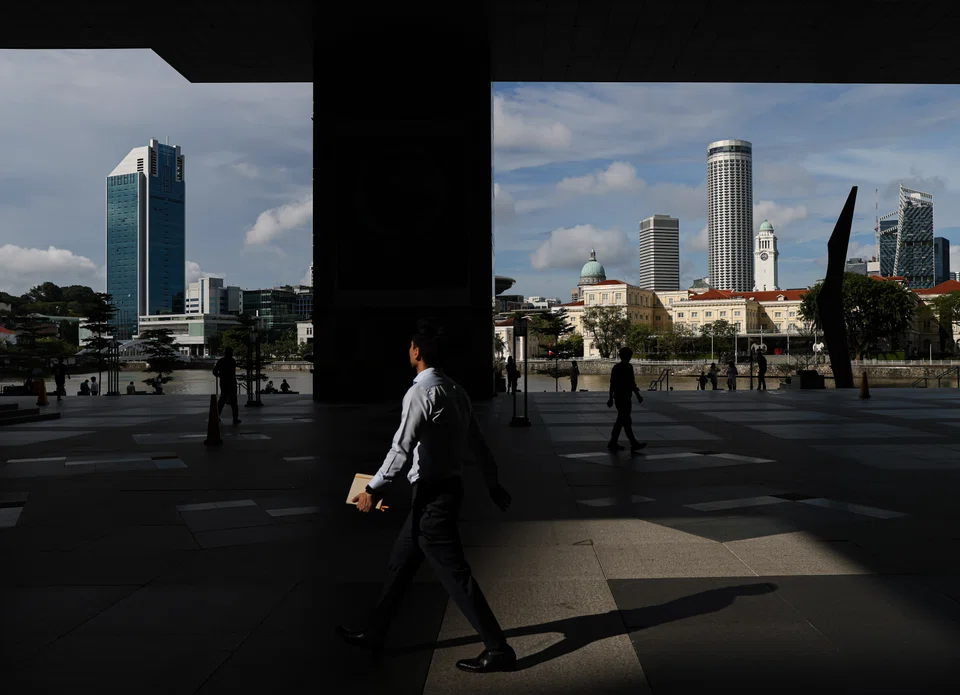
The tiny city-state of Singapore offers a good example. Defence Minister Ng Eng Hen spoke to some of these concerns earlier this month when he called the US out for “now willy-nilly” changing from “liberator to great disruptor to a landlord seeking rent”.
These are unusually harsh words from a country that has typically adopted a hedging approach, balancing its relations with both Washington and Beijing.
Singapore will no doubt still have to do that, but should have a renewed focus on consistently advocating for a liberal international system, and working towards the principles of a world that believes in open and free trade, even if there are fewer examples of the US and China doing that.
Building closer ties with middle powers such as Japan, South Korea, India and Indonesia has also helped the city-state. It has pushed for free trade agreements with a variety of nations and backed the Regional Comprehensive Economic Partnership and the Indo-Pacific Economic Framework for Prosperity, allowing it to have influence far beyond its size.
The alternative is that every country just does what it wants, and the world becomes a more dangerous place.
You could argue that is already happening. Nations are increasing their defence spending, with the global tally reaching US$2.46 trillion in 2024, up from US$2.24 trillion in 2023, according to the International Institute for Strategic Studies. All regions, bar Sub-Saharan Africa, grew spending in real terms last year.
When bullies rule the roost, you have to either adapt or risk becoming collateral damage. Smaller states have their work cut out. BLOOMBERG
TRENDING NOW

First Resources blames El Nino, outside fires for Kalimantan hotspots amid haze scrutiny

High Court rules against Julius Baer’s Singapore trust arm in US$50 million family trust dispute

Singapore key exports jump by higher-than-expected 68.4% in September, led by non-electronics

MSCI proposes standalone status for Indonesia; Jakarta stocks plunge 8%

