

If horse-racing here has run its course, so be it
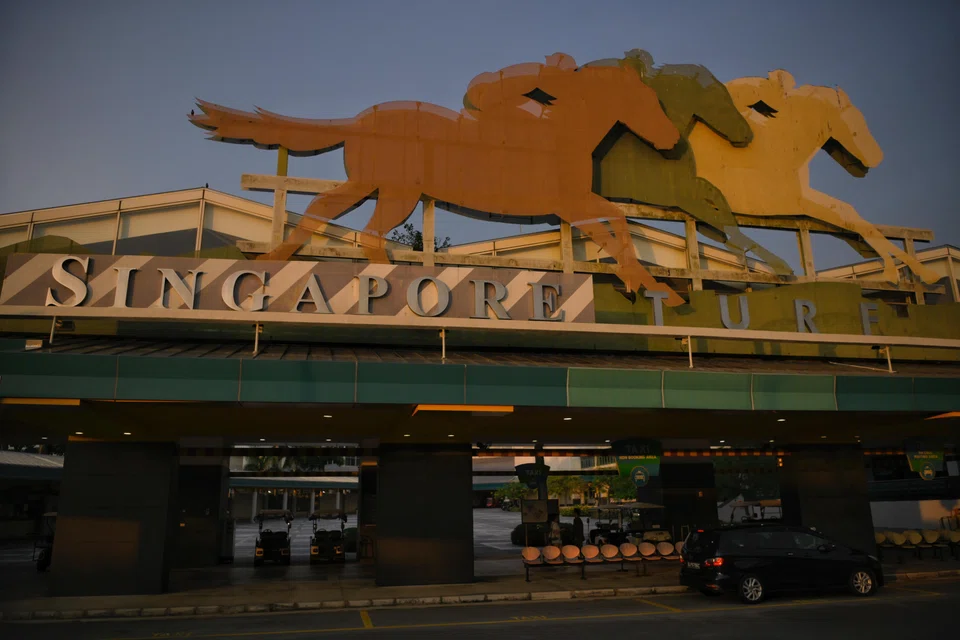
WHEN the news of the Singapore Turf Club’s impending closure was delivered, it was framed in practical terms, with figures that were hard to argue against.
The popularity of horse-racing has plummeted. Average attendance halved from 2010 to 2019, from 11,000 to 6,000 each race day. Post-pandemic, it halved yet again to just 2,600 per race day.
Meanwhile, the racecourse’s 120 hectares can hardly afford to be left unproductive, in the face of the land-scarce island’s increasing demands for space. Far more optimal to use it for housing, not least public housing – with property analysts swiftly calculating that it could host tens of thousands of new homes.
It might be tempting to frame this as yet another example of this city’s utilitarian calculus, in which unceasing urban development necessitates the sacrifice of heritage. Yet such a view arguably puts horse-racing on an undeserved pedestal.
The races may have brought excitement to many everyday punters and added colour to Singapore. But the glamour of the institution clearly owes more to its colonial trappings and elite associations – as seen in the eulogies written when news of the impending closure broke.
Singapore’s horse-racing history and heritage is worth remembering, but we can probably afford not to overly romanticise this colonial legacy. And while the Turf Club’s closure may leave some bereft, its redevelopment stands to benefit a much wider swathe of the population.
There are the tens of thousands of potential new homeowners, for a start. Beyond housing, the Ministry of National Development is studying other potential uses for the land, including leisure and recreation. A nature park or agricultural leisure area would likely have broader appeal – without the risks associated with gambling.
Of course, none of this is to deny the real and profound impact that the Turf Club’s closure will have on the racing community, from owners and jockeys to trainers, stablehands and other staff. Some may be able to further their careers at racetracks overseas, but this is not likely for all the 350 Turf Club workers who face retrenchment.
And leaving the racetrack behind may not be easy, especially for older staff or those who have only ever known the world of horse-racing. The Singapore Manual & Mercantile Workers’ Union, which represents unionised Turf Club employees, stated a particular concern about the “emotional aspect” of how the closure will affect workers.
There are also understandable concerns about the 700-odd racehorses at the club. But those who bemoan the closure for this reason should consider that it merely accelerates the fates of these horses. Racehorses are bred for a singular purpose, yet their racing careers typically last just a few years. The lucky ones may be retrained or retired abroad, but some will eventually be euthanised. It is the racing industry itself, not the closure of any one racetrack, that determines this.
As unfortunate as the Turf Club’s closure is for these 700 horses, from a longer-term perspective, removing one source of demand should mean that fewer horses are bred into such a life.
As Second Minister for Finance and National Development Indranee Rajah noted when announcing the closure, horse-racing is on the decline in countries such as the UK and US too. While recognising the significance that horse-racing has had to some, we need not bewail its passing here. Perhaps the sport as a whole has had its day.






