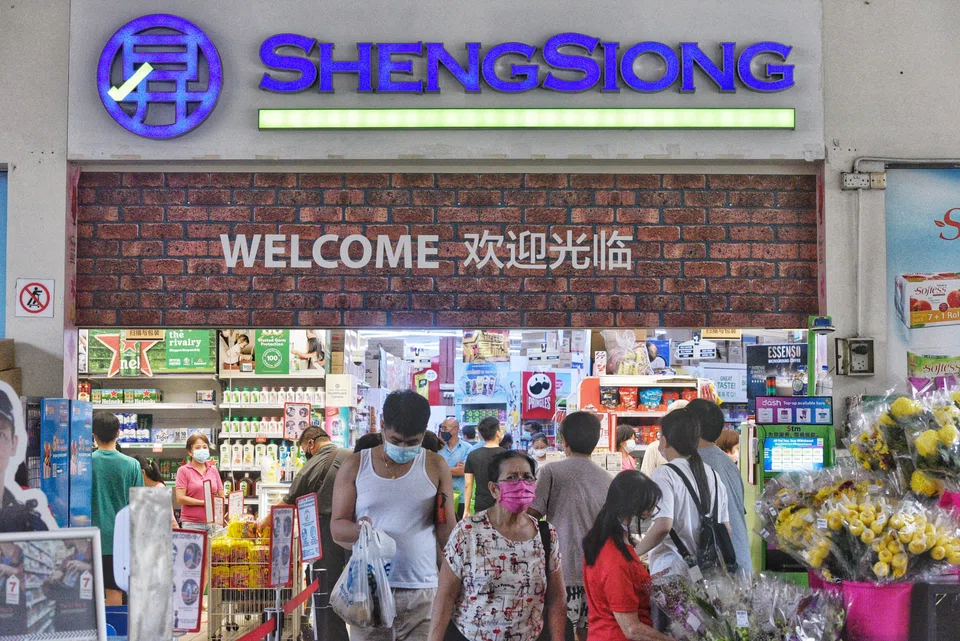
If Sheng Siong can’t add an independent director, maybe it should cut a family member instead

WHEN Singapore Exchange (SGX) queried Sheng Siong last week about the independence of its board, the grocery chain justified the composition of its board by saying that it was unnecessary to add more independent directors (IDs).
If it is true that Sheng Siong cannot maintain a larger board, perhaps the company should instead remove the directorship of a family member to ensure that the interests of the company’s stakeholders and minority shareholders are adequately protected.
SGX last week queried Sheng Siong why its board did not meet the Code of Corporate Governance’s guideline that the majority of a board should be independent and non-executive when the chairman is not independent.
Sheng Siong’s board currently has 10 directors, of whom five are non-executive and independent. Chairman Lim Hock Eng is a brother of chief executive officer (CEO) Lim Hock Chee. Other family members on the company’s board include managing director Lim Hock Leng, also a brother of the chairman; and executive director Lin Ruiwen, who is the daughter of the chairman.
The company argued that IDs and non-executive directors make up half the board, and added that the board is able to “exercise objective judgement through constructive dialogue” and that “no individual or group of individuals dominates its decision-making process”.
But Sheng Siong’s argument misses the point that the independent directors on its board must have more than the ability to spark lively discussions – they must have actual power to ensure that the interests of the company’s stakeholders are looked after.
The Code of Corporate Governance’s guidelines exist for a reason.
When a board of directors comprises mainly members from the same family, there are likely to be conflicts of interests – primarily between what serves the interests of these family members, and what would benefit the company and its swathe of stakeholders such as employees, shareholders, customers and suppliers.
For instance, Lian Beng Group in September last year was thrust under the spotlight over its unwillingness to disclose the remuneration of its five employees that are family members of a director, the CEO or a substantial shareholder. The company cited a potential impact on its ability to attract and retain management talent.
In 2015, two of Lian Beng’s independent directors resigned over disagreements related to the performance bonus paid to the company’s chairman-and-managing-director and his two siblings.
While credit must go to Sheng Siong for ensuring that the board’s nominating and remuneration committees are composed entirely of independent directors, the potential for conflicts of interest extend beyond pay and position.
Conflicts could also occur in corporate actions and mergers and acquisitions. In a rights issue, for instance, a controlling shareholder’s concerns about dilution or even a stake increase can affect decisions about how the rights offering is priced and structured.
These conflicts can be effectively mitigated or avoided by independent directors who, as the Code explains, have “no relationship with the company, its related corporations, its substantial shareholders or its officers that could interfere, or be reasonably perceived to interfere, with the exercise of the director’s independent business judgement in the best interests of the company”.
These directors must be able to do more than provide “constructive dialogue”. With its split of non-independent and independent directors coming in at 50-50, Sheng Siong risks being stuck in a deadlock if contentious transactions or difficult corporate decisions come up.
The problem with such structural deficiencies in corporate governance is that when things go wrong, the price is often high, and the rectification, often difficult.
The easy answer would be to hire another independent director to form an independent majority. But Sheng Siong might be right that its 10-member board is already large for the S$2.5 billion market capitalisation company.
The Lims might be better off having some difficult family conversations and removing the directorship of one or more of the family members. The family can continue to contribute just as well as part of management, but they should not hold so many board seats.
While Sheng Siong has arguably been one of the better examples of family-run listcos, SGX’s queries should be a wake-up call to the company that there are weaknesses in its foundation even though family members on the board have had a good run so far. If the Lims truly have the long-term interest of the company at heart, they should recognise that even the freshest produce will one day spoil.
At a time where environmental, social and governance factors are becoming more important for listed companies, Sheng Siong should take this opportunity to review the composition of its board of directors and ensure current and future investors that its corporate governance is founded on best practices.
TRENDING NOW
He built the Vingroup empire. Now South-east Asia’s richest man is handing some key roles to his sons
Fed hike throws Singapore banks a margin lifeline; UOB likely to benefit more
Luxury properties seized in S$3 billion money laundering case fail to sell at auction
US stocks: Tech leads Wall Street to higher close as oil eases, Treasury yields dip