

IMF warns investors to fasten their seat belts
Amid geopolitical instability and World Bank estimates that global GDP growth will be the slowest since the 1960s, the ride ahead is turbulent
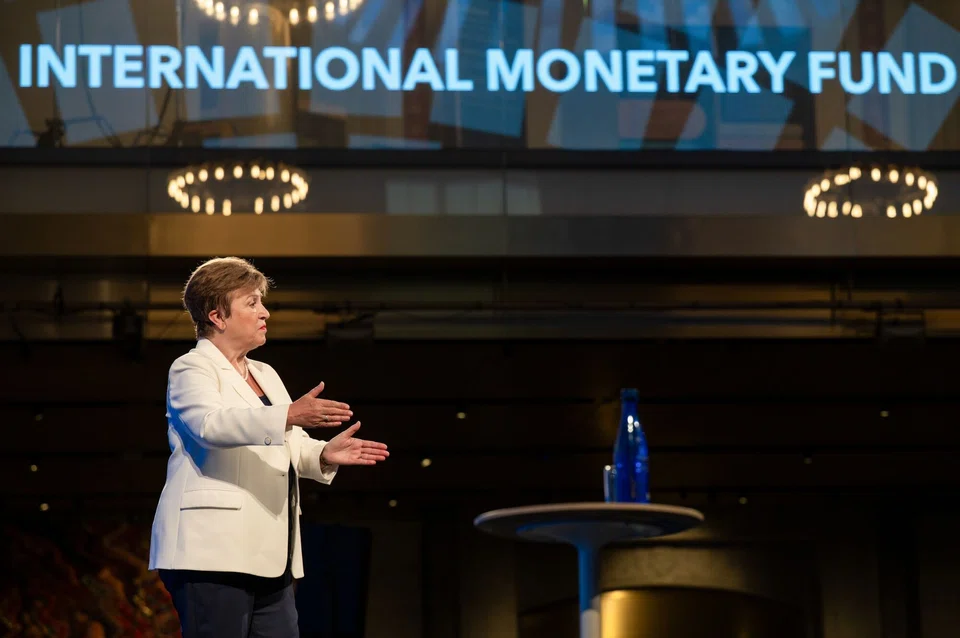
CURTAIN-RAISER speeches for International Monetary Fund (IMF) events are not always headline-makers. However, IMF managing director Kristalina Georgieva used her speech on Wednesday (Oct 8), ahead of the 2025 Annual Meetings of the World Bank Group next week, to warn investors to “buckle up” as “uncertainty is the new normal and it is here to stay”.
The context for her address at the Milken Institute was gold prices hitting US$4,000 an ounce for the first time, with holdings of monetary gold now exceeding one-fifth of the world’s official reserves.
While numerous stock markets are at or near record highs, this surge in gold prices highlights the degree of investor angst as geopolitical and wider market uncertainty – including from a weaker US dollar – bite.
Challenges in Asia
Georgieva has previously acknowledged the multitude of headwinds the global economy is facing. These include youth discontent around the world, as many young people foresee a less-than-rosy future for themselves, “from Lima to Rabat, from Paris to Nairobi, from Kathmandu to Jakarta”.
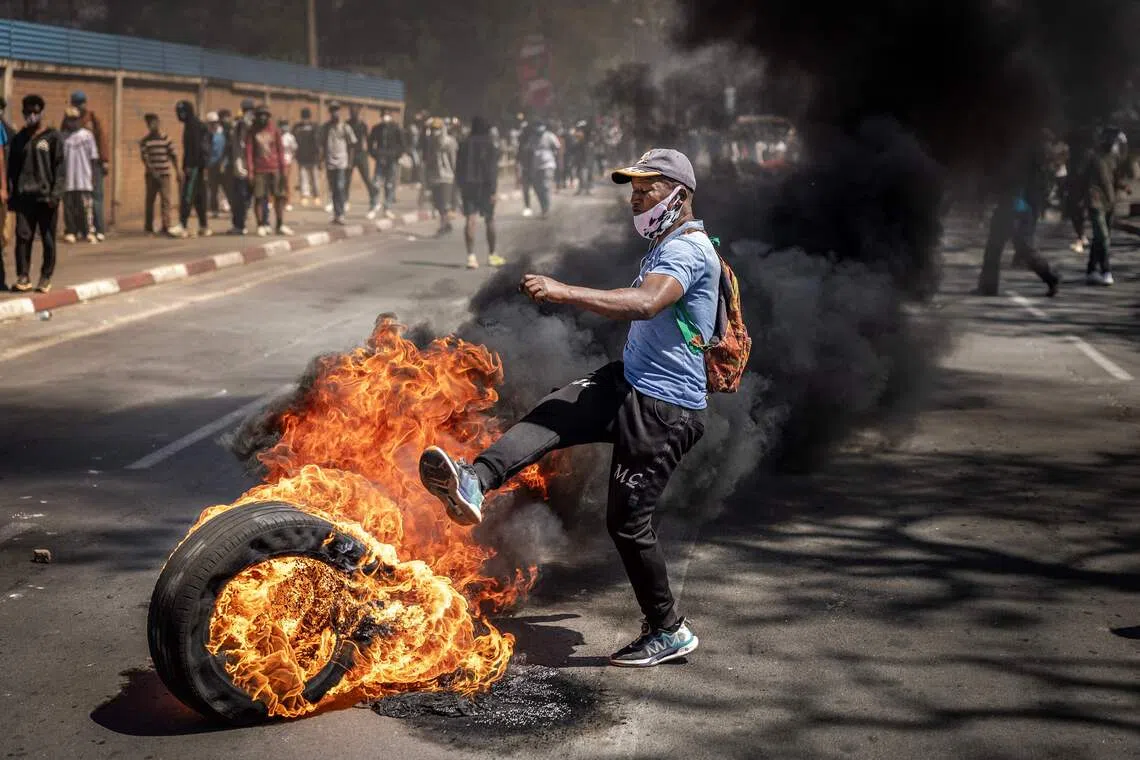
In Asia, these events have included youth protests in Nepal that unseated the government of former premier KP Sharma Oli; large-scale unrest in Indonesia; troubles in Sri Lanka which led to the end of ex-president Gotabaya Rajapaksa’s rule; and protests in Bangladesh that swept ex-prime minister Sheikh Hasina from power.
Georgieva highlighted regional reforms that could help change this picture. She urged Asian nations to deepen trade and carry out reforms to strengthen the service sector, including lowering non-tariff barriers and boosting regional integration, which she said could lift gross domestic product by 1.8 per cent in the long run.
In China, specifically, she called for boosting fiscal spending on social safety nets and the property sector clean-up, while urging reduced spending on industrial policy initiatives.
With global public debt projected to exceed 100 per cent of GDP by 2029, the IMF chief rightly highlighted that this is a challenge, post-pandemic, not only in many industrialised democracies, but also key emerging markets.
A big worry here is that governments may not have the fiscal firepower to help counteract another big financial crisis – akin to the 2007 to 2008 international shock intensified by the crash of Lehman Brothers – let alone another global economic trauma like the Covid-19 pandemic. Wider concerns include the impact of rising sovereign indebtedness on interest rates.
“Before anyone heaves a big sigh of relief, please hear this: Global resilience has not yet been fully tested. And there are worrying signs the test may come.”
IMF managing director Kristalina Georgieva
Georgieva also highlighted the lingering impact of US President Donald Trump’s trade tariff agenda and its associated uncertainties. She added that American inflation could rise if businesses pass on more of the costs of tariffs, or if goods previously designated for the US market force a new round of tariff hikes elsewhere in the world.
To be sure, the global economy is holding up better than expected despite these and other major shocks. Indeed, the IMF in July raised its global growth forecast by 0.2 percentage point to 3 per cent for 2025, and by 0.1 percentage point to 3.1 per cent for 2026.
Global resilience not yet fully tested
Yet, Georgieva warned: “Before anyone heaves a big sigh of relief, please hear this: Global resilience has not yet been fully tested. And there are worrying signs the test may come.”
Indeed, there may be a growing risk of what some call a polycrisis – a number of overlapping economic and geopolitical challenges. In other words, an era of successive, interconnected disruptions in which a permanent sense of crisis is the new normal.
This has implications not just for politics, but also for financial markets. Georgieva noted that financial market valuations are heading towards levels last seen during the dotcom bubble a quarter of a century ago, whereby any abrupt shift in sentiment – perhaps over the potential of artificial intelligence – could impact growth.
On the geopolitical front, the 2020s increasingly risk becoming a “Warring Twenties” in Ukraine and well beyond. This is in contrast with the 1920s, now widely known as the Roaring Twenties, a period of economic prosperity before the Great Depression.
The context for today’s growing geopolitical tensions is a forecast by the World Bank that, by 2027, global GDP growth may average only around 2.5 per cent in the 2020s. This is the slowest pace of any decade since the 1960s.
The multiple global fractures on the landscape right now include health risks in the post-pandemic era, climate crises and economic inequality. On the security front, there is the continuing threat from international terrorism and North Korea’s acquisition of nuclear weapons in Asia.
Instability may be at post-Cold War highs
Such international political turbulence has been a recurrent feature for several years now. Since around 2016, several market commentators have been asserting that geopolitical risks are at a post-Cold War high.
That year, of course, was noteworthy for marking the peak of anti-establishment populism riding the anti-globalisation mood – which may have been the election of Trump as US president the first time round.
What this underlines is that many hopes and expectations for how the post-Cold War world would look have also been dashed.
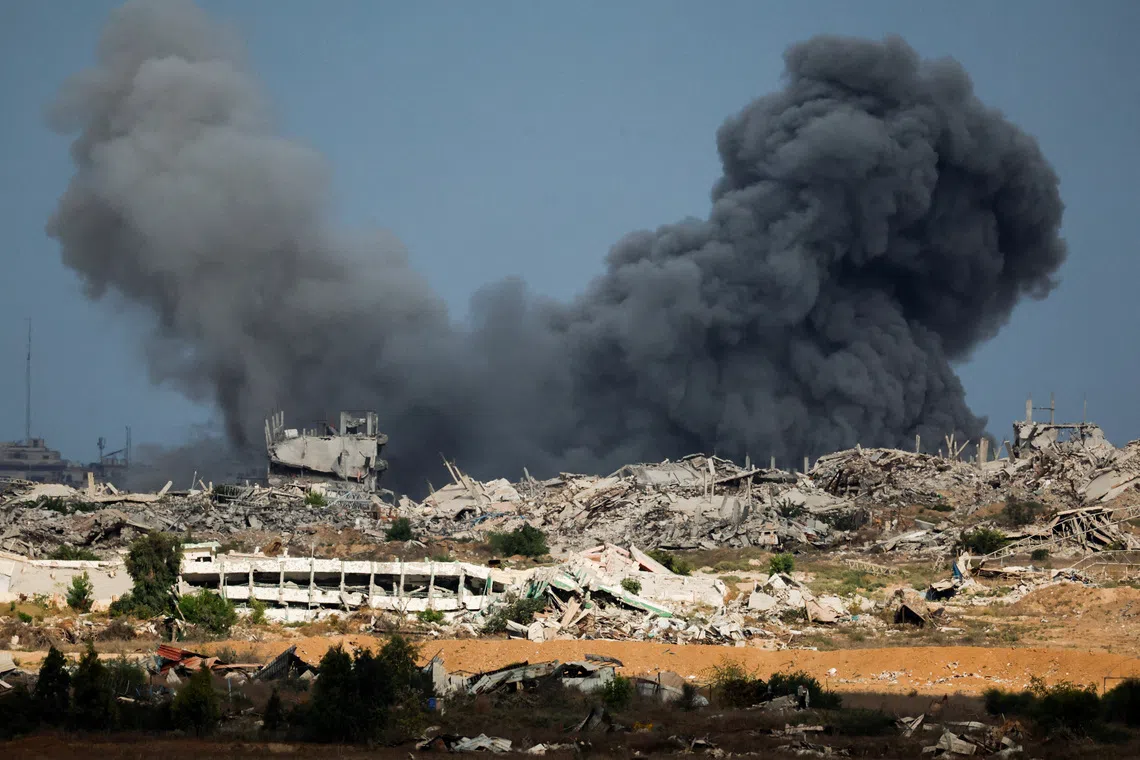
For instance, the vision of a universal order of liberal, capitalist and democratic states living in peace has been replaced by a reality in which authoritarian states, such as Russia, appear to be on the rise. This is alongside the ascent of multiple fragile nuclear weapon states across the world, including Pyongyang.
Still, the post-Cold War world contains some opportunities for potentially greater stability.
One example is on global climate change, with numerous agreements signed in recent decades from Kyoto in 1997 to Paris in 2015. While these pacts are by no means perfect, they represent a welcome effort to tackle global warming and, crucially, put international frameworks in place.
Moreover, the regular review framework means that countries can toughen their response to climate change in the future, especially if the political and public will to tackle the problem increases.
These frameworks are potentially very important stepping stones that could become foundations for sustainable growth for billions across the world.
Nevertheless, Georgieva is right to highlight that, overall, uncertainty remains at very high levels and may only grow. Little wonder many investors are fastening their seat belts for what may be a turbulent ride ahead.
The writer is an associate at LSE IDEAS at the London School of Economics






