India and Pakistan once again at war but will it go nuclear?
Nuclear weapons theorists don’t think so; hopefully they are right
AS IF life were not difficult enough for people of the Indian subcontinent that its two nuclear powers should be again at war with each other.
After terrorists killed 26 Indian tourists in a picturesque little resort town in Kashmir last month, Indian Prime Minister Narendra Modi threatened to hunt the “terrorists and their backers … to the ends of the earth”. He then moved to “suspend” the Indus Water Treaty, that has stood since 1960 and sets out how water from the Indus River system can be used by both India and Pakistan. It was brokered by the World Bank and has survived three Indo-Pakistan wars.
The suspension sparked a fierce reaction from Islamabad. Pakistan is downstream in the river system but the water accounts for no less than 80 per cent of the country’s farm irrigation water and for its hydroelectric dams. Pakistan has often accused India of diverting water upstream by building weirs and dams. India has always denied doing any such thing.
This time Islamabad duly proclaimed that any move to stop the flow of water would constitute an “act of war”. A Pakistani minister then warned: If they (India) stop water, they should be ready for war. Ghori, Shaheen and Ghaznavi (Pakistan’s missile systems) are not for display. We have kept them for India. We have not kept 130 atomic weapons for a showpiece.”
The water treaty has provisions for dispute resolution and sets forth distinct procedures to handle issues which may arise: “Questions” are handled by the commission in which both sides are represented. “Differences” are to be resolved by a neutral expert; and “Disputes” are to be referred to an ad hoc arbitral tribunal called the “Court of Arbitration”. Modi seems to have put this framework in abeyance.
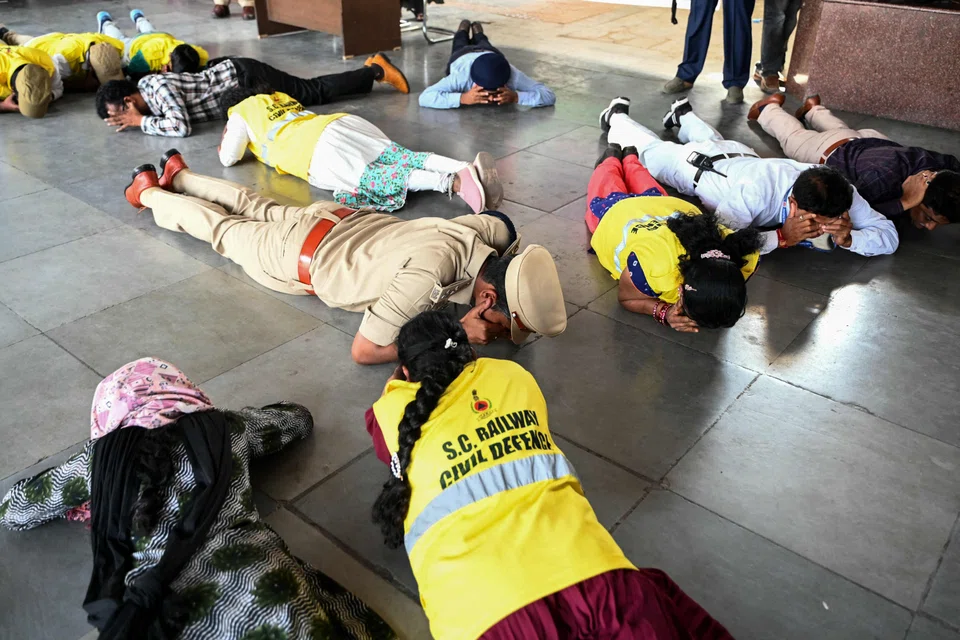
On Wednesday (May 7), Delhi ordered air and missile strikes and Pakistan responded with artillery fire. Indian state authorities have been told to prepare for war. The last time India conducted such a nationwide exercise was during the 1971 India-Pakistan war, which led to the birth of Bangladesh. But that was before both sides acquired nuclear weapons.
So, will this particular round of chest thumping and military action lead to a nuclear war? Nuclear weapons theorists opined at the time when the two sides tested their weapons in 1998 that nuclear weapons could, counter-intuitively, prove to be a check on full-scale wars.
Kashmir will always be an intractable problem. Delhi and Islamabad both claim Kashmir in its entirety. Neither side can give up its claim to the whole state even if the reality is that each controls only a portion – places recognised internationally as either “Indian-administered Kashmir” or “Pakistan-administered Kashmir”. Both Pakistan and India fear that any concession will trigger a cascade of other regions wanting to go their own way. This idea of having no good options while being compelled to act is something that has haunted decision-makers since independence.
At the same time, both sides are pandering to their domestic constituencies and cannot be seen to be backing down in the face of threats and attacks from the other side. Escalation, both in rhetoric and in military skirmishes, can take on a momentum of its own. Ask any historian of World War I. One-upmanship on both sides has locked them into their current trajectory. The world can only hope that those nuclear weapons theorists are right.
TRENDING NOW
Grab CEO’s wife Chloe Tong on life with Anthony Tan and finding her purpose
Singapore-based Ryde accused of pump-and-dump fraud in class action lawsuit
Malaysia’s F1 return: A low-cost second chance, possible Singapore boost
Canada is upping oil flows to Asia, but South-east Asia’s refineries aren’t ready to handle them yet