India intensifies its pitch for Global South leadership
New Delhi has conducted a whirlwind tour of economic and political diplomacy
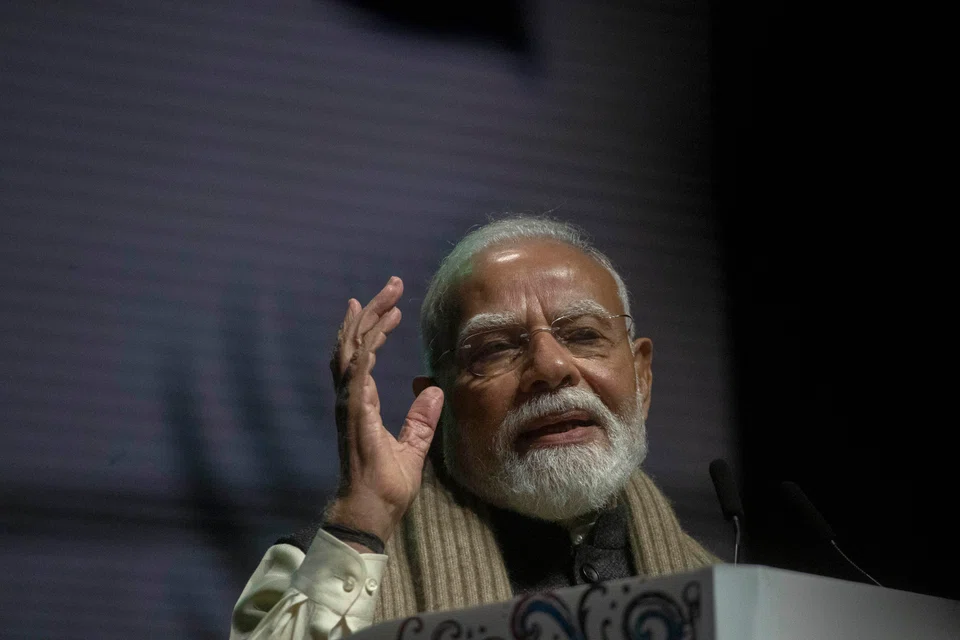
UNDER Indian Prime Minister Narendra Modi, New Delhi is joining China and Brazil in seeking leadership of the Global South in an increasingly multipolar world.
India’s global diplomacy has been turbocharged recently, with separate visits by Modi and the country’s External Affairs Minister S Jaishankar across the Middle East, North America, Europe and the Asia-Pacific.
This included Dr Jaishankar’s trip to the United Nations on Monday (Jul 13), where he launched India’s official campaign for non-permanent membership of the UN Security Council (UNSC) in 2028 to 2029.
India asserts that, without reform of global governance, the balance between risk and opportunity will tilt towards the downside. This is why New Delhi is pushing to reform the UNSC, such as by expanding both its permanent and non-permanent categories, to try to reflect today’s geopolitical realities.
On Monday at the UN headquarters, Dr Jaishankar said: “India’s focus will be on working for a secure, peaceful and equitable world – a world where the voice of the Global South is heard in equal measure… A world where multilateralism reflects contemporary realities and provides effective solutions, not remaining a bystander.”
This theme was picked up by Modi in his address on Jul 7 to the Indonesian parliament, on the 75th anniversary of bilateral diplomatic relations. He highlighted how “developing countries like ours are seeking equal participation and a greater role in global affairs”.
India’s bid for Global South leadership is expected to be a big feature of the rest of Modi’s prime ministership, at least until India’s next general election in 2029.
While New Delhi is unlikely to fully realise its ambitions to reform the UNSC any time soon, developing countries such as Indonesia are increasingly taking notice of its pitch.
This was true in Jakarta where Modi met President Prabowo Subianto to celebrate their friendship as two of the world’s three largest democracies. Modi highlighted that the distance between India’s Great Nicobar Island and Indonesia’s Aceh is around 150 km, meaning they are closer than the island is to some of India’s own states.
Meanwhile, Prabowo said recent genome testing shows that he has Indian DNA, as he highlighted the huge influence of India on Indonesia, including through the Sanskrit language.
Beyond these warm words, Modi’s trip reinforced economic and political ties with Indonesia by strengthening their bilateral Comprehensive Strategic Partnership.
Ties were deepened in multiple areas, such as clean energy, critical minerals, digital tech, defence and maritime security – a key topic given the Asean member state’s strategic location at the intersection of the Indian and Pacific Oceans.
Reshaping international governance
By forging a global campaign that straddles both economic and political diplomacy, the Modi team is making its case for leadership of the Global South.
Take the example of New Delhi’s commitment to trade liberalisation, with a series of deals agreed in the last couple of years. This includes agreements with the EU, the UK, Oman and New Zealand, which Modi visited from Jul 10 to 11 – becoming the first Indian prime minister to do so in roughly four decades.
One argument made by New Delhi is that reform of global economic and political governance, including at the World Bank and International Monetary Fund, will allow the world to better adjust to the fast-changing landscape.
The danger otherwise, it asserts, is that a growing number of industrialised nations – especially those falling behind in competitiveness – will promote narratives about the international economy becoming “a zero-sum game”, in the words of Dr Jaishankar.
The Indian foreign minister diplomatically did not mention specific states, but they would presumably include the US, under President Donald Trump with his protectionist agenda.
Dr Jaishankar and Modi are still smarting from the White House’s decision in 2025 to double tariffs on New Delhi from 25 to 50 per cent, owing to India’s increased purchases of Russian oil. That development rocked the two countries’ relationship, slowing the progress of a trade deal between Washington and New Delhi.
By contrast, as part of his renewed commitment to trade liberalisation, Modi is promoting what he calls India’s civilisational approach towards global engagement under the philosophy of “Vasudhaiva Kutumbakam”. This translates to “the world is one family”. As part of this principle, the Indian prime minister has asserted a need for the Global South to have a bigger influence in shaping international economic and political decisions, as the centre of the world’s gravity shifts from the industrialised world.
This was a message that Dr Jaishankar also took to Qatar, Bahrain, Kuwait and Oman during his Jul 5 to 10 trip to the Middle East.
Indeed, cooperation between Gulf Cooperation Council (GCC) states and India has risen remarkably in recent years, with both sides hoping to conclude a trade deal.
In 2025, India constituted around 28 per cent of GCC’s trade with Asia, the second-highest total after China, according to the think tank Asia House.
Taken together, Modi’s pitch for leadership of the Global South may therefore only intensify in coming years.
But this could heighten rivalry between New Delhi and other powers, including Beijing – which would further recalibrate risk and opportunity in the changing global landscape.
The writer is an associate at LSE IDEAS at the London School of Economics