India’s road to 2047: Lessons from Singapore
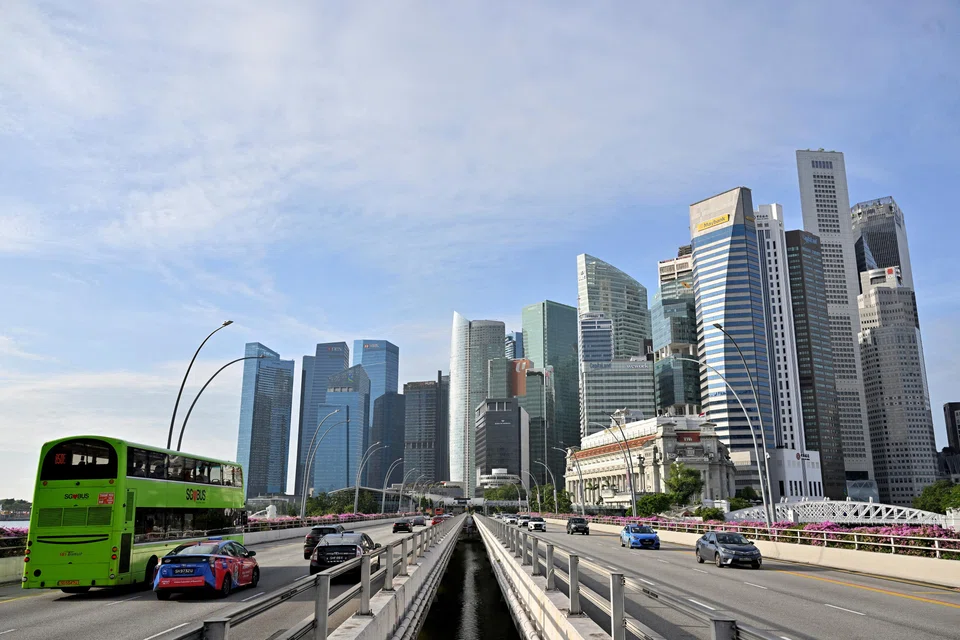
THE close ties between India and Singapore have a history rooted in strong commercial, cultural and people-to-people links across a millennium.
Singapore is India’s largest trade partner in the Asean region. It is also India’s leading source of foreign direct investment. The inaugural meeting of the India-Singapore ministerial roundtable in 2022 provided an ambitious road map for strengthening the strategic partnership between the two nations in a range of emerging areas such as digital connectivity, fintech, green economy, green hydrogen, skill development and food productivity.
Last year, India’s real-time retail payment system, Unified Payments Interface (UPI), and the equivalent network in Singapore, PayNow, were integrated to enable faster remittances between the two countries at a competitive rate. As we progressively add more users, the PayNow-UPI linkage continues to facilitate trade and people-to-people links between the two countries.
Skill development has emerged as another key pillar of the strategic partnership between India and Singapore. World-class skill centres have been established in Assam, Odisha and Delhi, with technical assistance from Singapore. Also of tremendous relevance to India is Singapore’s model of integrating skilling into education. India’s National Education Policy 2020 is specifically focused on providing early exposure to vocational education in middle schools.
India has been attracting more manufacturing investment to its shores since 2014 when Prime Minister Narendra Modi launched the Make in India campaign. In 2022, the number of firms that worked with Singapore’s EnterpriseSG to enter India increased by more than 40 per cent compared to pre-pandemic 2019. Manufacturing was among the top three sectors represented in these companies.
From a travel and tourism perspective, India has grown in importance for Singapore over the last decade. In 2019, India was the third-largest source of tourism for Singapore, with 1.41 million Indians visiting the country. Post-Covid, Indian tourists have become the second-largest source of visitors to Singapore.
India has made remarkable progress in the last 10 years, rising from the world’s 11th-largest to the fifth-largest global economy, with projections of becoming the third-largest economy in the near future. In the last decade, India’s capital expenditure, renewable energy capacity and solar energy capacity has increased five times, three times and 20 times respectively. Over 135 million people have come out of poverty in the last five years. The average income of the middle class and the participation of women in the workforce are constantly increasing.
This is a particularly interesting moment for India as we have recently concluded a successful G20 presidency against the backdrop of profound changes in the location of global economic activity, environmental challenges, technological change and strained multilateralism. The G20 New Delhi Leaders’ Declaration was adopted with consensus on accelerating strong, sustainable, balanced and inclusive growth. Singapore actively contributed to the G20 discussions in its national capacity and as the convenor of the Global Governance Group.
It is also a crucial time as we strive to fulfil our pledge of making India a developed country by 2047, in a large and diverse democratic society. In the words of Prime Minister Modi, “it is time for new dreams, new resolutions and continuous accomplishments”. Singapore, with its forward-looking urban and logistics planning, drive for competitiveness and one of the world’s most business-friendly environments, will continue to be a valued friend and partner in India’s journey.
There are three elements which will be especially relevant for India in the road ahead to 2047: resilience, inclusion and uncertainty. These need to be managed, while maintaining, and indeed reinforcing, the momentum of high-quality growth.
In a continental country like India, local shocks arising from extreme climate events, and structural changes like the energy transition, will entail greater labour market flexibility and mobility. This has implications for everything from transport infrastructure to housing markets. Here, there are lessons to be learnt from Singapore which, as a small city-state with limited natural resources, has adapted to constantly changing circumstances through long-term urban planning and contingency plans for different scenarios.
The second crucial element is inclusion, which is partly about social protection, but even more about the future of work. India is blessed with a young, technology-savvy labour force and a vibrant service sector. There are legacy issues such as a high proportion of the non-agricultural labour force in the unorganised sector and the proportion of women’s time devoted to the care economy. India will undoubtedly gain from moving to a more unified single market, where both physical infrastructure and new technologies can make a big difference. Singapore has pioneered artificial intelligence (AI) in Asia and I noted with interest the plan to triple the pool of AI experts in Singapore to 15,000 as part of the National AI Strategy 2.0 newly unveiled in December.
Finally, there is the issue of uncertainty. Niti Aayog, being the Indian government’s premier policy think tank, is charged with devising a vision and methodology – which for us is unprecedented, but lies at the heart of Singapore’s own success. I personally have a background in scenario techniques from being at Shell, which scan the horizon for long-term trends that seem likely to persist and overlay these with other developments which are more fluid. As I see it, the axes of long-term scenarios are India’s own demography and demographic trends elsewhere in the world; the impact of climate change and technology; and the likelihood that two of the three largest economies in the world will not be among the richest.
But how this is actually practised in a governmental setting is something in which Singapore has considerable experience. Singapore is also well-informed about India’s states, having been a long-term partner and investor, and I look forward to an exchange of views on how India can prepare for both positive and negative shocks at the national and sub-national levels.
The writer is vice-chairman of Niti Aayog, a public policy think tank of the Indian government. He is in Singapore this week (Jan 16-18) under the Ministry of Foreign Affairs’ distinguished visitors’ programme.