
THE POLITICS THAT MATTERS TO BUSINESS

Indonesia’s elections: Continuity and potential surprises
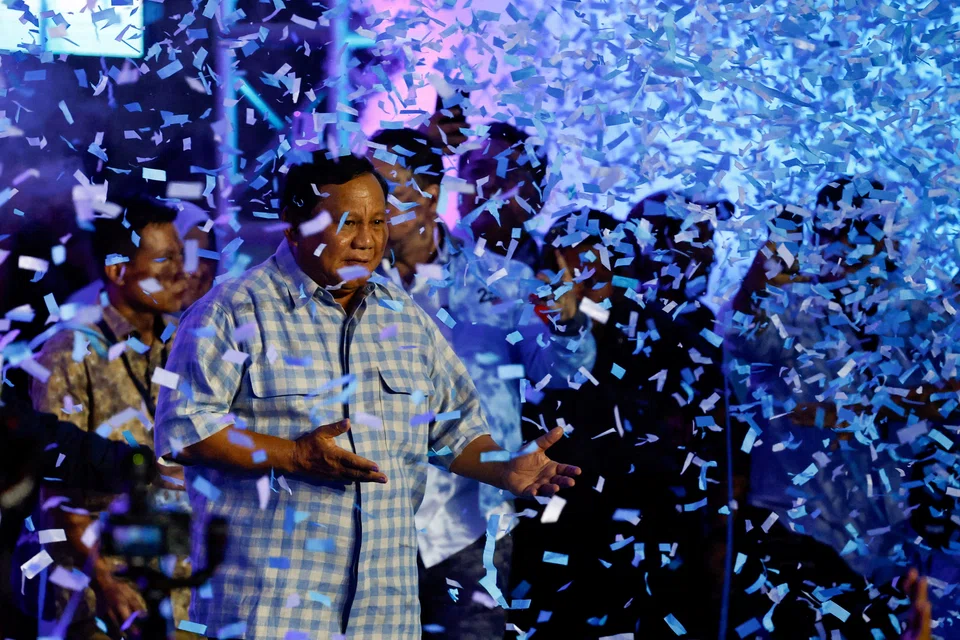
    • During his campaign, Prabowo managed to turn his image into one that appealed to the young as a likeable uncle.
    • During his campaign, Prabowo managed to turn his image into one that appealed to the young as a likeable uncle. PHOTO: REUTERS
    Published Wed, Feb 28, 2024 · 05:00 AM

    THE presidential race in Indonesia is over and with a clear result. The winner Prabowo Subianto achieved almost 60 per cent of the vote nationwide. The victory is notable for its wide appeal across all demographics including age, race and religion, geography and even party preference.

    This surprised some. As recently as end-2023, the consensus among Jakarta-based political analysts was that there would be a second run-off election without anyone receiving more than half the votes.

    There were, after all, two formidable contenders – the articulate and clever Anies Baswedan, the former governor of Jakarta, and Ganjar Pranowo, who was backed by the Indonesian Democratic Party of Struggle (PDI-P), the country’s largest political force and core of the current government.


    But since the year began, more and more people gravitated towards Prabowo. This was especially after he put Gibran Rakabuming Raka on his ticket to be vice-president. Gibran, the son of the very popular incumbent, Joko Widodo (or Jokowi, as he is commonly known), added significant appeal to Prabowo’s ticket.

    During the campaign, Prabowo also managed to turn his image into one that appealed to the young as a likeable kind of uncle. The campaign promise was one of continuity with the current Jokowi administration, and this resonated with voters, as well as businesses and foreign investors.

    While not without challenges, Indonesia has been growing well, even given the global slowdown and turbulence. Yet, there are surprises in the result, and more may yet emerge in the months ahead.

    Coalition-building and compromises

    There are ongoing challenges to the result, and complaints by some in Indonesia, including that the incumbent president should not have so clearly endorsed his preference. That said, no one expects the polls to be upturned or for mass demonstrations to result.

    This is a positive contrast to past elections, including that of 2019, during which lives were lost when demonstrations turned violent. There was also assurance that appeals to Muslim sentiments were not played up as they were in the 2017 Jakarta gubernatorial election.

    What may be more consequential but less apparent will be the formation of the administration and, even more so, building a strong coalition within the legislature.

    The formula for President Jokowi was based not only on his strong personal support – polling as high as 80 per cent recently – but also on his ability to bring together a grand coalition to help secure legislative support in his second term to pass laws and support key policies.

    Negotiations are underway to achieve a strong majority, but some of the dynamics have changed. The vote for legislative representatives was held alongside the presidential elections, with results that favoured the oldest parties in the country: the PDI-P and Golkar.

    Prabowo’s Gerindra Party was third, with around 13.5 per cent of the seats. Vice-president Gibran and his father Jokowi do not lead any party. The incumbent president is formally a PDI-P member, but the PDI-P has said that it will not join the government and instead form the opposition.

    Building a coalition that can muster enough votes remains likely, as most parties will want to have a share of power and Cabinet posts. But its shape and balance cannot be taken for granted. There is also a question of balance within the incoming team of Prabowo and Gibran.

    The incoming president deserves credit for a savvy campaign, but Jokowi’s support and Gibran’s presence turbo-boosted the backing. How the winners agree to divvy up the responsibilities and privileges from their electoral success will be a big question, and one that interlinks with the coalition to be built, and the Cabinet posts to be assigned.

    Jokowi has been a master tactician, but as his days in the president’s office come to an end, he will not have the same ability to command and convince. While Gibran will be the vice-president, that role is ill-defined and can be sidelined.

    More than a few analysts see a parallel to the Philippines, where the winning combination of Marcos-Duterte proved so powerful at the polls but now seems to be divided in running the country. But that danger can be avoided: after all, one of the masterstrokes by President Jokowi was precisely to bring Prabowo – his two-time electoral opponent – into the Cabinet.

    Again, compromise – between the president and vice-president, and within the coalition to be assembled – will be a key factor in delivering continuity.

    Longer-term issues

    The promise of continuity, while widely welcomed, may not be sufficient. While Indonesia is on a positive track in a difficult world, there are issues that remain to be addressed, and some arise from electioneering.

    Prabowo’s statements have been more nationalistic and populist. He also promised considerable giveaways to the common people. His free-school-meal programme is a cornerstone of his poverty reduction campaign.

    The envisioned scale of this policy is that it will eventually feed schoolchildren, teachers and pregnant women with free lunches and milk by 2029. The policy is likely to cost roughly 460 trillion rupiah (S$39.5 billion).

    This can add to the stresses on Indonesia’s finances. Consider the spending on infrastructure which has been credited for improving daily life and facilitating business. The promise of continuity on infrastructure will however require more funds, including for the new capital Nusantara.

    Populism and continuity will also weigh on the question of subsidies – including those on energy and a number of resources – that account for a significant portion of the budget.

    Squaring such expenditures with campaign promises and also government finances will be a challenge. If not handled well, these could impact Indonesia’s investment grading.

    There are also questions of character and temperament. President-elect Prabowo has been a constant in Indonesia’s ruling elite, coming from an esteemed family, and having run for the presidency before.

    Some controversies still linger from the early years. While he has campaigned successfully to reshape younger voters’ perception of him, the question of how he will act in office remains to be answered.

    He is well accredited for his considerable experience and knowledge of the world, and as an elite. These make for a considerable contrast to initial impressions of his predecessor when he first came into office – and this change in tone will be another challenge to continuity. 

    The writer is chairman of the Singapore Institute of International Affairs and associate professor at the National University of Singapore’s Faculty of Law


