Indonesia’s neighbours can help clear the air on haze-tackling efforts
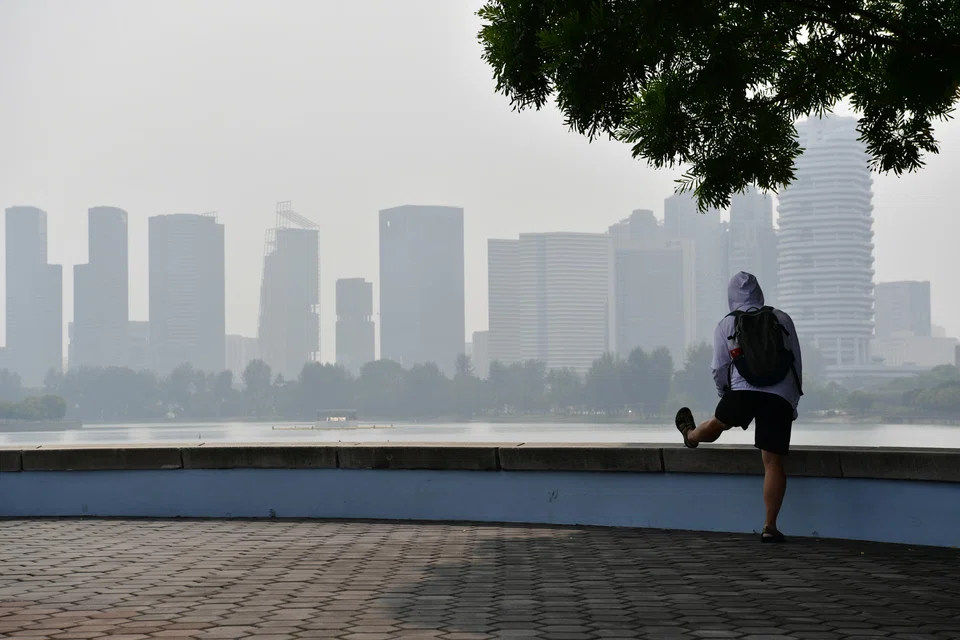
OVER the weekend, Singapore received an acrid reminder of how vulnerable the island is to circumstances beyond its control: in this case, the return of the haze.
On Saturday (Oct 7), residents woke to obscured views, and Singapore’s 24-hour Pollutant Standards Index (PSI) reading rose into the “unhealthy” range for the first time since 2019.
Fortunately, the air quality improved and the horizon cleared up on Sunday, while a change in prevailing wind direction and showers meant that conditions became even better on Monday.
Yet these circumstantial factors cannot be relied upon for longer-term relief. What ultimately matters is what happens at the source: forest fires in Indonesia.
The good news is that progress is being made on that front. On Saturday itself, Indonesian officials said they had sealed off 35 large plantation locations in Sumatra and Kalimantan to facilitate investigations into possible “hot spots” or fires.
Indonesian President Joko Widodo also said he had ordered the military and the police to tackle any hot spots found. This clear public stance and insistence on enforcement is a heartening sign, with Jakarta having further stated that it is prepared to penalise corporations found responsible for such fires.
Even as Indonesia fights its fires, however, Malaysia – which has also suffered from this wind-carried smoke – faces domestic pressure to take action against Jakarta, such as by introducing a law similar to Singapore’s Transboundary Haze Pollution Act.
Enacted in 2014, Singapore’s transboundary haze law targets companies or individuals that are responsible for causing or contributing to haze pollution in the island, regardless of where they are based.
While such external pressure could indeed spur further action, it might be more productive for Indonesia’s neighbours to express solidarity and recognition of Jakarta’s efforts thus far.
According to data from the World Resources Institute, Indonesia’s loss of primary forest due to fire has declined dramatically since peaking around 2015 and 2016 – which was also when Singapore experienced its worst-ever haze conditions.
Government actions have contributed to this improvement, the Institute noted. These include increased fire prevention and monitoring efforts; a moratorium on new licences for primary forest and peatland; and law enforcement.
One might argue that Indonesia’s neighbours bear no responsibility for the origins of the haze, and are not obliged to take anything other than an admonishing stance.
Yet even from the perspective of pure self-interest, it is surely better to aid in tackling this problem, if possible – whether in place of or in addition to punitive measures.
A study by economists at the Nanyang Technological University estimated that the total tangible and intangible cost to Singapore of the 2015 haze episode, which lasted two months, was some S$1.83 billion.
The authors concluded that given the high estimated costs, measures that involve smaller amounts of investment – to avert a bad haze episode or mitigate its effects – would be feasible.
Apart from taking mitigation measures at home, Singapore could offer support, whether financial or in kind, to fire prevention or fire-fighting efforts in Indonesia. This could happen at the governmental level; in the form of investment in corporations central to preventing fires; or in collaboration with non-governmental organisations.