
Indonesia’s US$1 billion bet on the Global South
If Jakarta goes to the New Development Bank primarily for cheap loans, it could find itself repeating the very vulnerabilities it seeks to escape
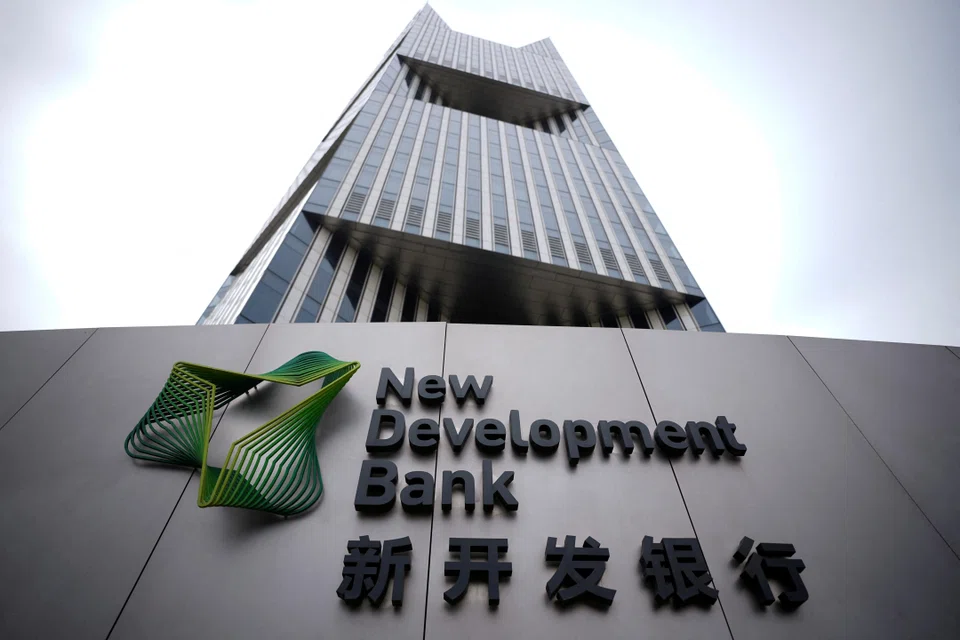
BY ANY measure, Indonesia’s decision this week to deposit US$1 billion into the New Development Bank (NDB) is more than just another line item in the state budget.
It signals a geostrategic pivot – a deliberate step towards the institutional architecture of the Global South, and a faint but unmistakable distancing from the post-World War II order long dominated by the World Bank and International Monetary Fund.
For a country that has consistently emphasised fiscal restraint, the size of the deposit is striking. Indonesia is not flush with excess cash. Ministries have been tightening belts, pushing efficiency and postponing ambitious programmes.
Yet the government still deemed the billion-dollar contribution as a worthwhile bet – a long-term investment in a new circle of development partners and a quieter expression of discontent with the pace of reform in Western-dominated multilateral banks.
The question is not simply why now, but: Why this institution?
The first answer lies in geopolitics: China’s shadow looms large.
Through the Belt and Road Initiative, Chinese state banks and companies have embedded themselves deeply into Indonesia’s infrastructure and industrial ecosystem.
Beijing’s influence is especially visible in the minerals sector – from battery supply chains to nickel smelters – where China-backed investment zones such as the Indonesia Morowali Industrial Park (IMIP) have become centres of both economic output and political controversy.
The recent dispute over IMIP’s airport designation – an unexpected bureaucratic tug of war – exposed how sensitive, and in some ways, unassailable, China’s position in Indonesian downstream industries has become.
Membership in NDB, a bank born from the original Brics coalition and still heavily shaped by China’s economic gravity, is therefore not surprising. It aligns Indonesia with a strategic partner whose footprint on the archipelago is already enormous.
But Indonesia’s calculus is not solely about China. The second factor is widespread frustration with slow and inequitable reform in traditional multilateral development banks.
For years, developing countries have argued that voting power remains lopsided in favour of wealthy nations – especially the US – and that decision-making processes often reflect geopolitical priorities rather than development realities. Loan requirements can be rigid, project evaluations sluggish, and interest rates uncompetitive.
Against this backdrop, Indonesia sees NDB as an entity with more equitable governance, where voting rights could be fairer, loan terms more responsive, and project selection more transparent.
Whether NDB will actually deliver on those hopes is still uncertain; the institution is young, and its track record uneven. But for Indonesia, joining early offers a seat at the table as the rules are written.
Yet enthusiasm must be tempered with clarity. If NDB champions sustainable development, Indonesia bears responsibility for ensuring that its own project proposals truly reflect that mission.
Too often, “green” narratives have been used to justify investments that are anything but. Expanding fossil gas infrastructure under the guise of transition fuels, or accelerating biodiesel blending mandates that depend on palm oil linked to deforestation, cannot be squared with a low-carbon future.
Indonesia’s celebrated biofuel achievements deserve scrutiny when the same policies have contributed to flooding in Sumatra and land conflicts in Papua, its easternmost province.
“Sustainability” is not a decorative adjective; it must be a filter that eliminates false solutions, not a pretext to fund them.
Instead, Indonesia should use its new platform to accelerate genuinely transformative projects. A prime candidate would be a domestic solar component manufacturing ecosystem – the backbone of an ambition to deploy 100 gigawatts of solar panels across Indonesian villages.
Such an endeavour requires not just financing, but also an industrial strategy: clear incentives, technology partnerships, workforce training and domestic content rules that build local capacity rather than create loopholes for imports.
A Green Industrial Policy, pursued seriously, could turn the energy transition into both a climate victory and a nationwide job generator.
Still, even the greenest investment vision must grapple with a sobering reality: NDB is a lender. Its core business model is debt. Indonesia cannot afford to treat it as a bargain-bin alternative to the World Bank or Asian Development Bank, no matter how low the interest rates appear.
Excessive reliance on external borrowing – even from the Global South – carries long-term fiscal risks. If Jakarta approaches NDB primarily as a source of cheap loans, it could find itself repeating the very vulnerabilities it seeks to escape.
A better approach is to see NDB not just as a bank, but as a platform – a vehicle for channelling equitable, high-quality investment into sectors that diversify Indonesia’s economy and deepen its green transition. That means prioritising blended finance, co-investment mechanisms, and partnerships that share risks rather than pile them onto the state budget.
Indonesia’s entry into NDB is, in many ways, a coming-of-age moment: the world’s fourth-largest nation declaring that it wants a bigger voice in shaping global development norms.
But the symbolism will mean little if the choices that follow do not align with the values Indonesia claims to champion: fairness, sustainability and sovereignty over its development path.
A billion dollars is a heavy downpayment on a new future. Now comes the harder work – ensuring that future is truly worth the cost.
Both writers are from the Center of Economic and Law Studies in Jakarta. Bhima Yudhistira Adhinegara is executive director, and Muhammad Zulfikar Rakhmat is director of the China-Indonesia desk



