Investing facts that dull gold’s shimmer
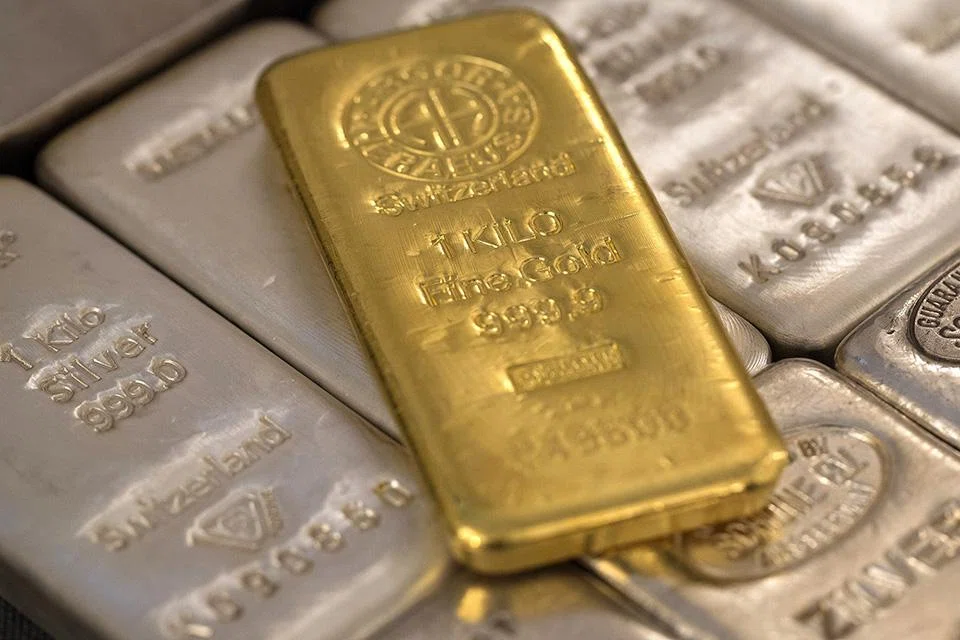
WHAT is more volatile than stocks, with lower returns than bonds? Give up? It’s gold, the precious metal nearing all-time highs and spiking Google searches for “how to buy gold”.
Headlines and forecasts project bigger gains ahead. Even the formerly high-flying crypto crowd is enticed.
But beware: Good gold returns require impeccable market timing. Otherwise, long-term pain ensues.
If you can’t time stocks, which rise far more often than they fall, don’t try gold. Let me show you why.
Gold’s appeal tracks its 9.6 per cent rise this year through late-April, pushing it over US$2,000 per ounce. With 2022’s broad bear market, March’s bank failures and inflation stubbornly fanning fears, many now see this supposed safe haven as an alluring hedge.
But before buying, understand how it behaves. It is a commodity, with no earnings, adaptability or dividends.
Since 1974, when the last vestiges of the gold standard vanished, it annualised 5 per cent gains in US dollar terms and 4.5 per cent in Singapore dollars. Sounds good?
Consider: Singapore stocks have annualised 6.4 per cent. United States 10-year Treasury bonds annualised 6.7 per cent total returns. The S&P 500 Index annualised 11.9 per cent.
Gold’s lower returns would make sense if it had low volatility. It doesn’t.
Looking at one-year standard deviations in US dollars – a measure of yearly return volatility around their averages – bonds’ standard deviation is expectedly low at 8.3 per cent. Famously volatile US stocks’ standard deviation is, unsurprisingly, 15.2 per cent. But gold’s is highest, at 18.6 per cent.
Low returns with high volatility mean that to shine in gold, market timing is key. Gold’s gains can be big, but sporadically, in spurts, with long stagnations and declines in between.
The recent rise illustrates this. Nearing its August 2020 peak of US$2,067, gold is now, 32 months later, almost flat. US stocks are up 26.9 per cent since then – despite 2022’s bear market. Singapore stocks have risen since then, too.
Some starker examples? After a late-1970s boom, gold peaked at the equivalent of S$1,827.67 on Jan 21, 1980. It next made that high on Dec 3, 2010 – 30 years later.
In between were multiple price swings: It fell 65 per cent over two years, gained 64 per cent in eight months, fell 39 per cent in two years, rose 56 per cent over two more years, and fell 58 per cent over the 12 years leading up to 1999.
The next high was S$2,309.25 in November 2011. Analysts presumed more appreciation, especially with eurozone sovereign debt and banking fear exploding. Singapore endured a bear market amid a deep global stock market correction.
That anticipated appreciation didn’t happen. Gold dropped 36 per cent instead, hitting a low in 2014. It didn’t rebound past S$2,309 until March 2021.
If you can time all that volatility, you need no advice from me at all. But most can’t. They buy gold high and sell low after much frustration.
So, timing gold is key. But gold’s returns are positive in just over half of rolling 12-month periods since 1974, whereas US stocks rose 81 per cent of the time.
Singapore stocks rose 55 per cent, much like gold. But world stocks rose 73 per cent of the time in Singapore dollar terms, so diversify globally.
Even if you can’t time stocks well, they work in your favour longer term. Gold, on the other hand, has little usage besides jewellery, so demand for it fluctuates mostly from sentiment swings that defy timing.
If gold has your eye, ask yourself why. Is it the recent glittery returns? Chasing heat is always a wrong reason to buy anything.
Some say it is for inflation or bear market hedging. But 2022 disproves that.
Gold initially climbed after the Ukraine war started. But it plummeted after about two weeks, falling alongside stocks to a slightly later fall bottom.
Gold’s recent climb mirrors Singapore stocks’ more than 15 per cent rise. That isn’t what functional hedges do.
Finally, rethink gold’s long profitless periods. Inflation wasn’t flat or negative during those stretches. Gold lost purchasing power to inflation then. It didn’t hedge.
Gold stocks? They’re okay and may offer dividends, while adding the magic of capitalism to the commodity. But as a group they are, again, more volatile than broader markets, typically rise most in early equity bull markets, and usually act like smaller value stocks. At most, they should simply be a small part of a portfolio.
In my 51 years of managing money, I’ve seen no one with any reliable history timing gold’s sentiment-driven swings. If you can, more power to you. But for most investors, stocks and bonds are simply better.
The writer is the founder, executive chairman and co-chief investment officer of Fisher Investments, an independent investment adviser serving both individual and institutional investors globally.