
THE LEVEL GROUND

Investment story trumps size for Reits; the key is to be sufficiently differentiated 

Lessons can be learned from the contrasting fortunes of Centurion Accommodation Reit and UI Boustead Reit

Summarise
Leslie Yee
Published Mon, Jun 15, 2026 · 12:29 PM
    • As Singapore's Reit sector matures, Reits need to stand out by having unique selling points.
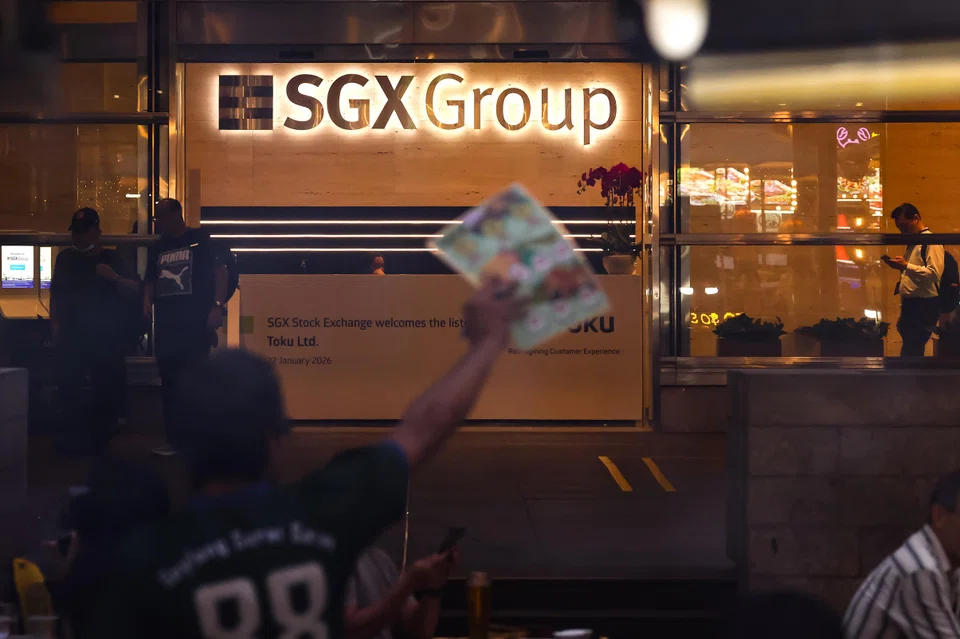
    • As Singapore's Reit sector matures, Reits need to stand out by having unique selling points. PHOTO: YEN MENG JIIN, BT

    [SINGAPORE] Singapore’s largest real estate investment trust (Reit) by market capitalisation, CapitaLand Integrated Commercial Trust (CICT) , currently trades well.

    Its unit price of S$2.34 as at Monday (Jun 15) represented a premium to the end-2025 net asset value (NAV) per unit of S$2.14.

    The trust has size, with total assets of more than S$27 billion at end-2025. Its portfolio’s value will grow bigger with the addition of Paragon and the divestment of Asia Square Tower 2 – an asset swop that would boost its net property income (NPI) and distribution per unit (DPU).


    Given its scale, CICT can carry out asset enhancement initiatives and take part in property development projects, while being able to pay unitholders stable and, possibly, growing DPU.

    By trading well, CICT can also easily raise equity to support growth through acquisitions. The trust’s private placement earlier this year to help finance the proposed purchase of Paragon raised gross proceeds of about S$750 million.

    However, is the success of Reit giants such as CICT and CapitaLand Ascendas Reit (Clar) – both of which count CapitaLand Investment as their sponsor – making life hard for other Reits and potential Reit aspirants?

    While investors have plenty of Reits and business trusts on the local bourse to choose from, they may largely focus on the market leaders, especially as these trusts continue to scale up and grow DPU.

    The big-cap Reits enjoy strong trading liquidity and are well-coveted by research analysts.

    Still, an aspiring Reit that cannot assemble a property portfolio worth, say, S$10 billion or more need not give up on plans to list on the Singapore Exchange (SGX).

    Two new Reits

    Instead, sponsors and managers of property trusts aspiring to list on the SGX can learn useful lessons from the listings of Centurion Accommodation Reit (CAReit) in September 2025 and UI Boustead Reit (UIB Reit) in March 2026.  

    While CAReit made a strong trading debut on the SGX, UIB Reit’s trading debut was weak.

    As at Monday, CAReit traded at S$1.09 a unit, or 24 per cent above its initial public offering price of S$0.88 a unit. UIB Reit traded at S$0.815 per unit, or more than 7 per cent below its IPO price of S$0.88 a unit. CAReit traded at a premium to its end-2025 NAV per unit of S$0.87.

    Both trusts have credible sponsors. UIB Holdings, a fully vertically integrated pan-Asian logistics and industrial real estate platform, is UIB Reit’s sponsor. CAReit’s sponsor is Singapore-listed specialised accommodation provider Centurion Corp .

    CAReit and UIB Reit are not mega-sized trusts. CAReit had total assets of about S$2 billion as at end-2025. The total agreed property value of UIB Reit’s IPO portfolio was around S$1.9 billion as at end-September 2025.

    In my view, the contrasting fortunes of CAReit and UIB Reit could boil down to the former having a unique selling point and the latter lacking one.

    UIB Reit owns a Singapore-centric property portfolio, which includes logistics, business space, high-specs industrial and general industrial properties. 

    However, investors looking to get exposure to high-grade Singapore logistics and industrial properties have abundant choice. Clar, for example, offers investors exposure to these property types.

    Mapletree Industrial Trust and Mapletree Logistics Trust , which are constituents of the Straits Times Index, are strong in Singapore industrial properties and Singapore logistics properties, respectively.

    ESR Reit’s portfolio includes business parks, high-spec industrial, logistics and general industrial properties in the Republic. The trust had total assets of S$5.9 billion as at end-2025.

    Worker accommodation

    In contrast, CAReit differentiates itself by being Singapore’s first global living sector Reit which offers exposure to two resilient accommodation segments: purpose-built worker accommodation (PBWA) and purpose-built student accommodation (PBSA).

    PBSA assets are supported by demand for quality housing from students pursuing higher education, particularly properties located in areas near reputable universities and where provision of student housing is inadequate.

    However, CAReit’s secret sauce is probably its exposure to PBWA assets, where it is a leader at home. 

    For the first quarter, about 72 per cent of its NPI came from Singapore PBWA assets, with the remainder contributed by PBSA assets in Australia and the UK.

    CAReit’s PBWA tenant base is anchored by the construction sector, which is supported by a strong pipeline of public and private projects. Think of the demand for Work Permit holders for projects such as the building of Changi Airport Terminal 5 and the expansion of Marina Bay Sands.

    There were 482,600 Work Permit holders in the construction, marine shipyard and process sectors in December 2025, up 55 per cent from 311,100 in December 2020. 

    With the controlled supply of purpose-built worker dormitories in Singapore, Centurion Corp’s leading position in providing worker accommodation under the “Westlite Accommodation” brand, and the Republic’s seemingly insatiable appetite for foreign workers, CAReit’s PBWA assets here can be defensive and yet offer scope for income growth.

    In short, if Singapore continues to rely heavily on foreign workers in areas such as construction, which locals are not keen to work in, demand for high-quality PBWA assets should be robust.

    Supported by a strong governance framework and tax transparency, Singapore’s Reit sector has grown tremendously since the first Reit successfully listed almost 24 years ago.

    While having more Reits listed on the local bourse will expand choice for investors, what may matter more going forward is for the SGX to draw new Reits with strong investment stories that trade well. 

    Perhaps, a Reit focused solely on predominantly top-grade city-centre office buildings would tick the right boxes. An example would be one by IOI Properties, containing IOI Central Boulevard Towers, South Beach and Asia Square Tower 2, which the group is in the process of buying.

    Also, Changi Airport Group could launch a Reit that owns retail space at the world-leading Changi Airport. Such a trust can uniquely leverage growth in passenger traffic in a highly rated and well-connected air hub.

    Mega-sized Reits have appeal, but what may truly draw increasingly sophisticated investors are trusts with unique selling points.

    The writer owns units in CAReit and UIB Reit


