Investor relations deserve attention for equity market reforms to work
Communication between Singapore-listed companies and their shareholders, analysts and potential investors must improve for these firms to reach their potential

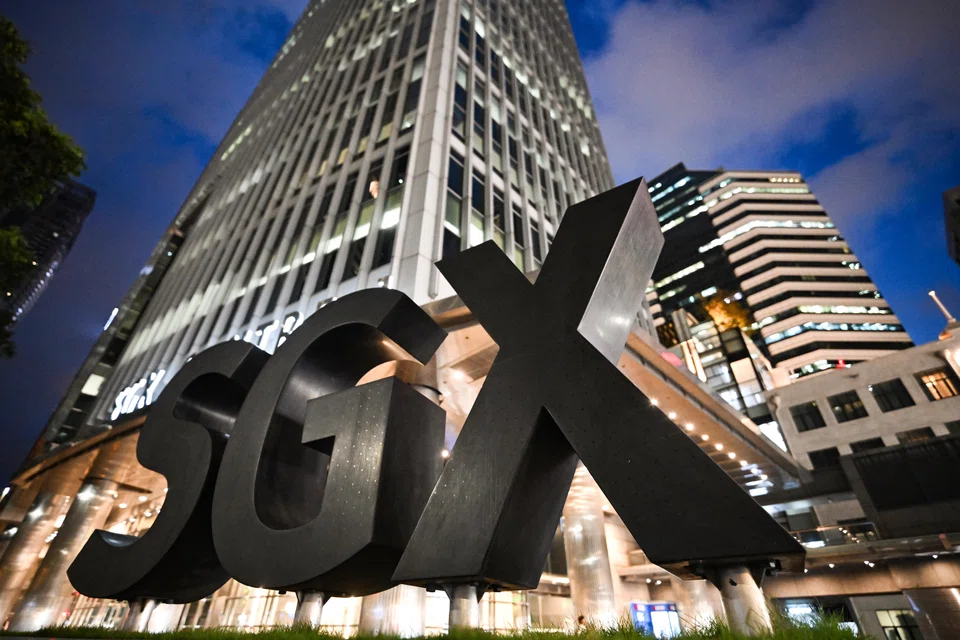
[SINGAPORE] Among the set of proposals unveiled last week to strengthen the stock market, one of them struck me as being particularly timely.
The Monetary Authority of Singapore (MAS) will allocate S$30 million from the Financial Sector Development Fund for grants to help listed companies develop competencies in the areas of corporate strategy, capital optimisation and investor relations (IR). This is to encourage a sustained focus on developing shareholder value.
Make no mistake, these Singapore-listed companies are generally well-managed and financially sound. But many remain undervalued due to insufficient investor engagement and poor articulation of corporate strategy and growth potential, MAS’ equities market review group had said in its final report.
Naturally, as someone working in the media industry, I have an interest in seeing how communication between companies and their shareholders, analysts and potential investors can be improved.
The IR function for listed companies in Singapore is usually performed by an in-house team, especially for the large caps. Some smaller companies may run an outsourced function, with an IR agency supporting the chief executive officer and chief financial officer.
A major pain point will be removed with the availability of these grants, given Singapore companies that are notoriously tight-fisted when it comes to paying for advice and services.
Still, there remains a key challenge: that of growing the existing pool of IR professionals and consultancies who can provide quality advice.
Many in the industry have wound up in their post via working in media, covering business news. Others have segued there from the finance function. Then there are some who have been analysts, while others hail from investment banking.
These different backgrounds have their pros and cons, in terms of the level of technical knowledge, familiarity with the sector, knowledge of what investors are interested in, and the skill in being able to effectively communicate this entire package to investors.
Increasingly, there will be more and larger players, that is, institutional investors, as the Singapore market develops and matures.
These may be international funds, including those from the US and Europe. Interest is also seen from large investors from Asean and Asia, although many of the Chinese funds still focus most of their attention on Hong Kong.
These investors will have expectations for IR to be best in class, in terms of disclosure, timeliness in handling of queries and the quality of the communication.
The IR professional, who is often the first point of contact for these investors, must have a good grasp of the company’s strategy to be able to respond effectively.
It is also a two-way process, where the IR professional must be capable of capturing what investors are looking for, sharing that intel with the management and board, and helping to conceptualise the relevant strategy.
As listed companies increasingly have complex regional and global operations or a complicated business model, this will also place more demands on IR professionals to be able to articulate the business case successfully.
Finally, management and boards, too, must change their mindsets in terms of regarding IR as a mere good-to-have or just another way of getting straightforward publicity for the company.
Raising the IR bar will be challenging, but necessary; a leading financial centre like Singapore will also require top-class advisory professionals.