

The invisible bottleneck in Singapore’s maritime ambitions
Industry and regulatory bodies need to make a deliberate shift in their talent development approach
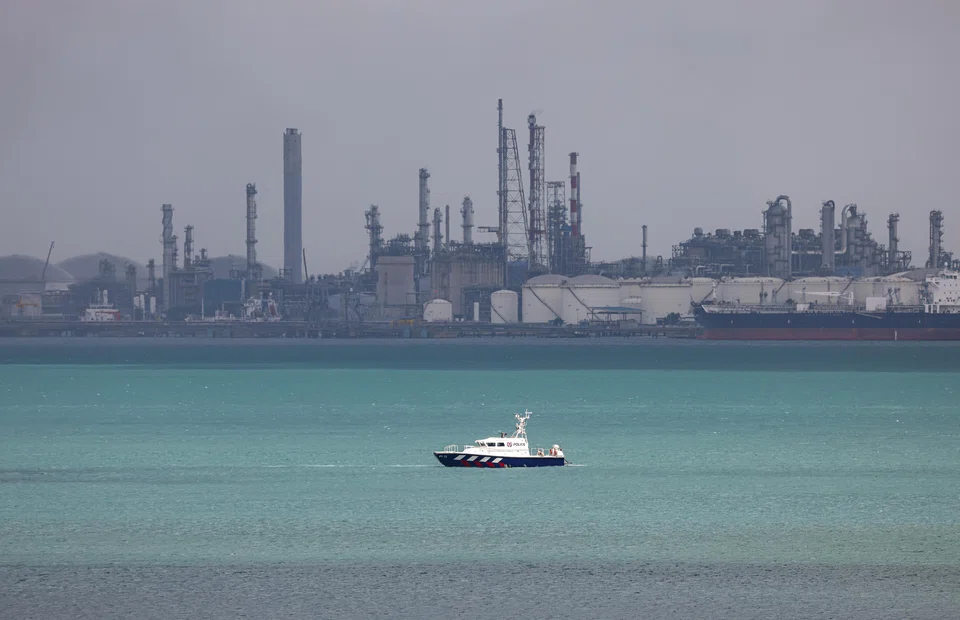
SINGAPORE has staked its maritime future on a clear and demanding target: a net-zero emission port by 2050, sustained by electrified harbour craft, low-carbon fuels and digitalised, intelligent port operations.
The resolve is there. The technologies, for the most part, exist.
What is not yet fully accounted for is the human talent development pipeline needed to carry it through, and that gap may prove harder to close than any engineering problem on the road map.
Between technology and deployment
There is a popular tendency to measure progress in technology milestones. A new electric harbour craft enters service. A green fuel bunkering trial concludes. A digital twin platform is developed.
These are real achievements and they deserve recognition. But technological innovation and real operational capability are not the same thing.
Conflating them gives a false sense of progress. A battery propulsion system that performs well in a controlled trial behaves differently under the variable loads, salt air and scheduling pressures of busy port operations.
The gap between pilot and fleet-wide deployment is where most maritime innovations quietly stall, and it is a gap that hardware alone cannot close.
What closes it is a specific kind of engineer that the maritime sector has historically underproduced.
Not a specialist in one discipline, but someone who can work across disciplinary domains such as propulsion, power systems, naval architecture and safety regulations simultaneously. One who has done so in real operational environments and not just within laboratory conditions.
Battery fire safety in electric harbour craft is one example. Thermal runaway in a confined marine space under various operating conditions and fire suppression arrangements involves chemistry, computational fluid dynamics, structural engineering, electrical engineering and naval architecture in ways that no single field fully owns.
Getting it right requires someone who has spent time working at all these intersections, with access to real vessels and real operators.
Singapore is producing very few of these cross-disciplinary, practice-oriented field engineers today, and they are much needed to close the gap between technology plans and real-life industry deployment.
Training vs capability building
The maritime sector is aware of the workforce challenge. Singapore’s Sea Transport Industry Transformation Map names it explicitly, and the policy response of career conversion programmes, upskilling grants and expanded training pathways reflects a strong government commitment.
But there is a distinction the sector has not yet fully grappled with. Knowledge transfer and knowledge formation are different things.
Instructing an engineer to understand decarbonisation frameworks is useful. It is, however, different from producing someone capable of designing, integrating and troubleshooting a novel propulsion system in an operational maritime environment.
The first can be accomplished in months. The second is what the sector increasingly needs.
Singapore has built much of its port competitiveness on the ability to adopt proven technologies efficiently and scale them at speed, an instinct that has served the industry well.
Yet, maritime decarbonisation does not offer a proven model to follow. The sector is in active, global experimentation.
Ammonia bunkering, methanol propulsion, onshore megawatt charging systems, battery-electric harbour craft: None of these has a settled operational playbook.
Singapore needs engineers who can do the experimental work locally, analyse and draw conclusions from real-life industry operational data, innovate and solve the problems accordingly.
The overlooked bottleneck: validation
Sitting beneath all of this is a validation problem that urgently needs attention.
As novel technologies move from trial to commercial deployment, someone has to certify them as safe, operationally sound and performing according to specification.
How do we approve a new battery configuration for commercial harbour craft service? The answer may be found at cross-disciplinary intersections.
Singapore’s decarbonisation timeline is held hostage by a shortage of qualified professionals who are capable of assessing their viability and safety in our unique local operational context.
Other maritime countries have also faced this same challenge, and those that navigated it well share a common thread.
Norway’s rise as a global leader in subsea and offshore technology was built on more than capital investment. It required a generation of engineers whose training was deeply integrated with the shipbuilders and energy companies they work alongside.
Academic institutions and industry worked on the same problems, in the same environments, from the beginning.
South Korea’s shipbuilding dominance tells a similar story.
State investment in shipyard capacity was matched by investment in technical workforce development, producing engineers who could adapt rapidly as designs, propulsion systems and classification requirements changed.
The technology moved because the people moved with it.
Deeper talent pipelines
The Singapore Maritime Week in April made talent development one of its four core themes, alongside decarbonisation, digitalisation and maritime services.
The industry knows where the talent gap is. The harder question is whether it acts on that knowledge with the same ambition it brings to technology investment.
Industry and regulatory bodies need to make a deliberate shift in how they approach talent development.
Companies cannot simply send engineers to training programmes and expect cross-disciplinary capability to follow. They need to jointly define problems with academic institutions, identify candidates early and commit to developing them within real operational settings under expert guidance from both industry and faculty.
Classification societies have a particular stake in this. They face a direct business need for engineers capable of validating novel technologies across disciplines, making them natural partners rather than passive observers in how training is structured.
Existing funding mechanisms across the sector can support these deeper talent pipelines, but the current emphasis on short-cycle upskilling needs to be rebalanced towards longer-form, industry-embedded pathways. The funding is not the obstacle; how it is deployed is.
The Singapore Institute of Technology’s Maritime Engineering Doctoral Training Centre is one attempt to do this differently, orienting postgraduate research towards live industry problems, and placing researchers in operational environments where technical, regulatory and safety considerations intersect in practice.
Research projects are tested against real operational constraints. Researchers work across vessel design, battery safety, system efficiency and low-carbon infrastructure, drawing on an ecosystem of ship designers, shipyards, original equipment manufacturers, operators and classification bodies committed to solving real-world challenges together.
Such models reflect a broader shift – from classroom-based learning to industry-embedded capability development. They are not a complete solution, but they signal something the sector has been slow to say plainly: Technology advances only as fast as the people capable of deploying it.
The writer, director of applied research partnership at the Singapore Institute of Technology, is a maritime leader with more than 15 years of industry experience in the Maritime and Port Authority and the Singapore Maritime Institute
TRENDING NOW

Once staunchly pro-China, Malaysian Chinese businesses are now distancing themselves from Beijing

New launch or resale unit? Here’s a guide for homebuyers
The lesser-known prospects in the Asian chipmaking supply chain

Cliff Tan has 7 million followers and a 4-month waitlist. Why won’t he expand his business?

