

Iran war may hasten Reits’ waning popularity
A more hawkish tone from the Fed this week could further weaken sentiment towards real estate investment trusts

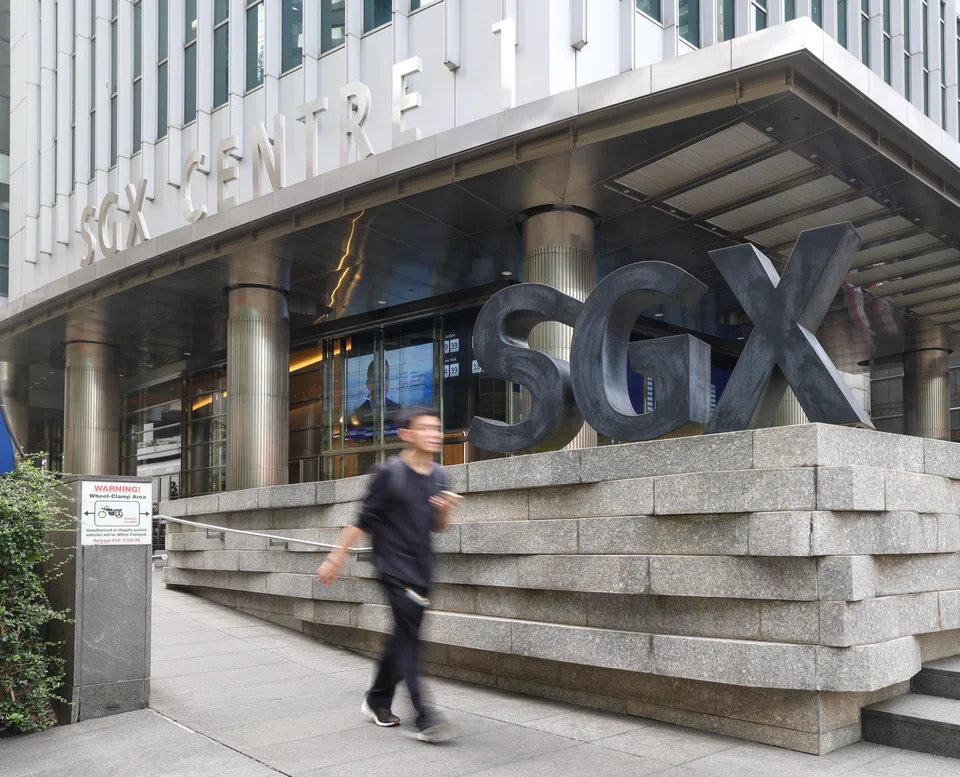
[SINGAPORE] The timing of UI Boustead Real Estate Investment Trust’s (Reit) mainboard debut couldn’t have been less fortunate.
When its units began trading on Thursday (Mar 12) afternoon, there seemed to be little doubt in the market that the US-Israeli war on Iran was going to stoke global inflation and drive interest rates higher.
US President Donald Trump had tried to calm the markets earlier in the week by predicting a quick end to the hostilities, and calling for a waiver of oil sanctions on Russia. But he did not succeed in coaxing the genie back into the bottle.
After dipping briefly early in the week, oil prices began pushing higher again as Iran demonstrated its ability to disrupt global energy supplies by firing on merchant vessels navigating the Strait of Hormuz.
Brent crude oil ended last week at about US$103 per barrel, more than 40 per cent above the levels at which it was trading a fortnight ago.
Global markets are likely to remain on tenterhooks this week as the US Federal Open Market Committee meets on Mar 17 and 18 and publishes its quarterly Summary of Economic Projections.
Back in December, the median projection of the committee was that the federal funds rate would end 2026 below 3.5 per cent – suggesting a single 25-basis point rate cut this year.
Clearly, the views of the committee could be about to change.
A more hawkish tone from the Fed this week could further weaken sentiment towards Reits. These property securitisation structures are designed to deliver the bulk of their total returns via cash distributions, and they all carry a certain amount of debt that is periodically refinanced.
The property assets they hold are also susceptible to downward revaluations when interest rates rise, which would inflate their gearing levels.
Against this uncertain backdrop, UI Boustead Reit ended its first trading day at S$0.805 – more than 8.5 per cent below its initial public offering price of S$0.88. It climbed nearly 2.5 per cent on Friday, to end the week at S$0.825.
This could well be a short-term opportunity for investors.
UI Boustead Reit holds a largely Singapore-based portfolio of industrial, logistics and business space assets worth more than S$1.9 billion, and its distribution per unit for the financial year to Mar 31, 2027, is projected to hit S$0.068.
At its Friday closing price, this translates to a yield of more than 8.2 per cent.
Over the longer term, however, firm interest rates and the ongoing efforts to revitalise the Singapore market may erode the popularity of Reits in general, in my view.
Weakening relative performance
Reits performed relatively well prior to the Covid-19 pandemic.
During the five years leading up to end-2019 – a period marked by historically low interest rates around the world – the iEdge S-Reit Index chalked up a total return (with distributions reinvested) of 54.4 per cent.
By comparison, the Straits Times Index (STI) delivered a total return of only 14.9 per cent. Of the eight Reits that are currently part of the STI, seven of them ranked among the nine best-performing constituents of the index during the period.
Four of them achieved triple-digit percentage returns: Keppel DC Reit (183.8 per cent), Mapletree Industrial Trust (140.1 per cent), Mapletree Pan Asia Commercial Trust (126.1 per cent), and Mapletree Logistics Trust (103.3 per cent).
Reits performed far worse through the disruption of the pandemic and the surge in inflation and interest rates that followed, though. From the beginning of 2020 up to Mar 6 this year, the week before UI Boustead Reit began trading, the iEdge S-Reit Index achieved a total return of just under 4 per cent.
The STI delivered a much stronger return of 97.1 per cent, helped by big value-unlocking moves at companies such as Keppel, Sembcorp Industries and Singtel, as well as sharply elevated profitability at DBS, OCBC and UOB, as inflation and interest rates soared right after the pandemic.
Even since the beginning of 2024, when it was quite clear that inflation and interest rates had peaked, Reits have trailed stocks by a wide margin. The iEdge S-Reit Index returned 6.7 per cent during the period, while the STI returned 66.3 per cent – fuelled by excitement about the Equities Market Review Group’s recommendations to revitalise the local market.
Looking ahead, it seems unlikely to me that global interest rates will sink back to their pre-pandemic levels. Even before the recent surge in oil prices, trends such as reverse globalisation, ageing populations and rising public-sector debt were expected to keep upward pressure on interest rates in the years ahead.
Combined with the gathering momentum behind local market reforms, stocks could continue to outpace Reits for years to come.
Active selection necessary
To be clear, this column isn’t suggesting that investors avoid Reits altogether.
While returns from the iEdge S-Reit Index have been weak over the last few years, there has been a wide dispersion of performance across its various components.
For instance, during the period from the beginning of 2024 to Mar 6 this year – when the index as a whole returned 6.7 per cent – its best-performing components were OUE Reit (55.2 per cent), Stoneweg Europe Stapled Trust (42.9 per cent), and Keppel DC Reit (34.2 per cent).
Its worst performers were Kore US Reit (minus 46.1 per cent), Manulife US Reit (minus 21.2 per cent), and IReit Global (minus 20.5 per cent).
Reits also account for a large swathe of the local market. The eight Reits among STI’s 30 constituents have a combined weighting of about 10.9 per cent. The iEdge Singapore Next 50 Index includes 16 Reits, with a combined weighting of about 42 per cent.
Investors could earn good returns from Reits by actively selecting those that are exposed to promising sectors, and those that are trading at relatively attractive valuations.
Yet, the sponsor groups behind these Reits may have to work harder to maintain their relative attractiveness.
Earlier this month, FTSE Russell said that SIA Engineering would replace CapitaLand Ascott Trust on the STI’s reserve list with effect from Mar 23. The other counters on the STI reserve list are Keppel Reit, Suntec Reit, NetLink NBN Trust and Sheng Siong Group.
Meanwhile, the Singapore Exchange noted that four counters will be added to the iEdge Singapore Next 50 Index on Mar 23: Haw Par Corp, GuocoLand, the recently listed UltraGreen.ai and ValueMax Group.
Making way for them are: Banyan Tree, SBS Transit, Geo Energy Resources and Cosco Shipping International (Singapore).
If a strong culture of shareholder value creation is sustained in the Singapore market, it wouldn’t surprise me to see the representation of Reits on the STI and the iEdge Singapore Next 50 Index decline over time.
TRENDING NOW

Once staunchly pro-China, Malaysian Chinese businesses are now distancing themselves from Beijing

Britain’s mansion tax shows the difficulty of targeting wealth

Three hats, one goal: How Ng Kian Swan runs sustainability at NUHS

COE review: The gap between luxury and mass-market cars isn’t the only one worth bridging

