

The Iran war presents a ‘guns and butter’ nightmare for investors
How long the conflict will last, and its energy impact, are unknown, but mounting global debt and inflation risks are all too real
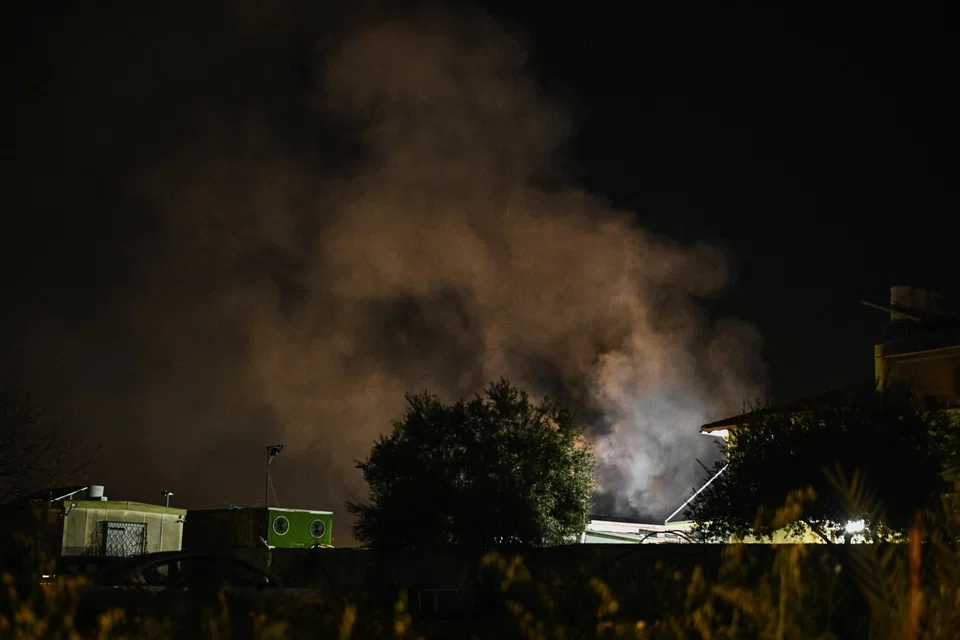
COMING after successive shocks from the Coronavirus pandemic, US President Donald Trump’s tariffs and the retreat from globalisation sparked by Russia’s invasion of Ukraine, the Iran war looks uncomfortably like the stuff of nightmares.
Yet, the response in the oil market to serious supply disruption has been muted. Even after its initial rise, the oil price was standing midweek at only two-thirds of the 2022 peak level of US$128.
In the meantime, the wider inflation scare in the markets has fallen well short of panic. The question is, are investors wilfully complacent about the looming threat of stagflation?
Granted, the uncertainties are legion. But the answer is still a blunt “yes” because this latest supply shock to the global economy differs in two important and worrying respects from all those experienced since 1945.
One is that public debt is at unprecedented peacetime levels. The International Monetary Fund projects that global sovereign debt will exceed a stunning 100 per cent of gross domestic product by the end of this decade.
The fiscal cost of addressing cost-driven inflation thus balloons as burgeoning interest rates raise government interest bills.
Harvard macroeconomist Jeffrey Frankel points out that the federal government in the US now spends more on interest than it spends on defence or non-defence discretionary spending, with the bill estimated at 3.2 per cent of GDP in 2026.
Other advanced economies are in a similar position or heading that way.
The other seriously malign political economy feature of the current conflagration is the recent intensification of deficit bias – governments’ tendency to spend more and tax less – regardless of the state of the economic cycle.
It is a penchant that becomes all the more damaging in a low-growth world marked by heightened geopolitical uncertainty and military build-ups.
In a recent survey of central government finances for 20 countries from 1870 to 2022, Johannes Marzian and Christoph Trebesch found that when societies re-arm, they tend to choose guns and butter, resulting in higher debt, public spending and taxes.
They conclude that large geopolitical shocks in war and peace lead to lasting fiscal expansion. Demography adds to the pressure as ageing pushes up hard liabilities such as pensions and healthcare, while the resulting costs have to be met by a shrinking workforce.
At the same time, we are witnessing the death of fiscal conservatism in politics. Nowadays, unpalatable but necessary fiscal medicine can only be administered to the electorate on a bipartisan basis.
Otherwise, political parties are trapped in the familiar dilemma neatly characterised by former European Commission president Jean-Claude Juncker: “We all know what to do. We just don’t know how to get re-elected after we’ve done it.”
The US presidential electoral process clearly demonstrates the hazards of fiscal conservatism. Democratic president Bill Clinton racked up budget surpluses in 1998 to 2001, only to see them gleefully deployed by his Republican successor George W Bush on tax cuts and military spending.
The political problems around debt and deficits will be exacerbated by the rise of populist parties. The spat between Emmanuel Macron and Marine Le Pen’s Rassemblement National over the French president’s desire to raise the state pension retirement age is symptomatic of what is to come.
While forecasts of the duration and energy impact of the Iran war are inevitably uncertain, record levels of public debt and the intensifying deficit bias are all too real. They raise the risk of inflation.
One potential driver is debt monetisation, through which central banks finance government spending directly through money creation.
Another is so-called fiscal dominance, in which central banks give priority to financing their governments’ increasingly short-term debt over control of inflation.
This may be because they fear that raising rates will cause investors to worry that the government’s debt service position is unsustainable, or because governments curtail their independence.
Another threat is financial repression, which was used after the second world war to reduce public debt. This entails forcing financial institutions and savers to accept below-market interest rates on government IOUs.
For the moment, investors appear remarkably insouciant about sovereign debt sustainability. But in the absence of any prospect of a return to fiscal restraint, bondholders will ultimately call a halt to indefinite refinancing of government debt. FINANCIAL TIMES
TRENDING NOW

Once staunchly pro-China, Malaysian Chinese businesses are now distancing themselves from Beijing

Looking beyond looming CEO succession, should UOB potentially pursue a transformative merger?

Could stablecoins be the future of money?

Grab CEO’s wife Chloe Tong on life with Anthony Tan and finding her purpose

