Iran war: Soaring oil price will be a key driver of Fed policy; opportunities, risks for investors
While even the price of gold fell last week, shares of Big Oil companies sustained their upward momentum

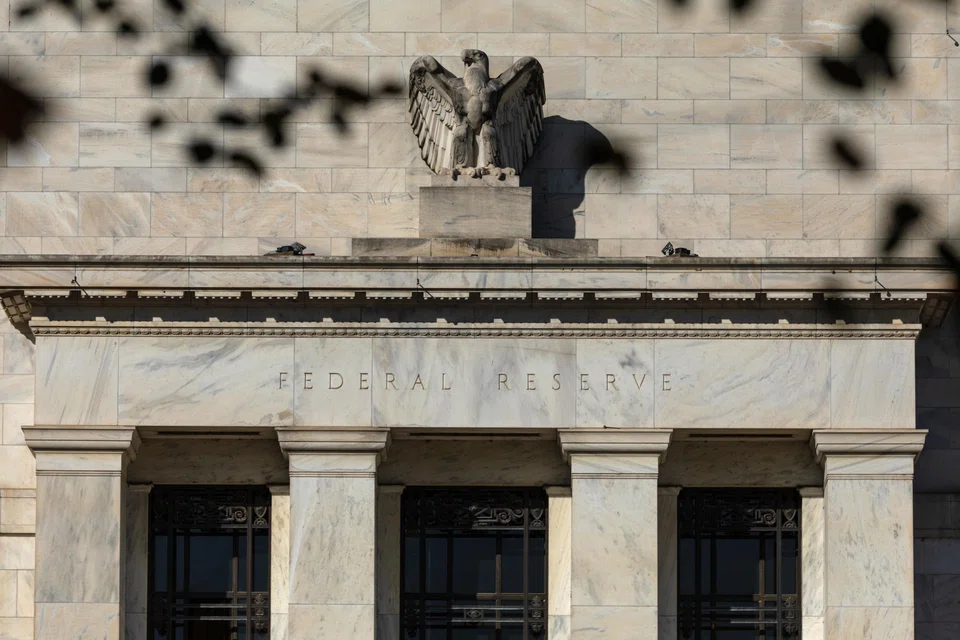
[SINGAPORE] When Jerome Powell was asked after the last Federal Open Market Committee meeting in January how rising geopolitical risks were shaping his thinking about the US economy, he offered a pretty simple and straightforward answer.
“A lot of it is around energy – oil,” the Federal Reserve chair said.
While geopolitical events can have profound implications for the global order and every country’s place in it, what usually matters to the Fed in these instances is the extent to which any change in the price of oil affects US inflation and economic activity.
The Fed’s only policy goal, after all, is to maintain stable prices and maximum employment in the US economy.
Investors should adopt a similar clarity of purpose as they navigate the current turmoil in the market. Whatever views one may have about the US and Israel’s attack on Iran, it is crucial to focus squarely on avoiding losses and earning decent long-term returns in the market.
It could be some time before it becomes entirely clear where the opportunities and risks lie, though. The main uncertainty at the moment is how long the military conflict will last, and whether it will widen across the region.
While the US and Israel appear to have overwhelmed Iran with their air power, it is unclear what exactly they want to achieve before bringing hostilities to an end. In the meantime, Iran lashed out at other countries in its neighbourhood, and is restricting sea traffic through the Strait of Hormuz.
Against this backdrop, the price of Brent crude oil leapt more than 20 per cent last week.
For the Fed, this could mean less room for rate cuts in the months ahead, despite the surprisingly weak February jobs report that was released on Friday (Mar 6).
With US inflation still running above its 2 per cent target, the Fed kept the target range for the federal funds rate unchanged at below 3.75 per cent at its January meeting, after three consecutive cuts of 25 basis points each in December, October and September.
The Fed’s next policy meeting will be held from Mar 17 to 18.
Big Oil drawing attention
For investors, the uncertainty surrounding the war and the possibility of a slower pace of Fed rate cuts could mean a lengthy period of asset price volatility, in my view.
Over the past week, it wasn’t just major stock indices such as the S&P 500 (down more than 2 per cent), the Stoxx Europe 600 (down 5.6 per cent) and the Nikkei 225 (down 5.5 per cent) that took a beating. Even the spot price of gold – a supposedly safe-haven asset – declined more than 2 per cent.
One explanation for this seeming anomaly is that gold has become a rather crowded trade as it soared over the past couple of years. A nearly 18-basis-point rise in 10-year US Treasury bond yields last week probably didn’t help.
The greenback was a far more effective refuge over the past week, perhaps because it had been severely beaten down since early 2025. The US dollar index, which measures the American currency against a basket of six major peers, climbed 1.3 per cent last week.
Safe havens aside, global energy stocks were another segment of the market that seemed to draw investors as bombs began falling on Teheran.
The iShares Global Energy Exchange-Traded Fund (ETF) – which counts Exxon Mobil, Chevron and Shell among its largest holdings – climbed nearly 1.6 per cent last week.
The ETF has been gaining momentum since December. It is up nearly 25.5 per cent so far this year, versus the S&P 500’s decline of 1.5 per cent.
Global defence stocks did not perform quite as well, perhaps because they had already run up strongly over the course of 2025.
The iShares US Aerospace & Defense ETF – which includes GE Aerospace, RTX Corp, Boeing and Lockheed Martin – was down 0.6 per cent last week, but up 12.8 per cent since the beginning of the year.
The Select Stoxx Europe Aerospace & Defense ETF – which counts Rolls-Royce, Safran, Airbus and BAE Systems among its top holdings – was lower by 5.1 per cent last week, but up more than 5 per cent since the beginning of the year.
Thriving without peace?
The Singapore market wasn’t spared in the global sell-off last week, with the Straits Times Index (STI) falling more than 2.9 per cent.
Aerospace and defence sector player ST Engineering was the best-performing constituent of the index by a long way, helped by a solid earnings report for 2025, and analysts raising their target prices for its shares.
ST Engineering ended last week 9.8 per cent higher.
The only other STI constituent that charted a gain last week was DFI Retail Group . Its shares ended the week 3.6 per cent higher, after reporting a strong set of financial numbers for 2025.
The operator of retail brands such as Guardian, 7-Eleven, Wellcome and Ikea streamlined its business profile last year and launched a three-year programme to improve its profitability and lift its dividend payouts.
At the other end of the spectrum, Jardine Matheson slid 8.5 per cent last week. Not far behind were Singapore Airlines (SIA) and Sats , charting declines of 7.4 per cent and 6.9 per cent, respectively.
Are some of these big sell-offs an opportunity for investors?
While SIA has cancelled several flights to the Middle East and could face higher fuel costs, some industry watchers have said ongoing disruptions at major airports close to the war zone could benefit carriers that fly non-stop between Asia and Europe.
Indeed, SIA and its Asian peers have raised their fares significantly since the war began.
On the other hand, cargo handler Sats said last week that its operations in the Middle East have not experienced any material interruption, and that its footprint across the region will enable it to cope with airspace closures by some countries.
Whatever the case, SIA and Sats reported strong results for the quarter to December 2025 recently, suggesting that they are both entering this uncertain period on a strong footing.
As the US-Israel war on Iran continues roiling market sentiment in the days and weeks ahead, some companies with exposure to the troubled region may well demonstrate an ability to thrive even in the absence of peace.
TRENDING NOW
Incidence of civil servants buying property near unannounced MRT stations ‘a concern’, but may not establish misconduct: PSD
Grab CEO’s wife Chloe Tong on life with Anthony Tan and finding her purpose
Income Insurance appoints former Manulife Singapore top man as new CEO
HDB reviewing ‘jumbo’ flat scheme after Telok Blangah unit listed for sale at S$2.18m