

The irony of green buildings making way for newer ones is the wastage it generates

Wong Pei Ting
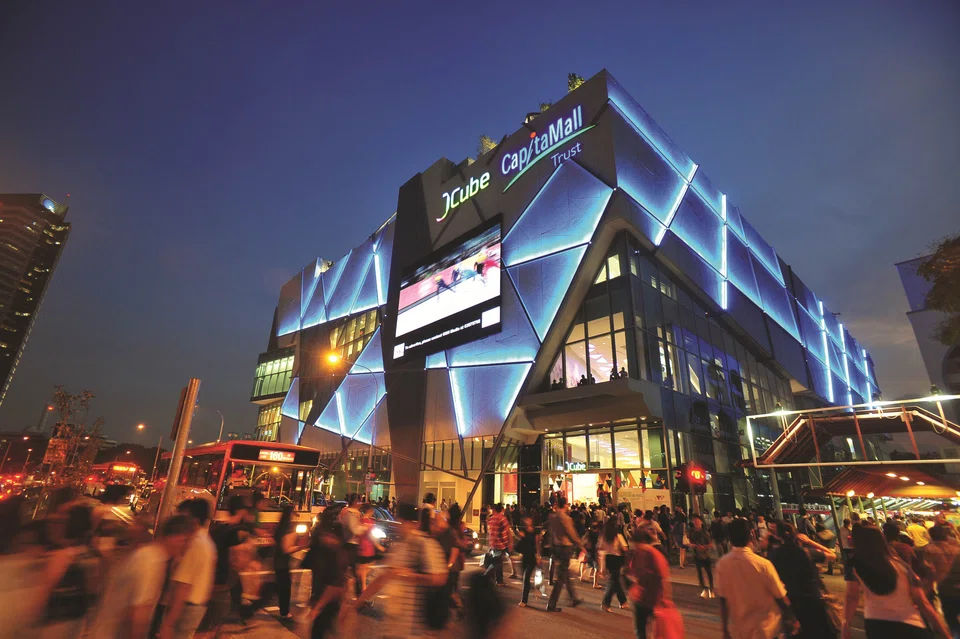
THERE is something jarring about JCube, the Jurong East shopping mall which shut its doors earlier this month to make way for a 40-storey residential and commercial mixed-use development. And it’s not the loss of Singapore’s only Olympic-sized ice-skating rink.
The building, which earned the Green Mark Platinum badge – the top honours under the Building and Construction Authority’s (BCA) green building rating scheme at the time when it was built in 2012 – will be demolished after just 11 years.
In its place will likely be another green building, given national targets to get 80 per cent of Singapore’s buildings green-certified by 2030, its developer CapitaLand’s sustainability targets, and the additional gross floor area (GFA) that a developer can unlock with it.
But despite all the “greening” done and to be done, the irony is that the environment is poorer for it. Think of the amounts of concrete and steel – highly carbon-intensive to manufacture to begin with – that will be knocked down and replaced in the process.
More starkly put, in barely 20 years, that 7,771 square metre (sq m) plot of land that JCube currently sits on will come to be associated with three sets of such embodied carbon come 2027, when the new development – J’den – is set to be completed. (Jurong Entertainment Centre was demolished to make way for JCube in 2010.)
The building also barely has had the time to live up to its energy- and water-efficient potential, the very attributes that helped it earn its Green Mark badge in the first place.
What has become clear is that a green building shouldn’t be so easily replaced by another, or we’d be only fooling ourselves.
But understanding that property developers make the most money when they, well, redevelop in this land-scarce city, what can be done to keep both their sustainability and commercial objectives in check?
The three Rs come to mind.
Reduce. The greenest buildings are the ones best left alone, and property developers should avoid taking this one-step-forward, two-steps-back stance. As more green buildings emerge, JCube won’t be the only example of this.
Regulators can also do their part. Currently, developers and building owners appear to have their appetites whetted by BCA’s Built Environment Transformation Gross Floor Area Incentive Scheme.
Under this scheme, attaining a Green Mark Platinum Super Low Energy badge today opens the door to up to 3 per cent additional GFA for building developments on private sites with GFA of at least 5,000 sq m. The badge, for buildings that achieve at least 60 per cent energy savings, puts little emphasis on embodied carbon.
To tilt the tables, BCA could expand the Green Mark standards to cover Scope 3 considerations, or add a time bar before green-certified buildings can be redeveloped without justifications. The authority could also look into decoupling the Green Mark scheme from GFA incentives.
Reuse. Before deciding on the full-scale demolition of an existing property that stopped performing, property developers should consider its potential for adaptive reuse – that is, the ability for the building’s pre-existing structures to be put to a new purpose.
This could mean conserving the building’s subterranean foundational structures, which usually make up the bulk of a building’s carbon expenditure.
If adaptive reuse is not at all possible – which could happen when there are substantial plot ratio differences, since a taller building would require more heavy-duty foundational structures – the developer should explain its decision to go ahead with full demolition.
When designing the new building, the developer can also prime it for adaptive reuse in the future, by considering the versatility of structures and spaces to be converted into new uses.
Recycle. As a last resort, developers could recycle the construction waste generated from demolition. This may include crushing and screening the concrete, bricks, gravel and stones to produce aggregates of different sizes for use in construction activities.
To be fair, CapitaLand did consider reusing and recycling in the case of JCube, although it remains unclear the extent of carbon it is projected to save in the process.
Chew Peet Mun, managing director of investment and development at CapitaLand Development (Singapore), told The Business Times that the developer will try to minimise the toll on the environment by retaining existing building structures and incorporating them into the new building design “as much as possible”.
More specifically, JCube’s current underground retaining structures will be kept or repurposed, reducing the need for new ones, to avoid the need for extensive excavation and earth-retaining structures, he said.
Chew added that the group is targeting for 75 per cent or more of demolition aggregates to be recycled, and that it is working with consultants and contractors to use sustainable materials and adopt more green construction methods where practicable.
Amendment note: An earlier version of this article incorrectly stated that JCube’s land area is 68,000 sq m. It is in fact 7,771 sq m. The article above has been revised to reflect this.

