

Isetan’s rich exit offer is a shining example of how to treat shareholders fairly in a privatisation

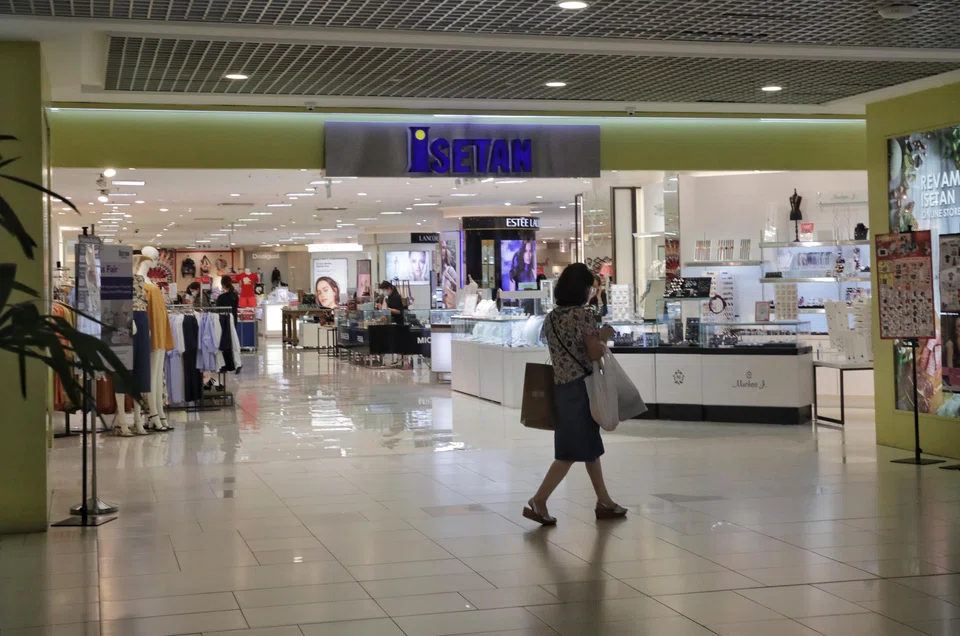
AMID a recent spate of lowball privatisation offers in the Singapore market, Japan-listed Isetan Mitsukoshi’s privatisation offer last week for its subsidiary – department store Isetan Singapore – comes as a breath of fresh air.
Its offer price of S$7.20 for each of Isetan Singapore’s shares that it does not already own far surpasses all major benchmark values considered in an exit offer, such as a company’s book value and last-traded price.
The offer price is 178.9 per cent above Isetan’s net asset value (NAV) per share of S$2.58.
It is also 173.4 per cent higher than its one-month volume-weighted average price (VWAP) of S$2.63 and 171.1 per cent higher than its three-month VWAP of S$2.66.
The offer price is also at a 37.4 per cent premium over Isetan Singapore’s highest closing market price over the last five years of S$5.24.
The attractive offer from Isetan Mitsukoshi comes even as the department store posted a net loss of S$1.9 million for the six months ended Dec 31, 2023, from a net profit of S$871,000 in the previous corresponding period.
The offer is pending majority approval from shareholders but it is unlikely to hit any snags.
Beating lowball offers
In the same week Isetan Singapore announced its privatisation plans, skincare and wellness product manufacturer Best World offered shareholders S$2.50 in cash per share by way of a selective capital reduction to take the company private.
The offer is 82.5 per cent above Best World’s NAV per share of S$1.37.
It is also a premium of approximately 43.7 per cent and 42.9 per cent over the VWAP of the shares for the one-month period and three-month period, respectively.
Recent privatisation offers made by other Singapore listcos, however, have been starkly different, with some perceived to be shortchanging shareholders.
The privatisation offer by hotel group Amara Holdings last November, for instance, fell through after the offeror, Amethyst Assets, failed to garner 90 per cent in shareholding interest for acceptances.
This meant that the offeror consortium – linked to Albert Teo, the hotel group’s chief executive, other members of his family and private equity investor Dymon Asia – was not allowed to exercise its right of compulsory acquisition over Amara Holdings.
Its offer price of S$0.60 was at a discount of 10 per cent to Amara Holdings’ NAV per share of S$0.67 as at end-June 2023.
This was even though its offer represented a 70.5 per cent premium over Amara’s VWAP for the one month up to Jun 15, and a 75.4 per cent premium over the three-month VWAP.
Similarly, Boustead Projects delisted with no compulsory acquisition earlier this year after its parent company, Boustead Singapore, failed to acquire 90 per cent of its non-controlled shares at the final close.
The company had proposed an unconditional cash exit offer for its real estate unit at S$1.18 per share after two previous offers. The final offer remained below Boustead Projects’ NAV per share of S$1.265 as at end-September 2022.
Isetan sets the standards
Isetan Mitsukoshi’s exit offer should set the standard for future privatisation deals. Its offer price is an indication of its confidence in Isetan Singapore’s business.
It is also likely a reflection of corporate governance reforms sweeping Japan, which are aimed at improving the valuations of listed companies.
Last year, for instance, the Tokyo Stock Exchange adopted a “name and shame” approach where listed companies that were trading below their book value had to explain why this was the case. The aim was to nudge companies to improve their valuations through peer pressure.
Will local listcos follow suit?
In Singapore, privatisation deals continue to be plagued by a lack of clear standards on what constitutes a “fair and reasonable” deal.
Market watchers have also questioned the independence of independent financial advisers (IFAs) who evaluate exit offers, given that they are ultimately appointed by controlling shareholders who are aiming to privatise their companies.
This is partly the reason why companies have been able to get away with lowball offers that were deemed by IFAs to be “fair and reasonable” but appeared far from fair or reasonable to minority shareholders.
Local regulators and companies should use Isetan Mitsukoshi as an example of how offers should be determined as fair and reasonable.
For a start, regulators can impose a strict benchmark that ensures that exit offers, at a minimum, match the book value of the company, as well as its VWAP over a one-month, three-month and six-month period.
The regulator, or another independent party, can also assign IFAs to determine if a privatisation offer is fair and reasonable. This will remove any conflict of interest between the IFA and the controlling shareholder in the valuation of the exit offer.
These steps could mark the start of fewer lowball offers and hopefully, more companies that take a leaf out of Isetan’s book.
TRENDING NOW

Once staunchly pro-China, Malaysian Chinese businesses are now distancing themselves from Beijing

Looking beyond looming CEO succession, should UOB potentially pursue a transformative merger?

Could stablecoins be the future of money?

Grab CEO’s wife Chloe Tong on life with Anthony Tan and finding her purpose

