

Itching for a solution: Why eczema treatments are expanding – as are costs
Moderate to severe cases of the skin condition are prevalent in Singapore, but new options to treat it do not come cheap. Can this be changed?

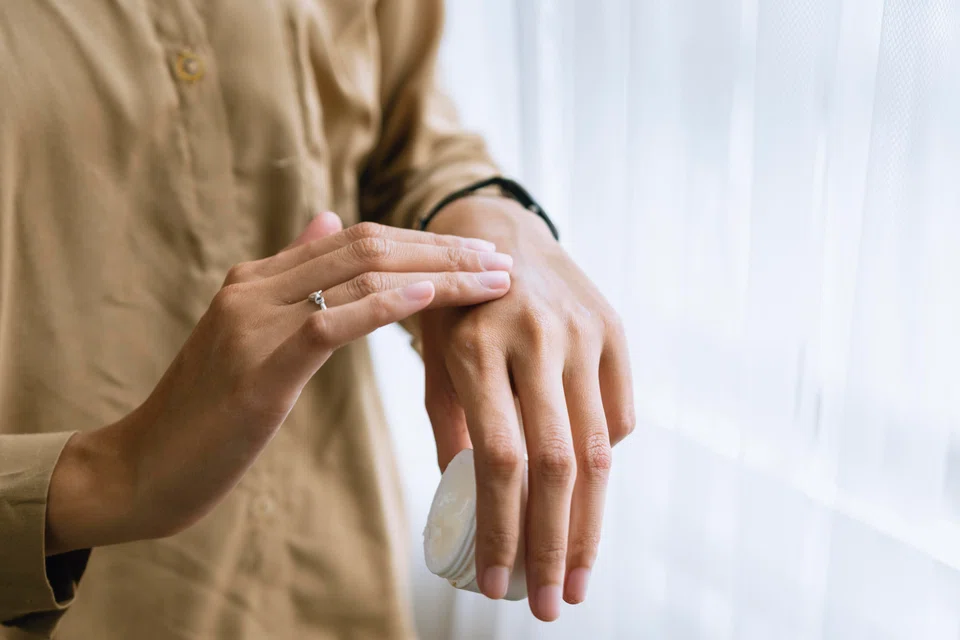
[SINGAPORE] A stray itch on the wrist, behind the thigh or on the cheek may seem mild at first, but it may reach a point where those with the condition cannot sleep due to the constant need to scratch their skin.
Tim See, who works in marketing and communications, says eczema affects his mood and concentration while going about his daily tasks.
He was officially diagnosed with the condition only in January last year, although he has had occasional skin troubles before. They usually flare up on his arms, upper body and thighs.
His flare-ups, which occur every few days, are usually triggered by stress or the environment, says the 37-year-old.
Moderate to severe forms of eczema have gained in prevalence in Singapore over the last few years, as more patients become aware of the illness and look to treat the symptoms.
A wide array of remedies has thus emerged, and each varies wildly in terms of application, effectiveness and cost.
The variety in care practices and doctors’ differing opinions on treatment indicate a lack of standardised guidelines for treating the condition which, in turn, resulted in eczema being excluded from the Chronic Disease Management Programme, in spite of a recent call to include it.
The initiative, aimed at making treatments for chronic diseases more accessible and affordable, currently covers 23 illnesses.
Eczema triggers
Eczema, which affects around 20 per cent of school-going children and 10 per cent of adults in Singapore, is a group of conditions that result in the skin becoming inflamed or irritated. This includes the most common form known as atopic dermatitis, as well as other dermatitis conditions.
The severity of the disease can range from mild to severe, and can affect different parts of the body.
“In Singapore, we are in a unique environment that is both hot and humid... and a lot of our patients also have dust-mite allergies,” says Dr Yew Yik Weng, senior consultant and consultant in charge at the National Skin Centre’s (NSC) Eczema Clinic.
He adds that humidity can also result in the growth of dust mites, one of the common allergens and triggers for eczema in Singapore.
Eczema patients are usually predisposed to the condition due to a mutation in the genes that causes the skin barrier to be more prone to allergens and environmental changes, say experts.
Dr Lee Hwee Chyen, medical director and consultant dermatologist at Epi Dermatology & Laser Specialist Clinic, notes that an individual is more likely to get atopic dermatitis if one or both parents have it.
Even factors such as stress, harsh soaps and certain fabrics can cause eczema to flare up, say doctors.
Physicians who spoke to The Business Times say the illness is detected more often in developed countries with a higher awareness of hygiene, such as Singapore.
While the percentage of adults and children in Singapore with the disease remains largely stable, more people have begun to seek treatment for it. NSC sees around 270,000 eczema patients a year, and notes an increase in complex cases at its weekly eczema sub-speciality clinic.
“In 2024, our weekly eczema sub-specialty clinic, which handles more complex cases, recorded around 4,300 doctor visits, compared to around 1,000 to 2,000 a decade ago,” says NSC.
Dr Yew believes the increase in severe cases seen by NSC may not be due to more people contracting severe forms of eczema, but instead a higher awareness that the disease can be treated. “Patients are getting more educated… so now a lot of them are seeking treatment earlier or more rigorous treatment, that is why we are seeing more cases in our severe clinic for treatment.”
Dr Lee notes that about 30 to 50 per cent of her patients have eczema, but the numbers fluctuate based on seasonality. For example, the number of patients surges during school examination periods. She declines to comment on the number of patients Epi Dermatology sees as a whole.
Dr Ong Fung Chin, president and chief medical officer at medical skin care provider Niks Professional, says that eczema patients at the group’s clinics now make up 30 per cent of all its patients, compared with 10 per cent about 20 years ago.
The group – which has four general practitioner clinics – treats skin conditions, has its own line of skincare products and offers aesthetic services.
Dr Ker Khor Jia, medical director and consultant dermatologist at specialist clinic Dermatology & Co, has also noticed a rise in eczema patients visiting the clinic, but does not give a specific figure.
However, she notes that patients with milder forms of eczema tend to visit general practitioners or treat the condition with over-the-counter medication, and specialists therefore tend to see only those with more severe conditions.
“There are still ongoing studies to try to get a more accurate estimate of the prevalence (in Singapore),” she says.
Satisfying the itch
Treatment for eczema can vary widely, from creams to injections. As it stands, there is no standardised formula of care for the condition, as acknowledged by the Ministry of Health (MOH) in a Parliament sitting in November 2024.
At the time, Senior Minister of State for Health Janil Puthucheary responded to an adjournment motion by Member of Parliament Tin Pei Ling. She suggested adding moderate to severe eczema to the Chronic Disease Management Programme.
The Clinical Advisory Committee, which reviews the programme, had not included eczema in 2020 as “care practices for eczema currently vary significantly and there are currently no standardised national guidelines for the treatment of eczema”, said Dr Janil.
He noted that the Agency for Care Effectiveness at MOH is developing clinical guidelines for the treatment of atopic dermatitis. The committee will review if the skin condition can be added to the programme once the guidelines are established.
Those with eczema have different ways of coping with the disease when it comes to their work.
Dr Lee explains: “Most of the working adults who have eczema, for which they actively seek medical attention, have found ways to cope. Some even have the option of working from home.”
Dr Ong adds that if people take sick leave for eczema, it is usually due to sleepless nights caused by scratching. However, most patients understand that eczema is a chronic condition, and take sick leave only when their condition is bad.
That said, those who spoke to BT say that they still continue their daily routines, even through their flare-ups.
Auditor Steffi Sim notes her eczema flares up when she is stressed, but it does not affect her daily life. “I don’t do anything differently and it doesn’t affect my work as well,” she says.
See notes that work usually helps him to take his mind off the constant itchiness for a while, and he manages the itch through occasional topical steroids and daily moisturising.
“I take along oral medication and moisturiser to work to deal with the flares,” he adds.
Doctors who spoke to BT generally agree that creams remain the most-used treatment form for eczema. NSC’s Dr Yew points to moisturisers and topical steroids in particular as common first picks.
But within these products, there could be several types. For example, consumer healthcare group Hyphens Pharma International , which is headquartered in Singapore, has several products under its Ceradan line for different parts of the skin – its most recent launch was the Advanced Hand Balm for hand eczema in September last year.
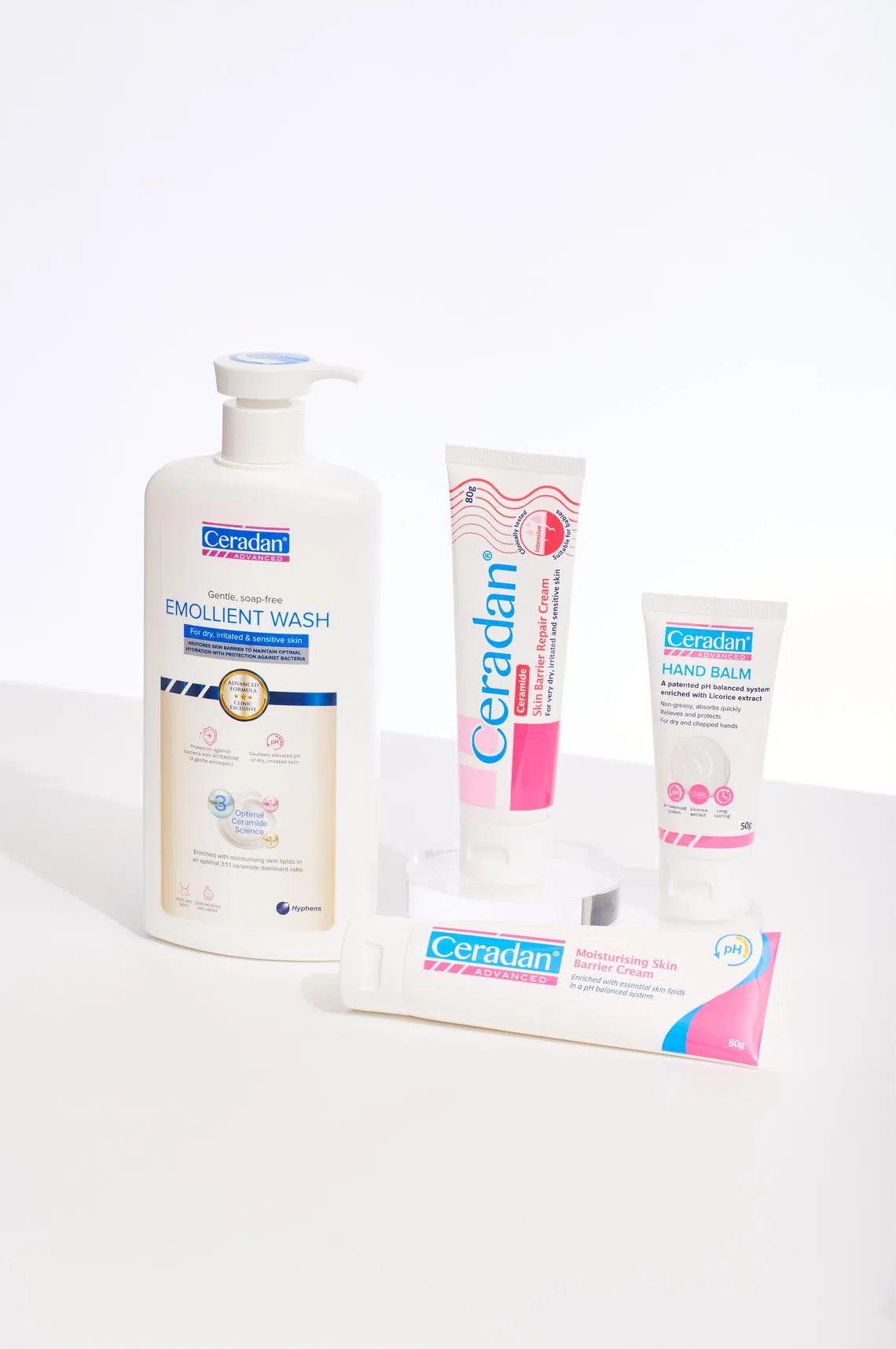
Esther Seah, Hyphens Singapore general manager and commercial director, says hand eczema affects 9 per cent of the general population and can be highly disruptive to daily life.
“We saw the need for a long-term solution that could effectively control this condition,” she says.
Meanwhile, Singapore-based clinic Niks Professional designs its own skincare products for sensitive skin.
Dr Ong, who is also a general practitioner at Niks, recalls that when Niks’ first clinic opened in 1994, doctors generally defaulted to steroid creams or tablets to treat the condition as there was a lack of skincare products specifically for the conditions.
And although eczema patients have traditionally favoured doctors of Western medicine when seeking treatment, some are also turning to traditional Chinese medicine (TCM) for relief.
Beatrice Liu, chief executive and co-founder of Oriental Remedies, says eczema is among common skin conditions that people have approached the TCM clinic chain for.
“Many patients turn to TCM after conventional methods provide only partial or temporary relief,” she notes. While the chain is unable to provide numbers, a “significant portion” of Oriental Remedies’ increase in autoimmune-related cases involves individuals with eczema.
Another TCM chain, Pulse TCM, participated in an eczema support event to provide insights into managing the condition from a TCM perspective.
The event also involved Ego Pharmaceuticals, which makes the skincare brand QV.
Pulse TCM founder Nicholas Poh says: “(In TCM), we are not going to ask you to stop Western treatment.” Instead, he believes both disciplines, TCM and Western medicine, can work hand in hand to treat the symptoms of eczema.
New methods
As research into eczema progresses, new forms of treatment have arrived, particularly in the field of biologics – medications that are derived from living organisms, such as proteins and genes.
The biologic used for eczema, dupilumab, is able to target specific areas in the body and regulate the immune response of patients. It is jointly developed by pharmaceutical giant Sanofi and biotechnology company Regeneron.
Data from Sanofi-Aventis Singapore showed that there are more than a million patients worldwide and over 5,000 patients in Thailand, Malaysia and Singapore who are being treated with the biologic.
In Singapore, dupilumab was approved by the Health Science Authority to treat adults with atopic dermatitis in 2019, says Quek Wee Ling, head of immunology, Sanofi South-east Asia and India.
Besides biologics, less conventional forms of treatment include phototherapy, which uses a specific wavelength of ultraviolet light to treat the afflicted skin, as well as immune-modulating treatments.
NSC’s Dr Yew notes: “Each (patient’s) case is different, and depending on the dermatologist’s assessment of the patient’s particular condition, treatment plans may also involve biologics, phototherapy and other interventions.”

Doctors say the newer treatments are generally favoured for moderate to severe forms of eczema, as they have fewer documented side effects. However, the high cost is a deterrent for several patients.
For example, a syringe of dupilumab, which is administered through an injection once every other week, can cost around S$1,000, notes Quek.
Treatment periods vary from patient to patient based on individual response and severity.
“Most patients start to see improvements after the first month of treatment, and at least four months is required to achieve the maximum response,” says Quek.
Eye on the money
Dr Ker estimates that a common treatment plan for patients who use dupilumab would be biweekly injections for one to two years, before stretching out the frequency of the medication. But with frequent use, as well as several doctor visits and prescriptions, significant costs may rack up.
The adjournment motion on eczema referenced overseas assessments of the incremental cost-effectiveness ratio for dupilumab, showing that it could be economically viable.
Depending on the country, it ranged from S$48,000 to more than S$160,000 for every quality-adjusted life year – a healthcare indicator combining quality and duration of life into a cumulative metric.
That said, Dr Janil noted that these studies may not be generalised to a Singapore setting if the medication cost differs significantly from country to country.
He acknowledged in Parliament that certain age groups, particularly young children, may require dupilumab if they are not suitable for subsidised treatment, but the medication is “non-cost-effective at the population level” at this moment.

The most recent study with a Singapore sample was published in 2020. The study on the cost of childhood dermatitis, published in the British Journal of Dermatology, found that the average annual cost per child in Singapore is US$7,943 based on 2017 prices.
For patients with severe eczema, the average annual cost could reach US$14,335. Medication, informal caregiving and out-of-pocket expenses were major components of the amount.
“It was surprising that when we add up the costs (in) the study, our patients spend more than their US and Italian counterparts,” says Dr Yew, who was an author on the study.
He notes that patient costs have likely climbed since the study, on the back of newer treatment forms as well.
However, there are no formal studies that include these newer treatments yet.
Despite eczema not being included in the Chronic Disease Management Programme, some medication for eczema can be subsidised in the public healthcare system.
For example, certain oral systemic immunosuppressants and topical steroids can be listed on the Standard Drug List, a framework that provides subsidies for drugs treating common medical conditions.
Dr Yew notes that eczema’s exclusion from the programme could be due to the difficulty in measuring how severe the condition is, unlike with other illnesses such as diabetes where a patient’s blood sugar can be taken.
But doctors are optimistic that eczema could be included soon, as the Clinical Advisory Committee intends to evaluate its suitability after drawing up guidelines on treatments.
“We have been working with MOH about this... as long as there are ongoing efforts, I don’t think (its inclusion) will be too far off,” says Dr Yew.
TRENDING NOW

From legacy to launch: Francis Yeoh and Yeoh Pei Xien on family unity and YTL’s next‑gen ventures

Could Japan trigger the next global financial crisis?

Wealthy Indonesians snap up government bonds as yields near 8%: OCBC

‘You buy more picks and shovels because you keep hitting gold’: Why AI spending needs to see results

