It’s a shame that ‘carry some cash’ is such good advice
IN THE wake of the recent disruptions to the digital payment services of DBS and Citibank, the Monetary Authority of Singapore (MAS) counselled the public to “carry some cash” as a contingency for outages.
The problem is not that this is bad advice, but that it is very good advice. Seven years after Singapore launched a Payments Roadmap with the ambition to move away from paper-based instruments, the country continues to struggle to wean itself off physical currency.
From a system perspective, physical cash is not desirable. Dollar bills and coins are expensive to produce, distribute and maintain; they also can be used to launder money and to evade taxes. Electronic cash and digital payments do not suffer as much from such issues, and are more environmentally friendly, to boot.
Singapore’s digital payment stakeholders need to address two issues. The first is the risk of system failures, which has grown with the complexity of the ecosystem. The second is the significant portion of the retail economy that remains stubbornly attached to physical cash.
On risk management, the recent spate of outages has highlighted a glaring lack of graceful failure protocols when systems go down – which they inevitably will.
One possible solution is to allow payers to give irrevocable payment authorisations when offline, and for such authorisations to be settled once systems get back online. These offline authorisations should be paired with proofs of authorisation that can be transmitted to payees and used to back claims if necessary. The aim is to allow transactions to continue even when services are down, with all sides having confidence that deals will go through when systems are restored.
The industry and MAS will also have to re-examine requirements for uptime, and whether the benefits of building in extra redundancies are justified by the costs.
Just as complex of a problem to solve is converting the physical cash holdouts.
The 2023 edition of the FIS Global Payments Report found that physical cash was still used for just under a fifth of transactions in Singapore. Statistics compiled by MAS showed ATM withdrawals are still about three-quarters of point-of-sale card payment amounts in 2022 and the first half of 2023.
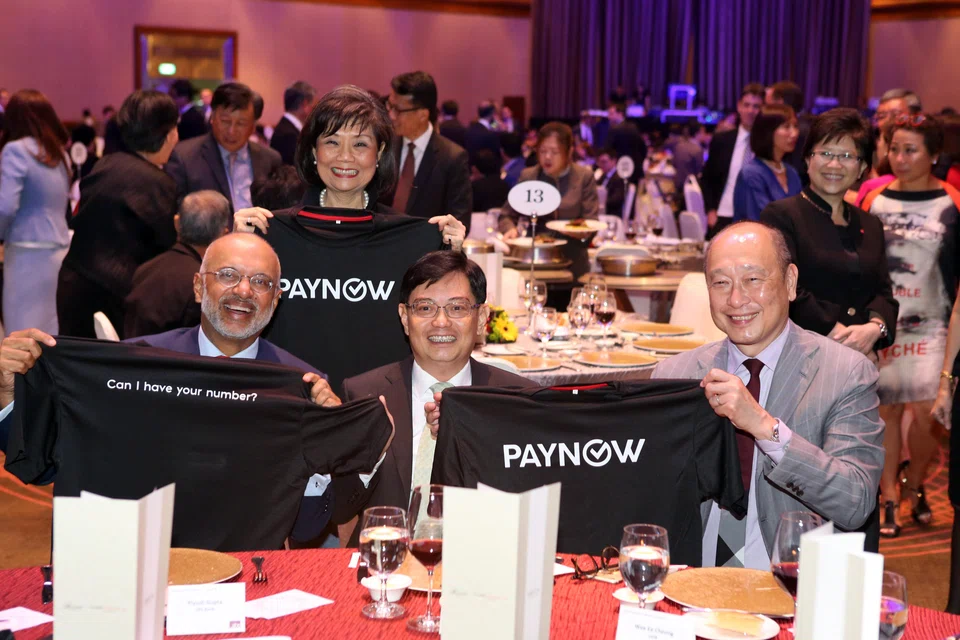
It is critical to provide low-cost and user-friendly access to e-payment services. PayNow, the popular interbank real-time payment system offered by banks in Singapore, is built for mobile and web-based platforms. But mobile phones are increasingly expensive, and there is real concern that some of the most needy segments of the population could be shut out if cash were phased out.
Card-based solutions, including the well-established NETS platform, might be easy to adopt for customers, but they are a cost for merchants, many of which still do not accept cards. Whether on the consumer or merchant side, the payments ecosystem needs to find inclusive solutions for the holdouts and the left-outs.
Banks must also significantly improve the user-friendliness of their payment service interfaces. Clunky log-in processes and glitchy apps are little annoyances that add up with every transaction, and contribute to views that physical cash is easier or more convenient. Worse, these inefficiencies can lead to unsafe behaviour, such as simplifying passwords, as users try to work around the pain points.
Singapore has made great strides in growing digital payments, but more needs to be done.