Jardines has survived wars and market collapses. Can it survive the digital age?
For investors, a flood of rumours over the sale of assets – including properties, fast-food chains and car dealerships – can be disconcerting

[SINGAPORE] With a history spanning nearly two centuries tracing back to its roots as an opium trading house, Jardine Matheson has survived empires, wars and market collapses.
But can a venerable hong whose origins predate the modern corporate era survive the digital economy and fast-moving technological disruption?
Over the decades, Jardines has diversified into industries such as retail, motor vehicles, real estate and financial services. And it is currently undergoing a structural overhaul, shifting away from its traditional owner-operator model to become a return-focused investment company.
But even as the group navigates a complex transformation, the market has not taken too kindly to recent news about its acquisitions and divestments.
This is understandable. For investors, a flood of rumours over the sale of assets – including properties, fast-food chains and car dealerships – can be disconcerting.
In Singapore, the stock is underperforming the benchmark Straits Times Index (STI) year to date and trading at a staggering 34 per cent discount to its book value.
So far this year, Jardine Matheson’s share price has fallen 5.4 per cent. In comparison, the STI is up 10.5 per cent.
But the market could be missing the point: Jardine Matheson desperately needs this pivot.
Assets up for sale
Jardine Matheson executive chairman Ben Keswick has led a sweeping effort to simplify the company’s holdings. And chief executive officer Lincoln Pan, who joined in December 2025 from alternative investment firm PAG, is actively building a dedicated investment team to steer the group in this new direction.
Of course, this strategic shift requires serious cash. And to this end, Jardines has been busy recycling capital. The market is awash with rumours of further asset sales after the group proposed or completed at least US$10.5 billion in deals over the past year.
To the casual observer, it might appear that even the family silver is on the table.
The group’s Mandarin Oriental International is said to be weighing the sale of the remainder of its One Causeway Bay office tower in Hong Kong. This comes after it sold 13 floors of the building to Alibaba Group Holding and Ant Group for US$925 million last year.
Another potential target for divestment is Zung Fu, the group’s Mercedes-Benz dealership covering Hong Kong and Macau.
Closer to home, Jardine Cycle & Carriage is also rumoured to be exploring the sale of its Mercedes-Benz dealerships in Singapore and Malaysia.
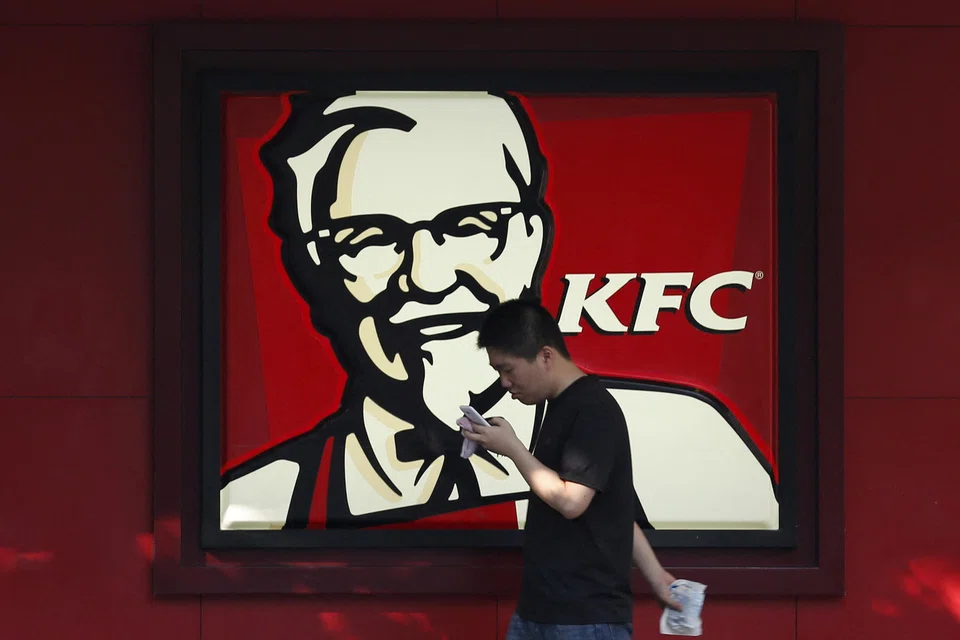
Meanwhile, Jardines’ restaurant unit has reportedly been seeking to sell its KFC and Pizza Hut chains in Asian markets, including Hong Kong and Taiwan. This has attracted bidders such as Carlyle Group and Yum China Holdings.
To streamline operations further, the parent company cut its corporate overhead by roughly 15 per cent compared with that in 2024.
Pivot to the future
Where is the freed-up capital going? Jardines wants to expand into developed Asia-Pacific markets. It targets markets such as Australia and Japan to reduce its heavy exposure to geopolitical and volatility risks in South-east Asia and China.
This strategy materialised with its push into Australian healthcare. Jardines agreed to buy I-MED Radiology Network from private equity firm Permira for an enterprise value of A$3.4 billion (S$3.1 billion). I-MED operates 215 diagnostic imaging clinics across Australia and New Zealand, performing more than seven million patient procedures a year.
This healthcare push offers something Jardines has noticeably lacked: a modern technology narrative.
The acquisition includes a minority interest in Harrison.ai, a firm developing radiology artificial intelligence solutions. For a conglomerate historically reliant on heavy industries, retail and real estate, this AI-adjacent investment is a welcome update.
Despite these proactive steps, the stock remains sluggish.
While the announcement of the Mandarin Oriental privatisation and the initiation of a US$250 million share buyback programme provided a lift to the stock last year, the momentum failed to hold.
To be fair, conglomerate discounts are common in capital markets.
Investors prefer to allocate capital themselves. If an institution wants exposure to Indonesian consumers, it can buy Astra directly. If a fund wants prime Hong Kong office space, Hongkong Land is available on the open market.
Yet, dismissing the holding company ignores a crucial long-term trend. Over the past decade, Jardine Matheson has actually outperformed most of its underlying listed holdings, with the exception of Hongkong Land.
This outperformance stems from management’s ability to create value through disciplined portfolio management and capital recycling.
Furthermore, the parent company offers significantly stronger liquidity and a free float of roughly 80 per cent. This easily dwarfs the liquidity of subsidiaries such as Jardine Cycle & Carriage, Astra or DFI Retail .
Still, we are in an era where capital aggressively chases pure-play technology and digital infrastructure. A case in point is the impending mega initial public offerings featuring Anthropic and OpenAI.
In this light, the caution from the market on a player that relies heavily on the slow compounding of traditional physical assets could be justified.
For now, patient, income-seeking investors might view the discount as a bargain. The current valuation is undemanding and offers a decent dividend yield of 3.6 per cent.
The management is expected to provide greater clarity on the group’s capital-allocation priorities, investment criteria, financial targets and medium-term total shareholder return framework on Jun 16, when it hosts its inaugural Investor Day in Hong Kong.
The group is likely making the right strategic moves. Now, it just needs to convince investors it can execute this pivot effectively.