

The Johor option in serving land-scarce Singapore’s ‘live, work, play’ needs
There are rich opportunities for eldercare, housing, leisure, retail and work-space developments across the Causeway

[SINGAPORE] The Urban Redevelopment Authority’s Draft Master Plan 2025 (DMP 2025) shows that Singapore’s cityscape is set for more housing and community spaces, as well as new models for regional hubs and industrial areas. This is part of long-term plans to build a more vibrant and inclusive city.
Plans are afoot for new neighbourhoods in the Paterson, Newton, Greater one-north and Defu areas, among others. DMP 2025 also includes plans for a bigger decentralised office hub in Bishan – on the scale of Paya Lebar Central – and more flexible zoning in industrial estates to cater to new business models and non-industrial use.
Indeed, DMP 2025, which sets out the Republic’s land-use blueprint for the next 10 to 15 years, shows that with forward planning, land-constrained Singapore can comfortably house more people and business activities.
As it stands, the Housing & Development Board (HDB) is building more flats to meet rising demand. Also, under the government land sales programme, various sites are available for the construction of private homes including executive condominiums, hotels and commercial spaces.
However, given the land scarcity, choices that hurt some people will always have to be made as the city-state transforms and builds capacity.
For one, after a more than 180-year history, horse racing here came to an end when the Singapore Turf Club held its final horse race in October 2024. The club’s land in Kranji will return to the government for redevelopment as a new housing estate.
Meanwhile, there will be fewer golf courses here. When their leases expire – the latest by 2035 – land occupied by Mandai Executive Golf Course, Warren Golf & Country Club, Orchid Country Club and Tanah Merah Country Club’s Garden Course will make way for other uses.
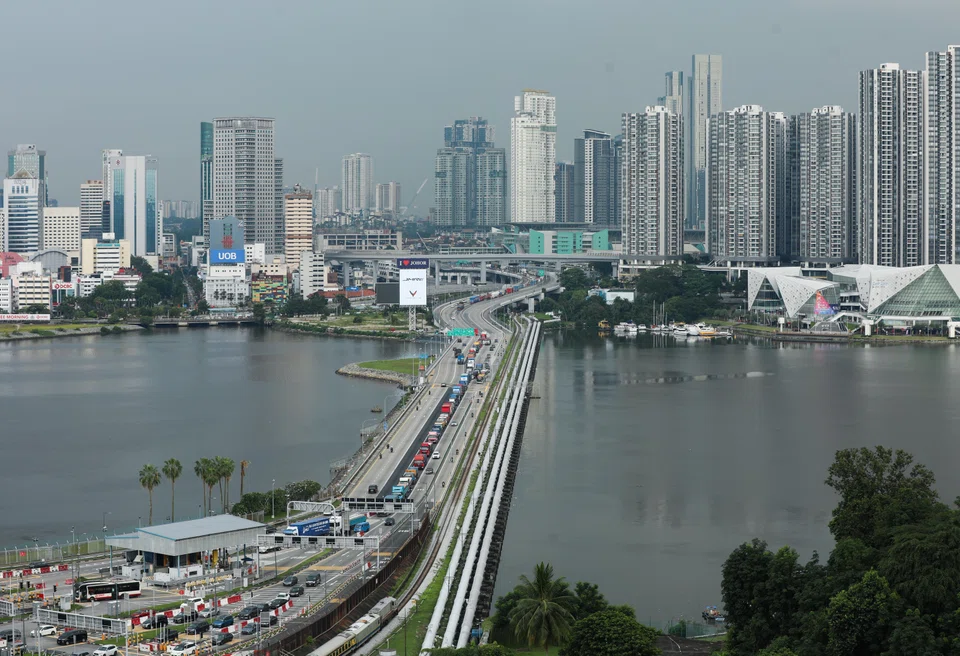
Looking forward, perhaps neighbouring Johor state in Malaysia will play a growing role in Singapore’s continuous efforts to improve as a destination to live, work and play in.
While Johor has a smaller population than Singapore, its land area is about 26 times that of the city-state’s.
Business needs
Developing the Johor-Singapore Special Economic Zone could drive more Singapore-based businesses to open offices and manufacturing facilities in Johor.
Given the generally wide disparity in wages and rental costs, moving support functions from the Republic to Johor can yield substantial cost savings without hurting efficiency as Singapore-Johor connectivity improves.
For example, businesses could split office-space requirements between Singapore and Johor’s capital Johor Bahru – whether for cost reasons or risk management.
Also, the supply of land at reasonable prices in Johor may lure Singapore-based businesses to invest in land-intensive manufacturing facilities across the Causeway.
Importantly, Johor’s growth as a business and manufacturing hub will help alleviate some of the pressure to find land here to cater to the growing needs of businesses.
Homes
On the housing front, the Johor Bahru-Singapore Rapid Transit System (RTS) Link can be a game changer. Passenger service on the RTS Link is expected to start in late 2026, with travel time between Singapore’s Woodlands North station and Johor Bahru’s Bukit Chagar station estimated to be around five minutes.
Should the Singapore-Johor Bahru commute be convenient and affordable, local households who need not travel during peak times to work spaces or schools here regularly might opt to live in Johor Bahru where they can get more space at a lower price.
As the population here ages rapidly, private businesses may see a golden opportunity in providing senior housing for Singaporeans in Johor.
Given the high land costs, developing retirement housing projects here – whether for seniors who can live independently or require assistance – is challenging.
Imagine leveraging Johor’s cheaper land to build retirement housing with abundant open spaces and recreational facilities for active seniors or utilising the lower-cost land and labour across the Causeway to provide premier assisted-living facilities for physically or mentally frail seniors.
Johor’s attractiveness to Singaporean seniors will be boosted if they can easily use their insurance plans to help pay for medical expenses there.
As it stands, Singapore’s Thomson Medical Group recently announced a mega Johor Bay integrated project spanning 10.5 hectares (ha), located 1.2 km from the RTS station at Bukit Chagar. The development will have a multi-disciplinary hospital, specialist suites, aged-care and assisted-living facilities, and healthcare ancillaries. There will also be luxury residences as well as hospitality, commercial and lifestyle elements.
Leisure needs
Currently, many residents here go across the Causeway for shopping and entertainment. The numbers could rise substantially once the RTS Link is operational.
For one, Malaysian conglomerate Sunway Group is partnering Malaysia’s Mass Rapid Transit Corp to build a mixed-use development, with components such as a mall, hotel, serviced apartments, health and wellness hub, as well as education facilities, that is integrated with Bukit Chagar RTS station.
Besides serving the shopping, dining and entertainment needs of Singapore residents, Johor can also cater to the recreation needs of residents here. While the city-state is building new park connectors and sports facilities, Johor can play a key role in serving the needs of local golfers, among others. After all, more local golf courses could disappear in future to make way for housing and other needs.
Indeed, imagine how small but passionate groups of Singapore residents can potentially indulge in land-intensive sporting activities in Johor.
The Republic and Johor could even collaborate more closely to host large-scale sporting events as well as cater to wellness tourists.
Singapore is adept at reclaiming land and building higher or going underground. With the completion of main construction works for Singapore’s first polder, about 800 ha of land was reclaimed at the north-western tip of Pulau Tekong. This land will be used for military training purposes, freeing up space on the mainland for other uses.
With good planning and investment in public infrastructure, the city-state has adequately met the changing needs of a growing population and businesses through the years.
Based on DMP 2025, property developers will have many opportunities to undertake projects to meet the growing and evolving “live, work and play” needs.
Nonetheless, with abundant land and cheaper labour costs across the Causeway compared with those in the Republic, a wide range of needs of Singapore residents can likely be optimally catered to in Johor.
Ultimately, there are exciting opportunities for Singaporean and Malaysian groups to pursue property development projects in Johor targeting Singapore residents and businesses.






