Johor-Singapore SEZ: Will third time be the charm?
Enduring political commitment between Malaysia and Singapore, with economic benefits proportionately accrued to both, are key to success
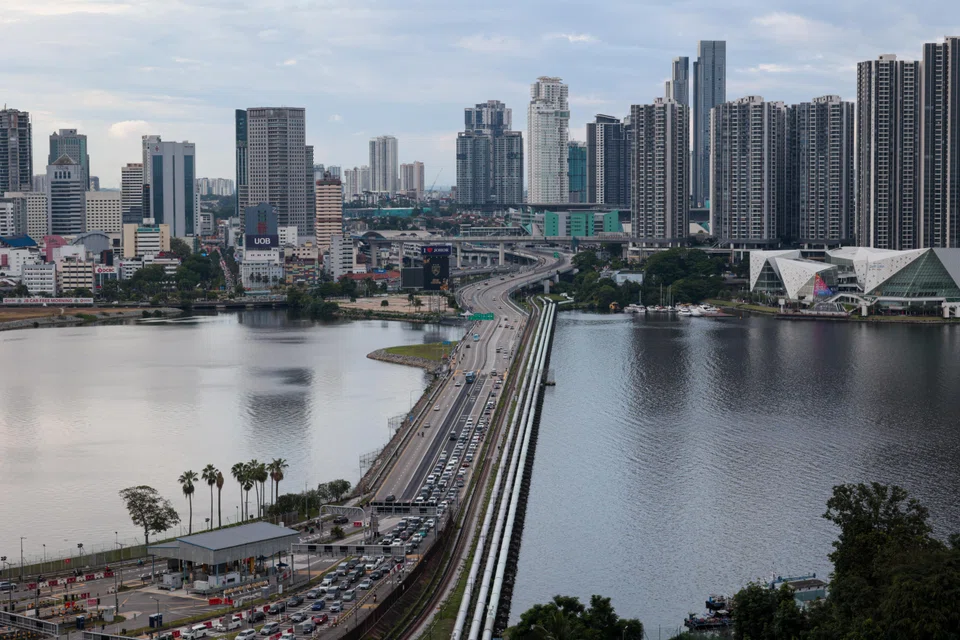
THE formal launch of the Johor-Singapore Special Economic Zone (JS-SEZ) has generated a flurry of interest from businesses and industry stakeholders keen to be part of what many are calling a “game changer” in economic cooperation between the two neighbours.
UOB, the Singapore Chinese Chamber of Commerce & Industry, and the Associated Chinese Chambers of Commerce and Industry of Malaysia inked a memorandum of understanding 10 days after the announcement to boost collaboration and investment opportunities in the JS-SEZ.
The Singapore Manufacturing Federation has about 20 member companies that have already set up facilities in Johor even before the agreement to establish the zone was signed on Jan 6. The Singapore Business Federation (SBF) is planning a mission to Johor in mid-February that will involve over 100 companies, with more than 80 per cent being small and medium-sized enterprises (SMEs) and more than half being new to Johor.
In theory, JS-SEZ promises to overcome Singapore’s resource limitations while capitalising on Johor’s geographical endowments. Businesses will now have the best of both economies – Singapore’s strength as a global hub for technology, business and finance, combined with Johor’s abundance of land and resources.
In reality, the JS-SEZ represents the third attempt at bilateral economic integration over the last three decades. Businesses operating in the region will remember previous initiatives such as Sijori in 1994 and Iskandar Malaysia in 2006.
Sijori aimed to create a growth triangle between Singapore, Johor, and Indonesia’s Riau Islands, focusing on complementary economic activities. Iskandar Malaysia sought to develop southern Johor into a strong and sustainable metropolis of international standing.
While both initiatives showed promise at the start, they faced challenges in implementation and sustained momentum, partly due to changing economic landscapes and political priorities. Both projects underscore the importance of improved governance, infrastructure development and strategic planning to ensure a more equitable and sustainable collaboration.
Would the third time be the charm? In SBF’s report on the JS-SEZ, Greater Together: Two Economies, One Ecosystem, published in July 2024, we highlighted perennial challenges such as the lengthy clearance times for people and goods, lack of skilled talent, and bureaucratic hurdles for businesses operating in Johor that limit their ability to operate across the Malaysian state and Singapore as one integrated entity.
The early initiatives announced as part of the JS-SEZ Agreement show promise. There is the establishment of the Invest Malaysia Facilitation Centre (IMFC) in Johor to be the one-stop shop to facilitate companies setting up in the JS-SEZ; the streamlining of customs procedures for land intermodal transhipments; and collaboration between educational institutions on vocational training. The Malaysian government has also announced a slew of tax incentives ranging from a preferential corporate tax rate to a special tax rate for knowledge workers.
But longer-term and more structural measures are needed to achieve seamless connectivity between Johor and Singapore.
These include the expedited clearance through green lane travel arrangements for workers in JS-SEZ businesses, additional connectivity points for people flows, digital integration of systems for goods clearance, and harmonisation of foreign pass frameworks to facilitate the movement of people living and working across the JS-SEZ. These will need further study and are subject to negotiations between the authorities.
The Hong Kong-Shenzhen model is often cited as a reference for “what good looks like” in an economic integration between Johor and Singapore.
It is enticing because Shenzhen has been growing rapidly with Hong Kong’s resources, experience and channels, while Hong Kong has benefited from a more seamless integration with mainland markets.
But there are limitations to this comparison. Hong Kong and Shenzhen operate under the “one country, two systems” principle, driven by decisions made by a single government in Beijing. In contrast, the JS-SEZ spans two sovereign countries, each with its own political, economic, legal and social considerations.
The pace and degree of integration will therefore depend on the willingness and ability to collaborate based on principles of complementarity and accountability by the people of both countries. Given the challenges and critical need for strong political commitment to sustain the projects, businesses are understandably concerned whether the current strong political commitment will endure through the political cycles.
Nonetheless, the economic imperative for greater integration is strong. If the benefits from economic integration are proportionately accrued between Johor and Singapore, enduring political commitment is more likely.
With the JS-SEZ, the competition is no longer between Johor and Singapore but with other destinations eyeing investments resulting from the global supply diversification. This collaboration presents an unprecedented opportunity to create a singular cross-border ecosystem that leverages digital integration, smart-city technologies, and collaborative talent development strategies.
In other words, we should not expect Johor to be a backwater for Singapore with few value-added and labour-intensive operations. We need to keep our sights on the big prize. We should jointly gun for high-value business operations that straddle across both regions that play to the strength of our complementarity. We cannot see this as a zero-sum game where an investment in Johor is considered as a loss for Singapore, and vice versa.
Already, many international companies are exploring this twinning model offered by the JS-SEZ. Among the interested companies that have participated in business missions are those from Japan, Germany, and China. These companies are looking to relocate manufacturing operations to South-east Asia.
If seamless connectivity for the movement of people and goods is achieved, the JS-SEZ offers an ideal platform for companies pursuing a “China plus one” strategy and capitalising on shifting trade routes and global supply chains.
What should businesses do now? Companies need to shift gears from a “wait and see” approach to “act and probe”. Beyond manufacturing investments, companies can view the JS-SEZ as an innovation sandbox, particularly SMEs that can leverage cross-border collaboration for new market access, shared research facilities, and integrated support systems.
With the IMFC set to be operational by the end of February, businesses should determine if their investments align with the prioritised 11 economic sectors, which flagship zones are appropriate, and if their projects qualify for tax incentives. Concurrently, they should engage with government agencies such as the Economic Development Board, Enterprise Singapore, and the Malaysian Investment Development Authority on available support and how to structure their operations across the two regions.
What should both governments do following the signing of the SEZ agreement? It is undoubtedly a landmark deal and has provided a basis for regular engagements between the two governments. Investors are now watching to see how quickly the early initiatives are implemented and what is in the next instalment.
Both governments have set a target of 50 projects within the first five years. The first few pathfinder projects will set the tone for how the economic integration is different this time. The projects should demonstrate how the twinning of activities across Johor and Singapore benefit from the complementarity, and how measures to ease the flow of people and goods make the projects more competitive in the JS-SEZ compared with other destinations. Investment promotion agencies in both countries need to work as a joint team to engage companies in structuring their operations by looking at the JS-SEZ truly as one ecosystem.
Amid geopolitical uncertainties and growing protectionism, the JS-SEZ can be a shining example of economic integration based on the principle of complementarity. It can provide a safe harbour of stability, reliability, and consistency for businesses. With enduring political commitment and swift execution, the JS-SEZ represents a bold reimagining of regional economic cooperation – a sustainable, seamlessly connected and digitally integrated model that could serve as a global blueprint for cross-border economic development.
We can indeed be greater together as “two economies, one ecosystem”.
The writer is chief executive officer of the Singapore Business Federation