

JustCo’s dismal debut: Did institutional investors misjudge the company’s public market value?
Despite pivoting to profitability and laying out growth plans, its shares have slumped 42.6% below their IPO price

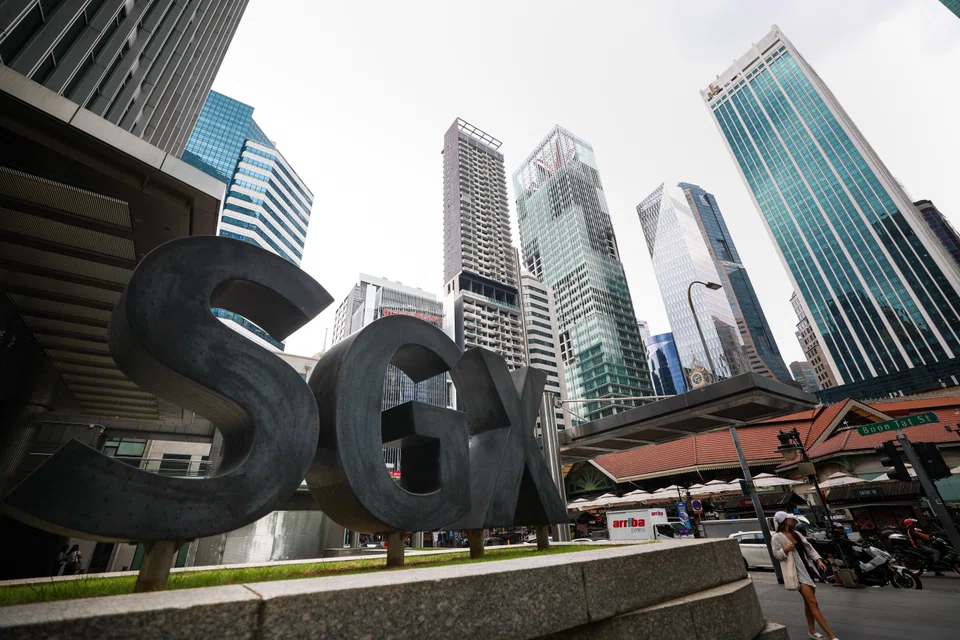
[SINGAPORE] Some investors may have been heartened by JustCo’s announcement last week that it will open a new co-working centre in Singapore’s Central Business District.
The provider of flexible workspaces came to market last month following an initial public offering at S$0.94 per share. On its first trading day, on May 22, its shares closed at S$0.775 – nearly 17.6 per cent below its IPO price.
Since then, JustCo’s shares have sunk even lower. They ended Friday’s (Jun 26) trading session at S$0.54.
The company said last week that the new co-working space, which will be located at level 9 of the Octagon along Cecil Street, forms part of the expansion pipeline announced during its IPO. This provides investors with some assurance that its growth plans are still on track despite the weak post-debut performance of its shares.
There is a lot riding on JustCo and other new listings delivering decent returns, in my view. Without a general sense of optimism about IPOs, promising companies may shy away from listing in Singapore – which would be a shame, given the big push to revive the local market through initiatives such as the S$6.5 billion Equity Market Development Programme (EQDP).
JustCo raised a total of S$100 million through its IPO and the sale of shares to cornerstone investors. More than four-fifths of these funds will be used to support its expansion in existing and new markets.
The company currently has 54 co-working centres in 12 cities in the region. It is aiming to have more than 100 centres across 20 cities by 2029. In 2026 alone, it plans to open a total of 28 new centres – including nine in Japan, a market that the company views as being crucial to its regional expansion.
JustCo’s IPO comes just as it is showing signs of turning profitable. For 2025, it reported a 12.5 per cent rise in revenue to US$144.2 million and a profit after tax of US$2.7 million versus a loss after tax of US$10.1 million in 2024.
Its improving profitability and expansion plans aside, JustCo also has some prominent corporate backers. Its prospectus indicated that more than 17.6 per cent of its shares are held by Frasers Property and 22.7 per cent by GIC.
The company’s chairman and chief executive, Kong Wan Sing, who has been buying shares in the market, holds a direct and deemed interest of 18.6 per cent of the company, indicated a filing last week.
So, why has JustCo fallen so far below its IPO price? Could anything have been done to ensure a better post-listing performance?
Lacklustre post-IPO performance
At the beginning of this year, it was reported that more than 30 companies were pursuing preparatory work to list on the Singapore Exchange (SGX) mainboard and Catalist. Some market watchers were expecting to see 15 to 20 companies go public in 2026.
Six months into the year, there has been only one other mainboard primary listing besides JustCo – namely, UI Boustead Reit.
The industrial and logistics real estate investment trust ended its first trading day, back in March, more than 8.5 per cent below its IPO price of S$0.88 per unit. It closed on Friday at S$0.81 – still nearly 8 per cent underwater.
Last week, Temasek-linked Foundation Healthcare lodged a preliminary prospectus for a mainboard listing.
Meanwhile, there have been three interesting listings on Catalist this year: AI-powered customer experience platform Toku; community living operator The Assembly Place (TAP); and sports events manager Kin Global.
Unlike UI Boustead Reit and JustCo, all three of these Catalist companies popped nicely when they debuted. In January, Toku and TAP ended their first trading sessions 14 per cent and 26.1 per cent above their respective IPO prices.
In April, Kin Global ended its first trading day 15.2 per cent above its IPO price.
This strong start did not last long, though. At their Friday close, Toku, TAP and Kin Global were 22 per cent, 2.2 per cent and 10.9 per cent below their IPO prices, respectively.
To be fair, the war in Iran may have weighed on the performance of these new listings – especially the ones that came to market early in the year. If these companies report decent financial numbers, their shares may rise over time.
Yet, even against their lacklustre showing thus far, the post-listing performance of JustCo looks terrible. Despite listing only after the Iran war began winding down, it is now trading 42.6 per cent below its IPO price.
Institutional investor backing
One common refrain in the market when companies do not trade well after listing is that they had been too greedy in pricing their IPOs. Another is that the company in question is not well understood by the public market.
Yet, investors do not have to participate in an IPO that is uninteresting or excessively priced. So, how would such companies get listed in the first place?
The way I see it, if a newly listed company trades far below its IPO price in the absence of any bad news, it may simply be a reflection of IPO investors having misjudged its public market value.
The bulk of the S$100 million raised by JustCo came from the sale of 74.3 million shares to cornerstone investors – which included recipients of EQDP funds such as Avanda Investment Management, JP Morgan Asset Management, Fullerton Fund Management and Amova Asset Management.
A further 32.1 million shares were sold through its IPO, which was approximately 3.4 times subscribed.
Two investors were disclosed to have taken up more than 5 per cent each of the IPO shares – a BlackRock fund, which was allocated 6.1 million shares; and Tecity Asset Management, which was allocated two million shares.
Fostering wider institutional investor participation has been a key element of the national effort to revitalise the local market, and persuade more promising companies to list in Singapore.
On the whole, it seems to be working. Initiatives such as the EQDP and Value Unlock programme have clearly spurred valuations and trading volumes across the market, and created a more conducive environment for new listings.
Yet, the weak post-listing performance of JustCo is a reminder that the participation of institutional investors in an IPO is no guarantee of a good outcome. If JustCo’s share price does not quickly recover, its listing may end up being remembered for harming rather than helping Singapore’s prospects as a vibrant capital raising hub.
TRENDING NOW

DBS, OCBC, UOB rout lops billions off STI as inflation, rate concerns spook investors

Grab CEO’s wife Chloe Tong on life with Anthony Tan and finding her purpose

OCBC sheds S$8 billion in value as shares close nearly 6% down; analysts cautious on banks

Deal between tycoon friends sparks scrutiny of Philippine power sector

