

Keppel Reit units: To have and to hold – or not?

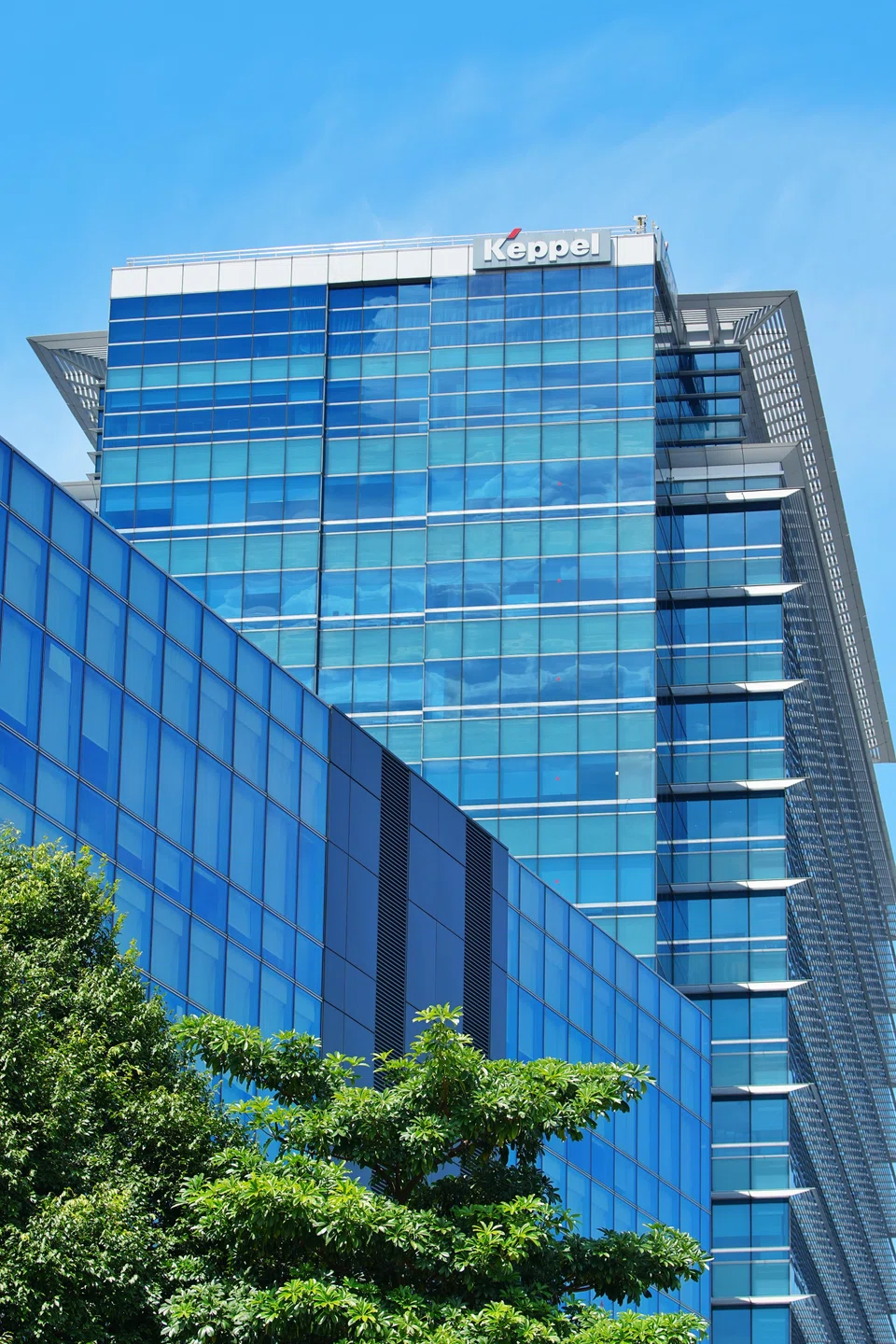
ACCORDING to the conventional wisdom “don’t look a gift horse in the mouth”, one ought to be grateful and not question the value of a gift. But why not?
A case in point is Keppel Corp ’s emerald (55th) anniversary reward to shareholders by way of an unexpected proposed special dividend in-specie of 352.4 million units it owns in Keppel Real Estate Investment Trust (KReit).
This proposed distribution represents a 9.4 per cent interest in KReit – one of the largest pure-play office S-Reits listed on the Singapore Exchange with a portfolio of S$9.2 billion, more than three-quarters of which is located in Singapore. The rest of the quality commercial assets under management by the Reit, which is sponsored by Keppel’s wholly-owned Keppel Land, are in key business districts in Australia, South Korea and Japan.
Keppel’s proposed distribution of one KReit unit for every five Keppel shares, announced alongside its first-half FY2023 bumper profits of S$3.6 billion, is set to make entitled shareholders wonder what to do once they bag the perk.
The plan is subject to getting shareholders’ green light at a meeting to be held by end-year, while the final value of the dividend in-specie will be based on KReit’s unit price on the date the proposed distribution is completed. Based on KReit’s last traded price of S$0.92 prior to the announcement, the special dividend is worth S$0.184 per Keppel share.
Keppel said the proposed distribution of KReit units is part of the company’s ongoing capital management following its reboot – unveiled in May – from a conglomerate to a global asset management and operator. The exercise will also raise KReit’s public float and investor base.
No doubt, the anniversary theme is dominant among Keppel’s group of companies. On its part too, KReit said last October that it will set aside S$100 million from accumulated capital gains to be distributed once every six months. It will take place over the next five years to mark its 20th anniversary in 2026.
The beat goes on, albeit slowed
Here’s one context for Keppel’s latest move.
The group has set a goal to monetise assets worth S$10 billion to S$12 billion by end-2026. Under this plan, aimed at scaling up and driving growth as well as rewarding shareholders, Keppel has so far announced deals to unlock value of nearly S$5 billion. These include some S$420 million announced over the six months to June 2023.
The capital recycling is part of Keppel’s efforts to meet a return on equity (ROE) target of 15 per cent by 2030. The company is hopeful this can be hit even earlier – by 2026 – as it supplants lumpy earnings with recurring income, which it appears to be doing dutifully. Already, 76 per cent of its first-half FY2023 net profit stemmed from recurring income from half in the corresponding period the previous year.
However, the pace of capital recycling has visibly slowed in the last six months versus the previous years since Keppel embarked on the programme (S$1.5 billion in 2022; S$1.7 billion in 2021; S$1.2 billion in 2020).
The proposed distribution in-specie of KReit units, albeit one off, will enhance Keppel’s ROE while helping the group stay on message that it remains steadfast on stepping up its ROE game.
What next?
That could also partly explain the elephant in the room, so to speak, since Keppel announced the proposed distribution: Why is Keppel cutting its stake in KReit to 37 per cent at this point, even if it will remain its largest unitholder? And is this is a prelude to something more?
When queried on this matter at last week’s results briefing, Keppel chief executive Loh Chin Hua replied: “...if there is anything planned after that? The short answer is no. Nothing is planned. We are quite comfortable with this number.”
He also said: “I hope that many of our shareholders will continue to hold this very good Reit... the assets are best-in-class in Singapore, in Australia. And of course, I think we are quite sure that (KReit) is what we want to hold at this point.”
The market, however, seemed less believing. Following the announcement, KReit’s units fell 1.6 per cent or S$0.015 to S$0.905 last Friday (Jul 28), largely owing to concerns on the overhang of some 352.4 million units involved in the proposed distribution.
Grade A pitch
For fans of quality Grade A office assets and those fixated on steady yields of around 6 per cent, there is little to nothing to dislike about KReit as an investment opportunity.
KReit’s latest results underscored continued rosy demand for quality office assets in its markets. As at end-June 2023, overall portfolio occupancy rate remained high at 94.9 per cent. In Singapore, committed occupancies for Ocean Financial Centre and One Raffles Quay were at 100 per cent, while Marina Bay Financial Centre and Keppel Bay Tower were above 98 per cent. Weighted average lease expiry (Wale) – a gauge of a property portfolio’s risk of going vacant – stood at 5.7 years. The Wale based on its top 10 tenants is at 10.3 years.
To top things off, KReit has also been buying back its units, which offers support for the counter. In the first half, it bought back and cancelled 19.5 million units, with management signalling that it continues to see good value in its units.
Several factors hold promise for KReit, said analysts, from resilient rents and capital values for office properties in Singapore to potential catalysts such as redeployment of divestment proceeds to new accretive acquisitions and recovery to pre-Covid demand for office space.
On the other hand, while rental reversions at around 8 per cent presently are healthy, the latest data from CBRE Research indicated that Singapore’s rental market outlook is looking flat.
There are other risks, such as a prolonged slowdown in economic activity that could hamper demand for office space, and a sharper-than-expected rise in interest rates that could increase cost of debt and negatively impact earnings.
It is no surprise, then, that when the proposed distribution finally gets the nod from Keppel shareholders, the question that will hog the market’s attention is whether the KReit units under the distribution will be a gift that keeps on giving.
TRENDING NOW

He built the Vingroup empire. Now South-east Asia’s richest man is handing some key roles to his sons

Proton e.Mas 5 review: The little EV that beat Tesla
Cash-strapped AirAsia takes unusual step of unloading new planes

Despite the de-dollarisation debate, demand for dollar liquidity in Asia is growing

