

Is Keppel Reit’s deal Down Under a good move?
Prime office landlord may continue diversifying geographically and across real estate asset classes to expand its portfolio

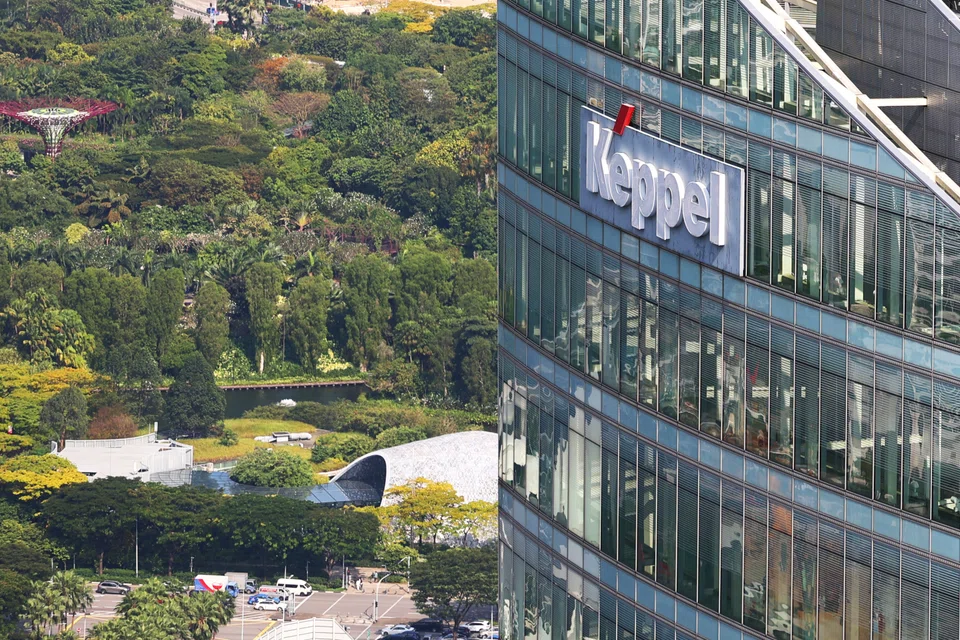
[SINGAPORE] Unitholders of Keppel Reit may have mixed feelings about its recently announced purchase of a 75 per cent stake in a freehold retail mall in Australia.
On the one hand, the deal has been billed as a strategic expansion by Keppel Reit into the retail property sector that promises to boost its distributions per unit (DPUs) and enhance the resilience of its portfolio.
On the other hand, the acquisition will further dilute Keppel Reit’s exposure to Singapore’s prime office property sector – which is arguably the most attractive aspect of its portfolio to many local investors.
As at Jun 30, Keppel Reit’s S$9.4 billion property portfolio consisted almost entirely of office properties. Its Singapore assets – which include stakes in Marina Bay Financial Centre, Ocean Financial Centre, One Raffles Quay and Keppel Bay Tower – accounted for 78.6 per cent of the portfolio.
Keppel Reit’s manager said on Oct 8 that it currently holds only about 100,000 square feet of retail space, integrated into its office properties. With the acquisition of the 75 per cent stake in the Top Ryde City Shopping Centre, however, retail property assets will account for 4.2 per cent of its enlarged S$9.8 billion portfolio.
The terms of the transaction seem reasonable. The price tag of A$393.8 million (or S$334.8 million) for the new asset is exactly in line with an independent valuation. Including the acquisition fee payable to the manager, stamp duties and other expenses, the total acquisition cost will amount to about A$427.4 million (or S$363.5 million).
Keppel Reit’s manager said 60 per cent of this total acquisition cost will be funded by the issuance of perpetual securities, and a placement of new units. The remaining 40 per cent will be funded by Australian dollar-denominated debt.
Pro forma financial data in the Oct 8 announcement showed the deal would have lifted Keppel Reit’s DPU for 2024 by 0.9 per cent, and lowered its net asset value (NAV) as at end-2024 by 0.8 per cent. Its relatively high aggregate leverage would remain almost unchanged at 41.6 per cent.
Keppel Reit has since raised S$113 million through a placement of nearly 115 million new units priced at S$0.983 each. The pro forma financial numbers were based on a less favourable assumption that 125.4 million units would be sold at S$0.90 each.
Forming partnerships for growth
One interesting aspect of the deal is the manner in which it was sourced. Keppel Reit will invest in Top Ryde City Shopping Centre alongside ASX-listed MA Financial Group, which will acquire a 25 per cent stake in the property.
Many of Keppel Reit’s properties are jointly owned with other investors; and it has been known to work with the same co-investors on multiple properties.
For instance, the real estate investment trust (Reit) purchased a 50 per cent interest last year in an office building at 255 George Street in Sydney from a unit of ASX-listed Mirvac Group, which continued holding the remaining 50 per cent interest.
Keppel Reit’s manager said at the time that the deal marked a “deepening partnership” with Mirvac, as the two parties already jointly owned 8 Chifley Square in Sydney and the David Malcolm Justice Centre in Perth.
The partnership with MA Financial is particularly intriguing, though. Besides being the property manager for Top Ryde City Shopping Centre, MA Financial will also be appointed asset manager for Keppel Reit’s 75 per cent interest in the property, according to the Oct 8 announcement.
A spokesperson for Keppel Reit’s manager told The Business Times that asset management fees earned by MA Financial will be payable out of the fees to which Keppel Reit’s manager would have been entitled. However, the Reit’s manager would still receive a divestment fee of 0.5 per cent if it sells its stake in the property.
The spokesperson went on to say that MA Financial’s primary responsibility as the asset manager is to serve as a direct point of contact for local stakeholders, including the property manager, tenants and vendors.
The spokesperson added that Keppel Reit’s manager works closely with its partners in all its co-owned properties to maximise returns.
“This model has proven to be highly effective for Keppel Reit. It allows us to harness our partners’ expertise and tenant networks, particularly in overseas markets, while maintaining direct involvement and control.”
More diversification ahead
The Reit’s acquisition of the Top Ryde City Shopping Centre may not be its last investment in the retail property space. In fact, in order to expand its portfolio, it may continue diversifying geographically and across real estate asset classes.
Singapore office properties tend to be valued at relatively low capitalisation rates. This makes it tricky for listed Reits to acquire such assets on terms that would be immediately accretive to their DPUs. Hunting for higher-yielding properties in markets such as Australia often makes more sense.
As at Dec 31, Keppel Reit’s stakes in Marina Bay Financial Centre, Ocean Financial Centre and One Raffles Quay were valued in its books at capitalisation rates of 3.25 per cent, 3.4 per cent and 3.15 per cent, respectively.
Its properties in Australia had much higher capitalisation rates: 6.5 per cent for 255 George Street in Sydney, 5.88 per cent for 8 Exhibition Street in Melbourne, and 7.25 per cent for 6 Giffnock Avenue in Macquarie Park, New South Wales.
Despite these higher yields, local investors often have misgivings about Singapore-focused Reits venturing overseas. This is partly due to a lack of familiarity with foreign commercial property markets, and concerns about higher volatility through economic cycles.
The structural appreciation of the Singapore dollar also works against locally listed Reits with big foreign exposures. Over the past five years, currencies of Australia, South Korea and Japan – countries to which Keppel Reit is exposed – have depreciated against the Singapore dollar by about 12 per cent, 23 per cent and 30 per cent, respectively.
Keppel Reit’s units are currently trading at an annualised H1 2025 distribution yield of 5.6 per cent, and at a 19 per cent discount to its NAV. For a major prime office landlord in Singapore, that doesn’t seem excessive. But investors should keep a wary eye on its long-term strategy.






