

Keppel Reit’s dilutive purchase of MBFC Tower 3 a gamble on the sensibilities of S-Reit investors
A quick rebound from its sell-off last week might suggest investors are prepared to stomach some DPU dilution for the right deal at the right time


[SINGAPORE] It has been a pretty good year for Singapore-listed real estate investment trusts (S-Reits), with softening interest rates and bullish market sentiment enabling some of the leading players in the sector to actively tap investors and expand their property portfolios.
Keppel Reit’s latest deal, however, could be something of a gamble on the sensibilities of S-Reit investors, and an interesting test of the limitations of these asset securitisation structures.
On Thursday (Dec 11), Keppel Reit’s manager called for a trading halt and announced that it will acquire a one-third interest in Marina Bay Financial Centre (MBFC) Tower 3 from a unit of Hongkong Land at an agreed property value of S$1.45 billion.
To partially finance the deal, Keppel Reit has launched a 23-for-100 preferential offering of 923.2 million new units at S$0.96 each – a 6.8 per cent discount to its closing price of S$1.03 on Wednesday. Keppel Reit is scheduled to trade ex-preferential offering on Dec 19.
Here’s the thing: The pro forma financial numbers provided by Keppel Reit’s manager do not suggest that the deal will have an immediate positive impact on its distributions per unit (DPU).
In fact, if Keppel Reit’s purchase of the additional one-third stake in MBFC Tower 3 had been completed at the beginning of 2024, and assuming a blended debt cost of 3.3 per cent, its DPU for the year would have been 6.4 per cent lower.
Assuming a more favourable blended debt cost of 2.2 per cent, its DPU for 2024 would still have been reduced by 3.6 per cent.
Will S-Reit investors support an acquisition that is not at least marginally accretive to DPU? What would it mean for the S-Reit sector if they did?
Seizing an opportunity
There are a number of good reasons for Keppel Reit to acquire a further one-third stake in MBFC Tower 3, despite the likely dilutive impact on its DPU.
SEE ALSO

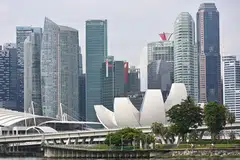


The deal will expand the size of Keppel Reit’s property portfolio, from S$9.8 billion to S$11.2 billion, and increase its exposure to Singapore’s prime office sector, from 75.8 per cent to 79 per cent.
Citing research from major property consulting firms, Keppel Reit’s manager said last week that average vacancy rates at Grade-A office properties in the Central Business District (CBD) fell to 5.1 per cent in the third quarter of 2025, from 6.6 per cent the same period a year earlier.
It also noted that no new office projects are expected in the Marina Bay area between 2026 and 2029, and that the government has not recently released land for office developments in the CBD.
With tightening supply of prime office space in the CBD, rents will probably rise over the next few years.
The opportunity for Keppel Reit to acquire a further one-third interest in MBFC Tower 3 against this positive backdrop only arose because Hongkong Land was contractually obligated to offer its stakes in some of its key properties to its partners before transferring them to a fund.
Hongkong Land said last week that its first private real estate fund – dubbed the Singapore Central Private Real Estate Fund – will have assets under management of S$8 billion at inception.
The fund will focus solely on managing prime commercial properties in Singapore, and it is expected to be seeded by assets from Hongkong Land and other sources.
Hunt for yield
Over the years, Keppel Reit has expanded across asset classes and geographies to gain heft and resilience.
Besides Singapore, it has exposure to office properties in Australia, South Korea and Japan. Earlier this year, it also acquired a 75 per cent stake in the Top Ryde City Shopping Centre, a freehold retail mall in Australia.
This diversification would have been appealing to income-focused investors. The prime office properties in Singapore that form the core of Keppel Reit’s portfolio tend to be valued at relatively low capitalisation rates. As the deal its manager announced last week demonstrates, it is tricky to acquire such assets on terms that would be immediately accretive to DPU.
Acquiring higher-yielding commercial properties in foreign markets such as Australia makes it easier to immediately deliver the higher DPUs many S-Reit investors crave.
Yet, investors are clearly sensitive to risk, too. S-Reits that are focused on commercial properties in Singapore tend to trade at higher valuations than S-Reits with faraway assets. The backing of a well-resourced, Singapore-based sponsor group can also make a big difference.
CapitaLand Integrated Commercial Trust – the largest of the S-Reits, with a property portfolio that is roughly 95 per cent exposed to Singapore – is currently trading at an annualised H1 2025 DPU yield of 4.8 per cent, and 1.09 times its net asset value (NAV).
The lesser known Stoneweg Europe Stapled Trust – which has no assets in Singapore – is trading at an annualised H1 2025 DPU yield of 8.2 per cent, and 0.78 times NAV.
Meanwhile, Keppel Reit’s units are trading at an annualised H1 2025 DPU yield of 5.7 per cent, and 0.78 times NAV.
So, will its further investment in MBFC Tower 3 draw applause from the market? Or, will concerns about the DPU dilution weigh on its units?
Dipping on dilution
When Keppel Reit’s trading halt was lifted on Friday, its units suffered a significant sell-off. They ended the day 6.8 per cent lower – at S$0.96.
Even if Keppel Reit’s units were to dip further this week, the preferential offering at S$0.96 per share would not be scuppered. About 37.3 per cent of Keppel Reit’s units are held by entities under the Keppel group, all of which have provided irrevocable undertakings to subscribe and pay for their respective entitlements.
DBS , OCBC and UOB – which have been appointed joint bookrunners and joint underwriters – will mop up any unsubscribed entitlements of the other unitholders.
Yet, it would not be a good look if the market price of Keppel Reit’s units were to fall significantly below the preferential offering price for an extended period of time. In my view, that would be a clear signal that DPU dilutive deals are simply unacceptable to S-Reit investors.
The upshot would be that Keppel Reit, and its S-Reit peers, will have to confine themselves in the future to acquiring assets that have the potential to deliver immediate DPU accretion. This would leave them with a narrower range of options to expand their property portfolios.
If Keppel Reit were to quickly rebound, however, it might suggest that S-Reit investors are prepared to look past temporary DPU dilution for the right deal at the right time – and embolden S-Reit managers to seize opportunities.
Despite the sell-off last week, Keppel Reit is still among the 10 best performing constituents of the iEdge S-Reit Index in 2025. With distributions re-invested, it has chalked up a total return of 19.4 per cent since the beginning of the year, versus the index’s total return of 14.4 per cent.
Decoding Asia newsletter: your guide to navigating Asia in a new global order. Sign up here to get Decoding Asia newsletter. Delivered to your inbox. Free.
Copyright SPH Media. All rights reserved.
TRENDING NOW

Once staunchly pro-China, Malaysian Chinese businesses are now distancing themselves from Beijing

Looking beyond looming CEO succession, should UOB potentially pursue a transformative merger?

Could stablecoins be the future of money?

Grab CEO’s wife Chloe Tong on life with Anthony Tan and finding her purpose

