

Key risks ahead for the global economy
Sticky global inflation and China’s uneven economic recovery remain key risks too and a second Trump term would lead to elevated policy uncertainty
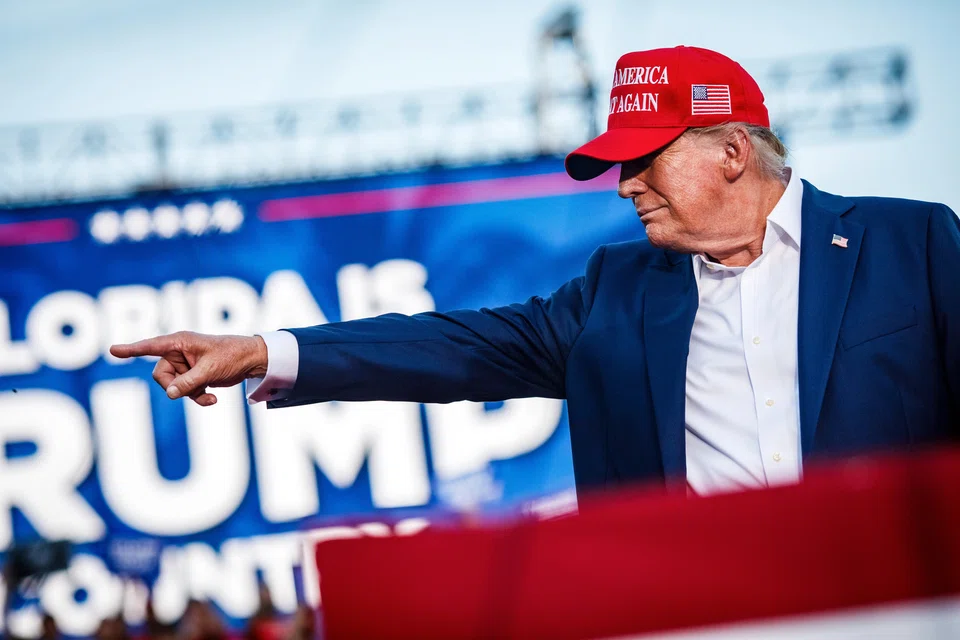
THE US presidential election in November is in sharp focus after President Joe Biden’s poor television debate performance raised doubts over his ability to defeat his rival Donald Trump.
There is the risk of elevated policy uncertainty should Trump win a second term as US president.
The prospect of a Trump victory – and its impact on the US economy – is the biggest risk facing the global economy for the rest of the year and into 2025.
The other two key threats – sticky inflation and China’s uneven economic recovery – are closely connected with the situation in the US. These other risks would be worsened if America gets a second Trump presidency.
A second Trump term
Trump’s proposed changes to tax policies, trade policies and immigration policies are expansionary, which means they have the potential to boost the economy. However, this also means that they will likely have inflationary effects – a huge worry given the stickiness of inflation in the US.
From a tax policy front, the personal income tax and corporate tax cuts enacted during Trump’s first term are due for renewal in 2025. If he wins office again, Trump will likely renew the tax cuts – an inflationary move because it is supportive of more consumer and business spending and demand.
With immigration being a major sticking point for American voters, Trump has proposed various measures to restrict inflows into the US and also went further to suggest repatriation of unauthorised immigrants. This may well lead to a tighter workforce and is inflationary as well.
A major signature plank of Trump’s first term was the trade war with China. He has made clear that if he regains power, he will increase trade tariffs against China to as high as 60 per cent. In fact, all of America’s trading partners are at risk as Trump has also mooted a universal 10 per cent trade tariff on all imports into the US.
He has also broached the idea of replacing income tax with trade tariffs – meaning that the US government would rely on taxing imports as a major source of revenue, rather than taxing the income of Americans. The impact overall would be inflationary as the cost of imported goods and services in the US would be substantially higher.
A group of Nobel-Prize-winning economists led by former World Bank chief economist Joseph Stiglitz have warned precisely of this inflationary risk from Trump’s proposed policies. Former US Treasury Secretary Larry Summers has blasted Trump’s proposal to replace income tax with tariffs as a very bad idea, warning that his policies risk igniting inflation and slowing growth at the same time, potentially triggering stagflation.
Persistent sticky inflation
Persistent sticky inflation remains a concern not just in the US, but potentially other countries too. Crude oil prices have been grinding back up above US$85 per barrel amid the Middle East’s long-brewing geopolitical risks, while shipping rates have climbed anew as shipping lanes across the Suez Canal remain disrupted.
Prices of copper and other industrial metals have risen back up towards the high of 2021. Further rises in commodities prices risk exacerbating the ongoing stickiness in global inflation. In the US and Australia, higher shelter and home rental costs have also contributed to sticky inflation.
Closer to home, there are nascent signs of stickiness in services and travel-related inflation in Singapore. Across other Southeast Asian countries such as Malaysia, Thailand, Indonesia and Vietnam, their respective central banks are expected to adopt a wait-and-see attitude, with no rate cuts projected for this year.
The concern is that this sticky inflation may prolong the risk of interest rates staying “higher for longer” and further delay the anticipated rate cuts from the US Federal Reserve.
Uneven recovery in China
Trump’s laser-focused targeting of Chinese imports will also throw a spanner into the uneven and patchy recovery in China’s economy.
Already, the Chinese property sector is going through painful debt restructuring as both home sales and prices continue to fall. Key manufacturing indicators like the Purchasing Managers’ Index (PMI) and industrial production have yet to show strong recovery.
Unlike many other countries grappling with rising prices, China faces the opposite problem of inflation staying near zero. That presents a whole new set of problems because it indicates soft demand for credit and weak consumer confidence.
That said, the Chinese authorities have instituted various stimulus measures to strengthen the economy. Specific to the property sector, there were a series of stimulus measures in the second quarter to tackle both weak demand and alleviate the issue of excessive supply. Various downpayment restrictions have been relaxed across key cities and relending programmes were introduced to soak up unsold units. The upcoming Third Plenum in late July will be closely scrutinised for further economic stimulus measures from the Chinese authorities.
Not all bleak: Fed still seen starting rate cuts later this year
Despite the potential risks, there are still silver linings on the horizon. We believe that China’s strong economic measures will finally stabilise the economy and help it to achieve its five per cent growth target this year.
For the US, the recent softening of job market and the ongoing gradual pull-back in inflation will likely provide the Fed with enough confidence to start its gradual rate cuts towards the end of the year and into 2025, supporting the country’s growth momentum. At the time of writing, we maintain our forecast for the start of rate cuts in September 2024.
The global supply chain and trade flows had proven resilient to the tariffs from Trump’s first term in office, while the global economy has adjusted well to the surge in interest rates over the past three years.
These have given the International Monetary Fund (IMF) the confidence to project a “slow but steady” growth trajectory for the global economy and it has kept its baseline forecast of 3.2 per cent economic growth for the world for this year and next.
Nonetheless, investors need to be aware of the potential policy risks of a second Trump term, the continued stickiness of global inflation, and the uneven recovery in China’s economy. Gold will be a good safe haven hedge in such times of increasing geopolitical risk and elevated policy uncertainty. It is more important than ever to maintain strong discipline in risk management, good prudence in investment decisions, and adequate portfolio diversification of risks.
The writer is head of markets strategy, Global Economics and Markets Research, UOB
TRENDING NOW

Two Singapore-listed palm oil firms named in Greenpeace report on Indonesian plantation fires

Singapore Airlines flight returns to San Francisco after ‘unruly’ passenger incident

Singapore looking into which companies responsible for haze-causing fires: PM Wong
Deluge IPO 3.86 times subscribed ahead of SGX debut

