
Kill Bill sneakers turn Japan soft power into hard profits
From Muji to Mario, Hello Kitty to Asics, brands that appeal to foreigners are enjoying record earnings
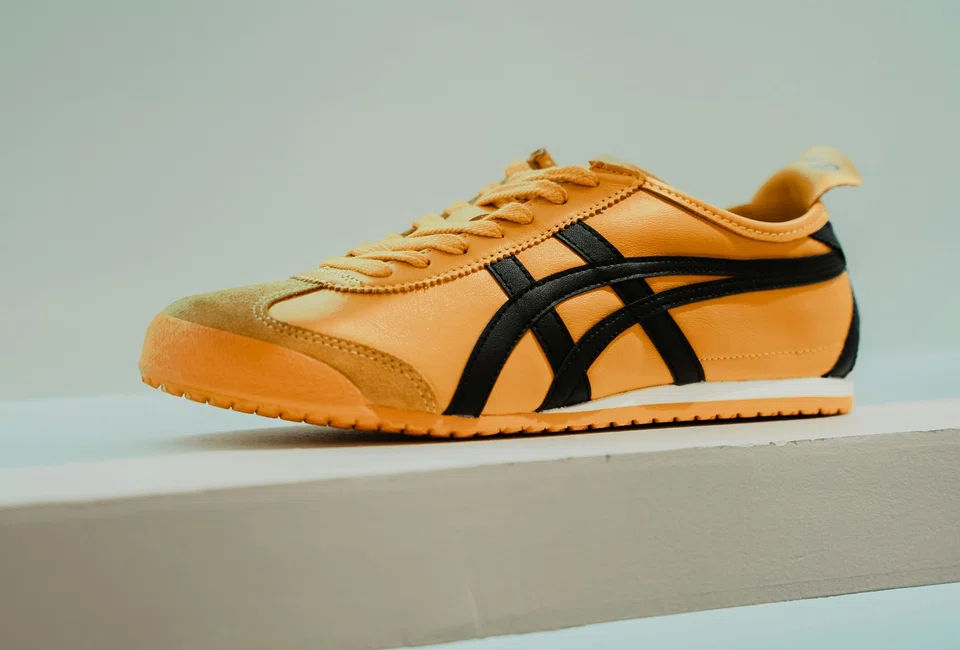
THE unlikely must-have item for tourists in Japan is the footwear of choice of Kill Bill’s protagonist.
Onitsuka Tiger, the fashion brand reborn when Uma Thurman’s The Bride wore its sneakers in Quentin Tarantino’s 2003 movie, is enjoying record sales. Asics discontinued the brand for decades until the early 2000s, but post-Covid visitors can’t get enough of the comfy, timeless trainers.
Revenue in Japan has doubled in a year, with tourists accounting for almost all the surge. Onitsuka is by far Asics’s highest-margin segment, with a new flagship store on the Champs-Elysees in Paris and plans for shops in the US. Shares are up eightfold in the past five years, helping its market capitalisation to recently pass US$20 billion.
It is also more evidence that visitors to Japan are a growth driver. Complaints about overtourism get the headlines; online grumbles surround the “shadow economy” of Asian travellers, said to extract more than they spend.
But the evidence is there for all to see in the 8.1 trillion yen (S$70.7 billion) of foreign spending last year – and increasingly in profits at firms like Asics. It’s far from alone.
The focus of the most recent earnings season might have been the impact of US tariffs, but a more interesting narrative is a surge in authentically Japanese brands reaching tourists or expanding abroad.
The weak yen is, of course, a factor. But more important is the strategy of creating fans of the country, who connect with a part of the culture and want to spend on it at home. And from Muji to Mario and Hello Kitty to Uniqlo, these firms are having record quarters, helping propel the Nikkei 225 to a series of record highs.
Consider Kitty’s maker, Sanrio. While it still generates its largest chunk of revenue domestically, tourists now account for around 40 per cent of its product sales here (the data is trackable thanks to Japan’s sales-tax exemption scheme). Shares are up more than 10 times from the 2019 level.
Or Food & Life, the owner of conveyor-belt sushi leader Sushiro. Its restaurants in Tokyo and other city centres are thronged with travellers, and it has been expanding abroad. The company aims to have 320 stores overseas by fiscal 2026, from just 38 stores five years ago. The first Sushiro in mainland China opened last year, with reports of customers queuing for 10 hours for some chutoro.
Ryohin Keikaku, meanwhile, now has more Muji locations outside Japan than at home, selling minimalist notebooks and no-brand cosmetics.
Without simplifying Japan into ikigai and other reductive nonsense, these firms do have a common link. It’s some combination of affordability, high quality and an aesthetic minimalism that taps into feelings consumers have long associated with “Japan-ness.” (The same can be said about foreign brands that try to ape this look, such as the Chinese retailer Miniso).
Companies that can take this and tap into newfound customers at home or overseas have significant upside, as the country seeks to attract 60 million tourists spending an annual US$100 billion by the end of the decade.
The exemplar of this transformation is Fast Retailing, the operator of Uniqlo. It was once the poster child for how a deflation-beset country was turning to cheap fast fashion. “Basic chic from Japan. But will it sell?” asked a New York Times headline in 2006, when Uniqlo opened its flagship outlet in the city; back in those days, 90 per cent of sales were in its home market.
Since then, it has transformed itself into a minimalist yet iconic fashion brand, and overseas turnover overtook domestic in 2022.
Of course, not every successful company needs to be minimalist. At the other end of the spectrum is retailer Pan Pacific International. Its Don Quijote stores are an assault on the senses, but it is a brand that tourists associate with the country – and in turn can generate higher margins than most discount retailers. It is expanding in Japan with even more shops to cater to visitors, with plans to more than double those sales to US$2.7 billion by 2035.
That is before we even get into more iconic names such as Nintendo and the gaming and comic giants that benefit from the recent infatuation with Japan’s soft power.
If a traveller carries an Onitsuka Tiger bag, odds are the other hand holds one from Nintendo, Capcom or Sega Sammy’s merchandise stores. More brands can tap into this, too: A recent collaboration between Sega’s Sonic the Hedgehog and VF’s Timberland shoes sold out in minutes.
Souvenirs of a trip can be quickly discarded. But these brands are positioned to better stand the test of time – and turn Japan’s soft power into hard profits.
TRENDING NOW
Three ex-employees of Envy group join Ng Yu Zhi in bankruptcy
He built the Vingroup empire. Now South-east Asia’s richest man is handing some key roles to his sons
Grab CEO’s wife Chloe Tong on life with Anthony Tan and finding her purpose
Incidence of civil servants buying property near unannounced MRT stations ‘a concern’, but may not establish misconduct: PSD



