King Charles’ coronation may mark era of instability
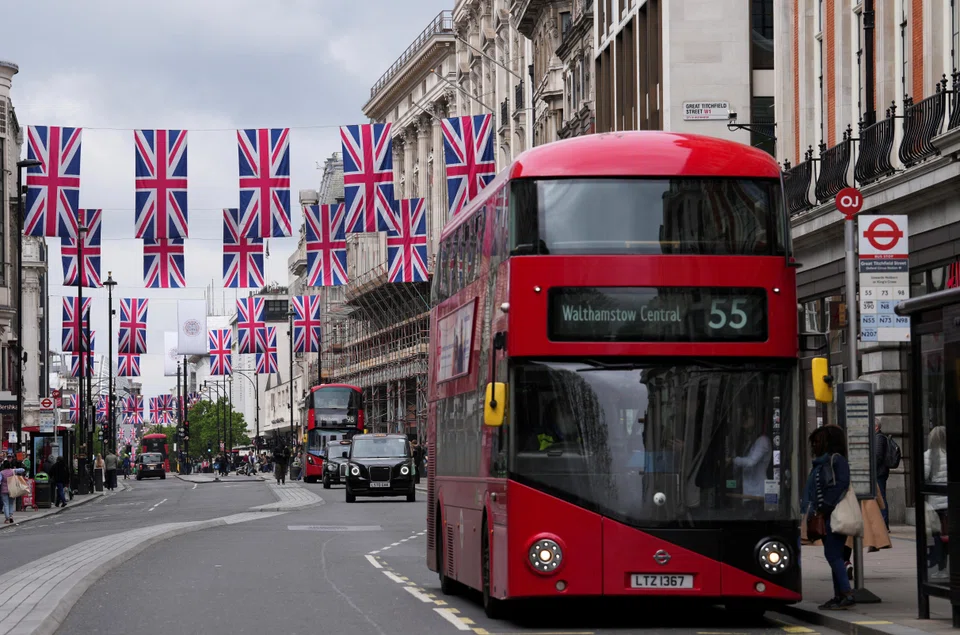
THE coronation of King Charles III on Saturday (May 6) formalises a new era in UK and wider Commonwealth history. However, while much of the public welcomes the new monarch, his reign could see a much rockier period after the long, successful Elizabethan age.
It is, partly, for this reason that Buckingham Palace is keen that this coming weekend’s big events go as smoothly as possible. The kick-off is Saturday when Westminster Abbey will take centre stage when Charles is crowned at midday, after which the king and Queen Consort Camilla embark on their procession back to the palace in the Gold State Coach.
In the meantime, Sunday will see a major pop concert at Windsor Castle with headline acts including Lionel Richie, Katy Perry, and Andrea Bocelli. Monday, by contrast, will be a tribute to the king’s lifetime of public service in a “Big Help Out” which will use volunteering to bring some 1,500 charities and local communities together and create a lasting legacy for the coronation weekend.
Given the importance of the Commonwealth, the king is also this week carrying out a series of engagements with a focus on ties with the 56-member club. He has, for instance, accepted the role of commissioner-in-chief of the Royal Canadian Mounted Police, and watched the Australian Defence Force charity kick off the London leg of a torch relay in celebration of its centenary.
Amid these extensive preparations, one key factor that cannot be controlled is the erratic English spring weather, which is forecast to be dull and damp, with strong winds blowing in. Whether or not that proves a good guide meteorologically, it could well prove an accurate descriptor for the king’s wider reign in coming years.
Charles’ ascension to the throne, after the record-breaking reign of his mother, is shining a spotlight on the uncertain future of not just the monarchy, but also the wider United Kingdom and Commonwealth. For Charles does not (yet at least) have the powerful unifying quality that Elizabeth had over much of the last few decades, in part because he is not so widely known or admired across much of the world.
It is sometimes forgotten that when Elizabeth assumed the throne, Winston Churchill was UK prime minister, Joseph Stalin was leader of the Soviet Union, Harry Truman was US president, and Mao Zedong was the Chinese Communist leader. Then, the Korean War was still underway; the People’s Republic of China (PRC) was only two years old; and the United Kingdom was just about to join the United States and the Soviet Union as a nuclear weapons power.
Today, the PRC is an emerging superpower, with the largest economy in the world on purchasing power parity terms; the Soviet Union has long disappeared from the geopolitical landscape (although Russia continues to challenge the world, as shown most recently in Ukraine); and the United Kingdom has transitioned to what some term as a “middle power”, with its former empire transformed into the 2.4 billion-population Commonwealth.
While Charles has potential to grow into the role, he is already 74, an age at which many people have already fully retired, and he came to office as the oldest monarch in UK history. So there are very real question marks about whether he will have the energy in the coming years to make his mark as king.
Whereas his mother enjoyed a seven-decade reign, with her assuming the throne at 25, Charles may have only a decade, and likely no more than two, during which he will hit his 80s and 90s respectively. This would be a tall order for any person, let alone one so comparably old.
Add to that the fact that the personal popularity of Charles is neither as high as his mother’s was, nor that of his own heir, William. It is for this reason that some polls show that a significant body of the UK public would have preferred the monarchy to have skipped a generation from Elizabeth to William.
While the standing of Charles could improve over time, this leaves open the significant possibility that the Royal Family could become less popular under his reign. This is not just true in the United Kingdom, but also in Commonwealth nations such as Australia, where there is already active debate about transitioning to a republic from the constitutional monarchy with King Charles, represented by the Governor-General, as the official head of state.
Going forward, it is also possible that the continued union of England, Scotland, Wales and Northern Ireland could suffer from a potentially less popular UK head of state. As much as Elizabeth was a stabilising force for many people, the United Kingdom appears to be increasingly divided on geographic lines.
This is especially given the significant number of Scottish people, in the last decade or so, who favour independence for Scotland. Plus the growing signs of political change in Northern Ireland with the nationalist Sein Fein party, which favours unification of the island of Ireland, becoming the largest single party in last May’s elections.
Beyond the debates about the Commonwealth and United Kingdom, there is also significant uncertainty over the future of the monarchy itself. Amid the high esteem that Elizabeth was held in, it is sometimes forgotten that she suffered bouts of lower popularity.
The 1990s were particularly troubled, with 1992 becoming her self-described “annus horribilis”. That saw the marriages of three of her children, including Charles, disintegrated, in a way that the new king has still not fully recovered from given the popularity of Princess Diana, his former wife.
Nonetheless, there is no inevitability that the reign of Charles will be flatline, and he could yet surprise many people. There continues to be much British and wider international fascination with the UK monarchy, and even during the challenges of the Elizabethan era, less than a quarter of the UK population wanted a republic, with many believing that it is better to have a non-divisive, non-political head of state.
So much now depends on the skills Charles now shows as king, which will have implications not just for the monarchy, but also the wider United Kingdom and Commonwealth. He will do well to learn the astuteness his mother showed of being seen as a force for stability, while setting a road map for reform to allow the Royal Family to continue to evolve to meet the changing social, political and economic contours of the 21st century.
The writer is an associate at LSE IDEAS at the London School of Economics.