

Kore’s distribution halt reflects Reits’ ‘original sin’ of needing constant access to capital to exist
Every Reit has a certain amount of debt that is refinanced from time to time, creating the risk of it being caught with too much leverage when market conditions weaken

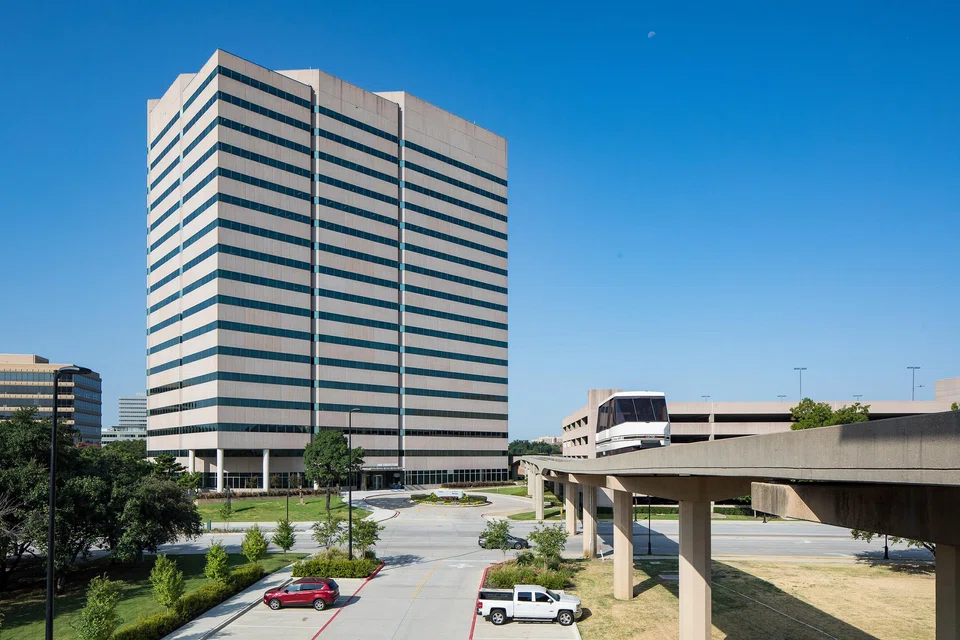
THE frightening thing about Keppel Pacific Oak US Reit (Kore) suspending its distributions last week is that doing so was deemed necessary despite its relatively good operational performance.
For 2023, Kore reported a 1.9 per cent rise in revenue to US$150.8 million and a 2.2 per cent increase in net property income (NPI) to US$86.1 million.
Income available for distribution fell 13.8 per cent to US$52.2 million, though. The decline was partly attributable to higher financing costs, and partly to Kore’s manager receiving its base fee for the first quarter of 2022 in units rather than cash.
Still, Kore’s portfolio committed occupancy stood at 90.3 per cent as at Dec 31 2023, and it suffered a negative rental reversion of only minus 1.8 per cent.
So, what exactly was the problem? Kore’s portfolio valuation slipped 6.8 per cent to US$1.33 billion. This was due to increased capitalisation rates and discount rates, as well as higher vacancy rate assumptions for 2024.
This, in turn, inflated Kore’s aggregate leverage to 43.2 per cent at end-2023. Its aggregate leverage was 38.2 per cent at end-2022.
For Kore’s manager, this called for immediate action. Besides the risk of Kore’s leverage eventually hitting the statutory ceiling of 50 per cent, lenders have become wary of exposure to the US office market.
“Banks are reluctant to lend above 45 per cent leverage for the US market,” the manager said in a media release last week.
The manager went on to say it is unlikely Kore will be able to monetise its properties because of the weak US office property sector; or raise enough equity capital to solve its leverage problem given the tough market environment.
The only remaining option was to suspend distributions to unitholders. Kore’s manager has said it will suspend distributions from the second half of 2023 until H2 2025.
The manager also pointed out that the cut in Kore’s portfolio valuation has resulted in an accounting loss of 2023. Under the Code of Collective Investment Schemes, if the manager declares a distribution in excess of profits, it has to certify the property fund will be able to fulfil its upcoming liabilities from its deposited properties. Kore has some US$75 million of loans due for refinancing by Q4 2024.
In short, Kore was pushed into suspending distributions to unitholders by little more than an adverse shift in real estate and financial market conditions.
This reflects the “original sin” of Reits such as Kore: they need constant access to capital in order to exist.
Leverage risks
Some segments of the Reit sector are more vulnerable than others, of course.
In particular, the US office property sector has been far more volatile than many analysts and investors in Singapore expected. While Kore’s property portfolio was marked down by 6.8 per cent, two of its assets took double-digit percentage hits.
The valuation for Westmoor Centre in Colorado was reduced by 18.8 per cent to US$105.7 million at end-2023, from US$130.2 million at end-2022.
Another property, located on Iron Point Road in Folsom, California, suffered a 21.7 per cent cut in its valuation to US$38.2 million at end-2023, from US$48.8 million at end-2022.
Kore’s manager also explained last week that it needs to constantly invest in its properties to maintain their attractiveness to tenants. “This is very different from the Singapore office market, and therefore office Reits that invest in the US require more capital investment than office Reits that invest in Singapore.”
It added: “Without the necessary capital investments, US landlords’ ability to retain tenants and attract new ones would be greatly compromised, thus leading to a decline in occupancies and NPI, resulting in valuations declining even more significantly.”
Yet, every Reit maintains a certain amount of debt on its balance sheet to boost its yields. This debt load is never paid down but refinanced from time to time – creating the risk of some Reits being caught with too much leverage when real estate and financial market conditions weaken.
Even CapitaLand Integrated Commercial Trust (CICT) – the largest Reit in the local market, and one that is largely focused on rock solid Singapore real estate assets – has said it is currently trying to reduce its leverage to 37 to 38 per cent from 39.9 per cent as at end-2023.
Rights issues, DRPs?
Aren’t Reits always able to tap their unitholders for fresh equity through rights issues? Aren’t distribution reinvestment programmes (DRPs) a surefire way of drawing a steady inflow of equity capital from unitholders?
Much depends on market conditions. Last year, CapitaLand Ascott Trust suffered the ignominy of its preferential offering of more than 100.5 million stapled securities being only 64.7 per cent taken up after the market price of the units tumbled below the offer price of S$1.025 per stapled security.
As for DRPs, a number of Reits are currently offering unitholders this option – including CICT, CapitaLand China Trust, Starhill Global Reit, Lendlease Global Commercial Reit, Sabana Industrial Reit and Mapletree Logistics Trust (MLT).
Even though DRP units are usually issued at a small discount to their market price, the take up rates are not high – suggesting many Reit investors simply prefer to be paid in cash.
For instance, MLT paid about 19 per cent of its distributions in the quarter to Sep 30, 2023 with new units. For the quarter to Jun 30, 2023, it paid about 6 per cent of its distributions with new units.
Another interesting case: Prime US Reit paid only about 1 per cent of its distributions for H1 2023 with new units. This was despite the new units being priced at US$0.161 each, a more than 78.5 per cent discount to Prime US Reit’s net asset value (NAV) of US$0.75 per share as at Jun 30, 2023.
Kore slumps further
With the suspension of its distributions, Kore will be holding on to its H2 2023 distributable income of US$26.1 million. Assuming it generates a similar amount of distributable income in H1 2024 and H2 2024, it may have accumulated just enough to pay off the US$75 million in debt that comes due at the end of this year.
“We believe that the manager is probably proactively building up further liquidity to refinance its near-term debt expiry in case there is a ‘funding gap’ when refinancing discussions start sometime in the coming quarters,” said DBS, in a research note.
In the meantime, the suspension of distributions is likely to weigh on the market price of Kore’s units. Since announcing the suspension last week, the already depressed market price of Kore’s units have fallen 40.8 per cent.
Kore closed Friday at US$0.148 – a 78.6 per cent discount to its NAV as at Dec 31, 2023 of US$0.69 per unit.
DBS last week cut its target price for Kore from US$0.48 to just US$0.10.
Kore’s manager may well be doing the right thing to preserve the Reit through the current period of elevated interest rates and weak US property prices; but investors are not likely to return until Kore indicates it will resume its distributions.
TRENDING NOW

Philippine power giant First Gen rebuffs foreign offers, plans up to US$2.6 billion in expansion

Cliff Tan has 7 million followers and a 4-month waitlist. Why won’t he expand his business?

Could stablecoins be the future of money?

From finance aspirant to Asean CEO: TUV SUD’s Jonas Strahberger on finding people who believe in you

