The Land of the Rising Sun rises much too early
Hours of productive daylight are largely wasted in Tokyo, where the summer dawn breaks before 5 am. It’s time to figure out a better system.
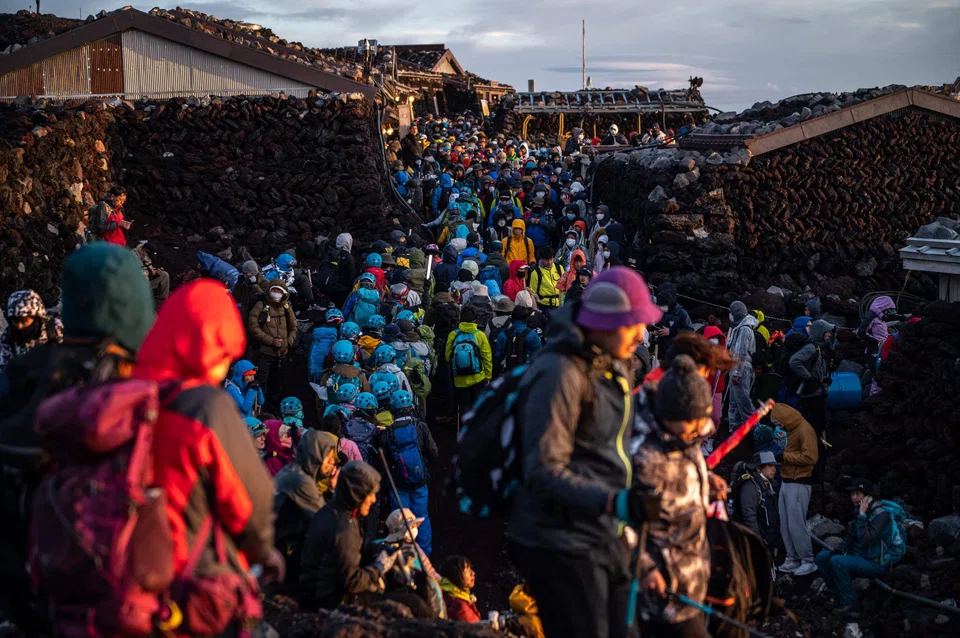
THE sun pierces through the curtains. Birds are chirping. The thermometer nears 30 deg C. It is not yet 5 am.
It is a pretty typical scene during Tokyo’s long, muggy summers. Japan may be the land of the rising sun, but us residents often ask ourselves – couldn’t it rise (and set) a little later?
A few days after the summer solstice, the capital is currently enjoying its longest bright evenings – with the sun setting at just 7.02 pm. It is hard to find a major capital where summer daytimes end earlier than those in Tokyo. In London, it is still bright past 9 pm at this time of year; in Paris, it is nearer to 10 pm by the time darkness sets in.
It is sometimes hard to escape the feeling that something is off about the time here, or at least in the eastern part of the country that includes Tokyo. Japan is nine hours ahead of Greenwich Mean Time, and is one of the few major industrialised nations not to have daylight saving. With offices generally starting at 9 am, hours of sunlight are wasted in the mornings before most people are active; during the peak commuting hours in summer, it is already scorching. Conversely, evenings are short: For much of the year, by the time the nation’s salarymen and women get out of work, the sun has already set. In midwinter, it is dark in Tokyo long before 5 pm.
Japan maintains the same time zone first introduced at the International Meridian Conference in 1884, which established the modern universal time system, setting an hour of time at each 15-degree interval of longitude from London. The conference fixed Japan Standard Time at 135 degrees east, passing through Akashi in Hyogo prefecture, nine hours ahead of GMT.
In Tokyo, which is nearly four degrees east of Akashi, the sun rises and sets some 20 minutes or so earlier than the country’s legal time. In the 1880s, the city had only recently become the nation’s capital, with a population of just one million. Now, about 36 million people live in the megacity and surrounding regions, with the Kanto area producing almost half of the nation’s gross domestic product. Does it make sense for it to be stuck in a time zone decided nearly 150 years ago?
Many alternatives have been proposed. Daylight saving time, used in more than 40 per cent of countries including most industrialised nations, would seem an obvious fix. US authorities imposed summertime, as it is known in Japanese, shortly after World War II, but Japan abandoned the idea as soon as it regained full sovereignty. Multiple administrations have debated the idea since, citing supposed energy-usage and economic benefits; it was considered as an emergency power-saving measure following the March 2011 earthquake and tsunami that shut down the nation’s nuclear plants.
Most recently, a Liberal Democratic Party (LDP) committee looked at introducing daylight saving time during the Tokyo Olympics, originally scheduled for 2020 but ultimately delayed a year due to the pandemic. Quaint as it might seem now after Covid, at the time, the chief concern over the Games was the safety of athletes in events such as the marathon, due to the capital’s punishing morning temperatures. Amid public opposition, an LDP committee rejected the idea of shifting the clocks, and it has not resurfaced since.
In any case, daylight saving time is losing popularity outside of Japan. Multiple US states have passed legislature to adopt it permanently, seeking to end the twice-yearly changing of the clocks. The European Union, following a public consultation that found overwhelming opposition to the practice, has passed legislation to abandon it, though member states have not yet agreed on how it should be implemented. It would seem a strange time for Japan to introduce it now, knowing all the downsides, including increases in traffic accidents and heightened health risks such as heart attacks and strokes. Opponents also argue the benefits for energy savings are now negligible.
A decade ago, then Governor of Tokyo, Naoki Inose, made a forward-thinking proposal to permanently move the country’s time zone forward two hours. Seeking to ride the wave of hype surrounding Abenomics, he linked his proposal to market hours, envisaging that the city’s trading would start as soon as it closed in New York. While his proposal had supporters, including noted reformist Heizo Takenaka, it went nowhere.
A permanent shift in the time zone is an idea that would be worth exploring again, however. Japan is situated in the same zone as Seoul, which is almost 13 degrees of longitude closer to GMT – that is nearly an hour difference in evening daylight. While two hours seems too much, a one-time shift to move the entire country from GMT+9 to GMT+10 would fix many issues.
Early risers might complain, but Tokyo is not known for its morning culture anyway; one thing commonly heard from visitors is how difficult it can be to find somewhere open before 9 am. The hit on traffic, aligning train schedules and computer systems, would be limited to one occasion. Commuters would travel during cooler hours; longer evenings would benefit Japan’s beleaguered service sector, still trying to fully recover from Covid. Inose’s idea of aligning markets to New York’s could also still be implemented by moving financial market times up by an hour.
Doubtless there would be objections from the likes of farmers and teachers’ unions; GMT+10 would suit Tokyo but perhaps deliver fewer benefits to regions such as Kyushu or Hokkaido. There is an argument to be had that Japan is so broad, spanning 30 degrees of longitude including its outlying islands, that it should have more than one time zone (though some even larger countries, notably China and India, do not.) In any case, we should get down to discussing the idea. It will give us something to do on those long summer nights. BLOOMBERG