

Lessons to grow the local stock market from fantasyland’s Great Eastern-Income Insurance union
Will business owners sacrifice near-term value to help develop Singapore’s bourse?

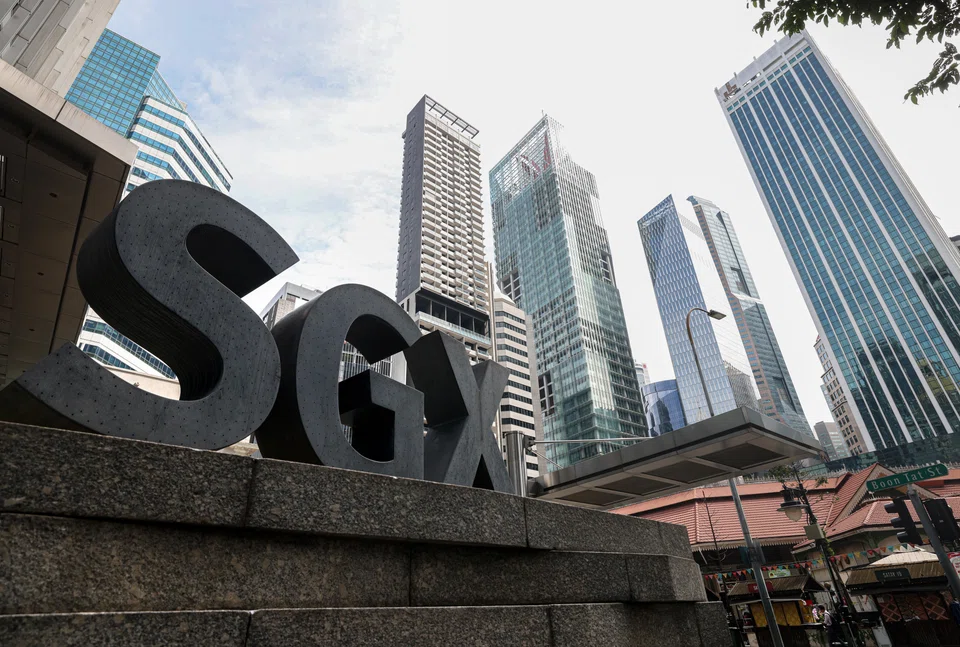
FEARS of a hard landing for the United States economy sent stock markets in the US, Europe and Asia, including Singapore, plunging in early August.
Still, a slowing US economy may not hurt Singapore businesses that much. Many local businesses can count on growth in South-east Asia and a resilient domestic economy, where the government has ample fiscal firepower to fuel growth.
Moreover, lowering of interest rates in the US and elsewhere to combat slowing economic growth will help many businesses by reducing financing costs and share prices of listed entities as investors apply lower discount rates to future earnings. Also, many local stocks are generally defensive and pay good dividends.
Looking further ahead, could a major positive catalyst for local stocks come from the work of the review group set up by the Monetary Authority of Singapore (MAS) to recommend measures to help equities market development in Singapore?
The group’s composition looks promising. Its chairman is Second Finance Minister and MAS board member Chee Hong Tat, who will become MAS’ deputy chairman on Friday (Aug 23).
The group comprises senior private-sector stakeholders and public-sector representatives from organisations such as MAS, Enterprise Singapore, the Ministry of Finance, Singapore Economic Development Board, Singapore Exchange, Temasek and the Singapore Business Federation.
While the review group busies away, an analysis of two recent major corporate deals offers pointers on strengthening the local bourse.
First, OCBC offered to buy up the remaining shares of its listed insurance group Great Eastern Holdings (GEH), with an eye to privatising GEH.
While OCBC received insufficient acceptances to exercise the right to compulsorily buy all GEH’s shares, the offer led to GEH’s shares being suspended from trading as the number of GEH shares held in public hands fell below 10 per cent.
Second, German financial services giant Allianz has offered to acquire 51 per cent of unlisted Singapore-based insurer Income Insurance. NTUC Enterprise Co-operative, which owns about 72.8 per cent of Income Insurance, has given an irrevocable undertaking to accept the offer – up to the number of shares required to make 51 per cent.
The GEH deal has led to investors losing access to trade shares in an established and financially strong business via the local bourse. With the Income Insurance deal, control of a local champion will pass to foreign hands.
Imagined deal
Let’s consider a hypothetical deal instead where GEH acquires majority control of Income Insurance.
In the hypothetical deal, Income Insurance remains in local hands. And GEH becomes a strategic partner to help strengthen Income Insurance’s business in a competitive environment.
The imagined deal could see GEH bulk up its business and some shareholders of Income Insurance hold shares in an enlarged GEH. As such, GEH’s free float and trading liquidity could improve. Indeed, GEH’s shares may become more actively traded on the local exchange.
Sure, GEH and Income Insurance cannot be forced to join hands. Maybe GEH finds what Allianz is paying for control of Income Insurance unacceptable. Also, OCBC may have sound rationale to boost its GEH stake and benefit from potentially delisting the insurer.
Nonetheless, the local bourse needs to have more listed entities with strong businesses and sizeable free floats to entice investors. A deal where GEH acquires control of Income Insurance would represent a step in this direction.
Sure, such a transaction would possibly involve compromises from each of NTUC Enterprise, GEH and OCBC. However, compromises might be justified because of the national interest of building a stronger listed equities market in Singapore.
A vibrant domestic stock market supports quality jobs in the key financial sector and helps people growing new businesses here.
Crucially, locals can access liquid Singapore dollar-denominated investments in a well-regulated market to help achieve retirement financial adequacy amid rising life expectancy. Having more publicly owned instead of privately held businesses greatly benefits retail investors in particular.
The local bourse must offer investors a choice of good counters so investors will seek to build Singapore-listed equities portfolios instead of channelling money into overseas equities, physical property or cryptocurrencies.
Making sacrifices
The Singapore bourse’s success depends on business/asset owners actively supporting it.
Entities such as the Housing and Development Board or Changi Airport Group could consider listing some of their assets on the local bourse.
Also, Temasek can explore listing its fully owned entities Mandai Park Holdings, Mapletree Investments and PSA International, subject to their satisfactory financial performance. Maybe Temasek will get better value for selling down stakes in those entities from the private market.
Temasek needs to then decide if it can stomach an initial lower valuation from a local public listing, which will hopefully be rectified over time as investor interest in the domestic bourse improves.
Local owners of strong privately held businesses will need to grapple with whether listing their business at home trumps listing overseas, divesting to a foreign partner or selling to private equity players even if valuation is poorer.
Also, owners need to embrace putting up with listing requirements so as to support the local stock market’s development.
Sporting success in the Olympic Games requires much sacrifice and support from many stakeholders. This same spirit is needed for Singapore’s listed equities market to shine globally.
May our local business owners help build a stronger domestic bourse by prioritising listing good businesses at home and nurturing such listings.
Should enough owners step up, Singapore will gradually grow a vibrant equities market that gives attractive valuations to listed entities.






