Lessons from OCBC’s offer for Great Eastern: be unafraid to hold out, but do so with eyes open
Earn dividends from shares that are suspended from trading and wait for a richer future offer

MUCH has been said about what ails the local bourse, and numerous suggestions have been put forward regarding how to inject vibrancy into Singapore’s stock market.
One way to boost investor confidence in local listed equities is for controlling shareholders to act to unlock shareholder value.
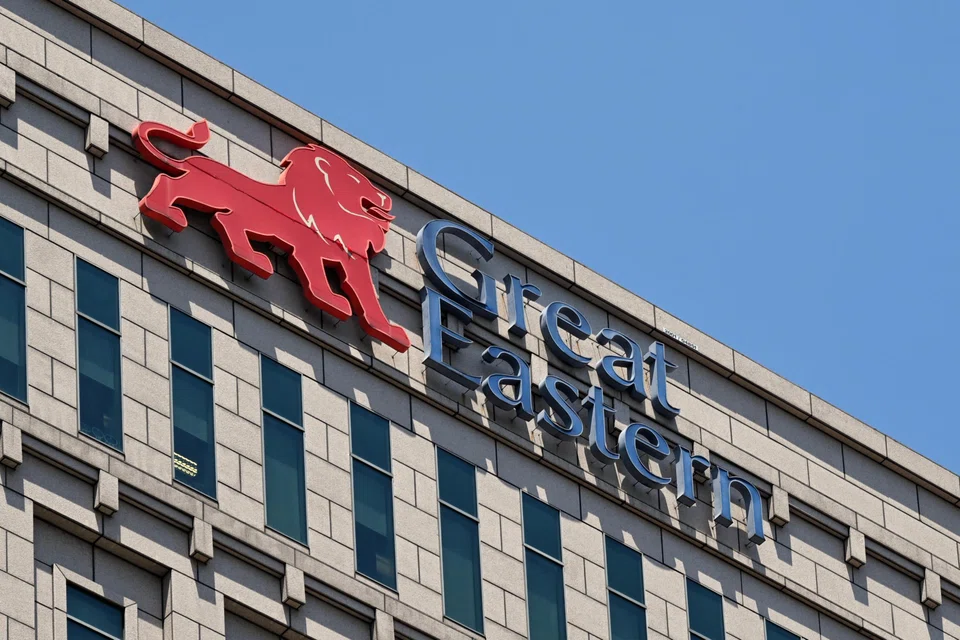
Hence, OCBC ’s recent voluntary unconditional general offer to buy up the remaining shares of its listed insurance subsidiary Great Eastern Holdings with an aim to delist the latter should be cheered.
However, debate rightly raged over whether OCBC should have made a richer offer for the insurer. The offer was deemed to be “not fair but reasonable” by EY Corporate Finance – independent financial adviser (IFA) to the Great Eastern directors, considered independent for the purpose of making a recommendation to the shareholders on the offer.
Ultimately, the said directors concurred with the IFA’s opinion to recommend Great Eastern’s shareholders to accept the offer.
While the offer price of S$25.60 per share represented a 37 per cent premium to Great Eastern’s last traded price before the offer announcement and a premium to net asset value, it was at a 30 per cent discount to the insurance group’s embedded value per share (EVPS) of S$36.59 as at end-2023.
Founded in 1908, a core part of Great Eastern’s business is life insurance, where it is a market leader in Singapore and Malaysia. Embedded value is a common valuation measure of life insurance companies that, among other things, includes the current value of projected future profits from in-force policies.
Perhaps the IFA’s view of an offer being “not fair but reasonable” was unhelpful to some investors.
Still, OCBC played within the rules in making its offer for Great Eastern. Given it has to be accountable to its shareholders, the bank probably had limited room to be far more generous to Great Eastern’s minority shareholders. As OCBC already owned much of the insurer prior to making its offer, the bank might be seen to be rash if it raised its offer simply because some parties urged it to do so.
OCBC saw its shareholding in Great Eastern exceed 93 per cent after the bank’s offer closed on Jul 12. Given under 10 per cent of shares are in public hands, the insurer’s shares were suspended from trading with effect from Jul 15. Still, pursuant to the Companies Act, Great Eastern’s minority shareholders who did not accept the offer are given some time to request OCBC to buy their shares at S$25.60 per share.
Nonetheless, minority shareholders should be unafraid of holding shares in Great Eastern that are suspended from trading.
First, expect the insurer to continue to be well governed. This is an established business, which values its reputation and likely has in place proper systems as well as processes.
Moreover, insurance is a tightly regulated business. In the media release for its first-quarter results, Great Eastern said the capital adequacy ratios of the group’s insurance subsidiaries are strong and well above their respective minimum regulatory levels.
Steady and growing dividends
Second, Great Eastern has a solid dividend payment record, and shareholders can possibly bank on future growth in dividend per share (DPS).
Even when the Covid-19 pandemic raged, the insurer posted DPS in 2020 that was unchanged from 2019, while DPS in 2021 exceeded that in 2019. The group’s DPS of S$0.75 for 2023 was up 25 per cent from 2019.
Measured against profit attributable to shareholders, the payout ratio for 2023 was about 46 per cent. In its latest annual report, the group said that barring unforeseen circumstances, it aims to maintain each dividend amount to be no lower than the preceding one.
Third, OCBC is vested to ensure that Great Eastern is well governed and delivers good returns.
The offer announcement for the insurer said that in a fast-growing region that has seen rising demand for products and solutions to enhance and preserve wealth, bringing Great Eastern even closer to OCBC reinforces the bank’s long-term vision of becoming the leading wealth management player.
Great Eastern is a major profit contributor to OCBC. The insurer’s profit contribution to the bank rose 30 per cent from a year ago in 2023. Count on OCBC being laser-focused in ensuring the Great Eastern business pulls its weight so the bank can deliver attractive returns to its investors.
Being patient
Fourth, an investor who owns shares in a well managed company, which are not readily tradable in the public market, needs to exercise patience. However, in the meantime, one can receive steady and possibly growing dividends.
Sure, OCBC will be careful in how it uses its money. Still, OCBC may bid to secure all of Great Eastern in the not-too-distant future. Such a bid could potentially be triggered by the willingness of a significant minority shareholder of Great Eastern to divest due to a change in circumstances.
And a future bid could top S$25.60 per share while still representing good value to OCBC, by being at a discount to Great Eastern’s EVPS.
Unsurprisingly, privatisation is a major theme on the local bourse. Many listed companies, where one shareholder holds a large stake, trade poorly relative to intrinsic value.
In the above cases, privatisation is a logical option for any major shareholder. Listing-related costs can be saved and a company can operate with greater flexibility.
Yet, any party eyeing the privatisation of a listed group will target a sweet spot of an offer price that is reasonably attractive, but not excessively so.
Minority shareholders of deeply undervalued and tightly-held listed groups need to know how to handle privatisation offers.
After evaluating the opportunity costs, an investor with a very long time horizon and little need for liquidity in one’s investment should be unafraid to reject privatisation offers. Holding on to shares in entities that are suspended from trading or unlisted can pay off – provided the underlying businesses are properly governed and perform well.