Leveraging Progressive Wage Model to enhance workplace safety
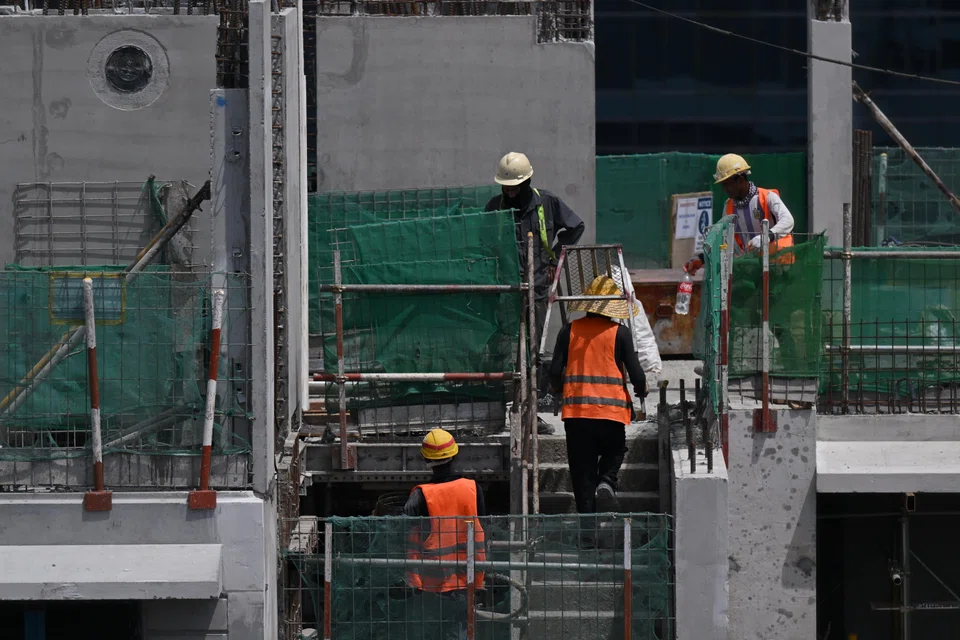
IN SEPTEMBER 2022, following a spike in workplace fatalities, the Ministry of Manpower implemented a slate of “heightened safety” measures that continued until May 2023.
Imposing this “heightened safety period” was effective as an urgent call for employers to put safety first.
The annual death rate for every 100,000 workers fell to 0.8 during the first six months of 2023 – half the rate of 1.6 deaths per 100,000 over the first half of 2022.
However, the number of workers who suffered serious injuries stayed at 17.2 for every 100,000 workers.
Can more be done to address the wide range of workplace risks – particularly in the construction and manufacturing sectors, which collectively accounted for 54 per cent of the total number of fatal and major injuries in the first half of 2023?
We propose that the Progressive Wage Model (PWM) should be extended to include these two sectors and, in so doing, enhance workplace safety.
Progressive wage model
The government introduced the PWM in 2012 to raise the income of low-wage workers according to their skills upgrading and productivity.
The idea is that if employees learn more and do better, they should get higher pay for their efforts.
While the focus has primarily been on enhancing workers’ productivity and wages, the question arises: Can the PWM be extended to high-risk sectors, such as construction and manufacturing, to improve workers’ knowledge and training in safety procedures?
Upgrading their workplace safety skills and knowledge would help minimise the risks of work-related accidents or injuries and productivity loss. At the same time, the training would ultimately improve their salary prospects.
Productivity and economic costs of workplace injury
Workplace injuries incur significant costs and loss of productivity. Additional expenses will arise from mandatory safety timeouts and increased regulatory scrutiny.
Companies with serious safety lapses resulting in severe or fatal accidents face a three-month ban on the hiring of new foreign workers, which could compound manpower woes and result in decreased productivity or higher wage costs if locals are hired.
An increased incidence of major injuries will also incur higher premiums for work injury compensation insurance.
Fines for safety violations will further add to the financial burden of companies found to be in breach of safety regulations.
While upskilling workers in workplace safety will incur costs, employers should consider too the cost of not managing health and safety – not just from the standpoint of corporate impact and the bottom line but, more fundamentally, in terms of human life. What’s the price of worker safety?
Enhancing the business licensing framework
Since construction and manufacturing – the two highest-risk sectors – are regulated by their specific business licensing frameworks, there is scope for them to come under the PWM.
The PWM focuses on upgrading skills, and can help provide a strong foundation for urging workers to undergo safety training courses that will give them a deeper understanding of workplace safety protocols.
Specialised training can significantly reduce injury risk, when workers learn to operate machinery safely, recognise potential hazards, and respond effectively to emergencies.
To promote workplace safety, government agencies should make it necessary for companies to regularly refresh or upgrade their workers’ safety competency and knowledge if they want to renew their business licences.
This is akin to the annual renewal of, say, swimming pool lifeguards’ life-saving certificates.
The link between wage progression and skills development creates a natural incentive for employees to actively engage in safety training programmes.
Workers who view safety as critical for improving productivity and wages tend to embrace a safety-conscious mindset, which helps in reducing accidents at work.
This linkage will lead to a paradigm shift in how people think about work safety and strengthen the safety culture within companies.
As corporate financial health is tied directly to safety measures, companies would be incentivised to cultivate a workplace culture that values and invests in the well-being of their workers.
The PWM has been tested and proven to be effective in raising wages, upskilling workers, and improving productivity.
By tapping the PWM to provide safety training to workers, companies in the construction and manufacturing sectors in particular can sustain efforts in injury prevention, minimise downtime or potential legal liabilities, and ensure the career longevity of their workers, while also allowing for progressive wage increases.
We commend the tripartite partners, in particular the National Trades Union Congress, for enabling workers to achieve sustainable wage increases via the PWM framework.
We believe and are hopeful that, with the same commitment and effort, the tripartite partners can likewise employ the PWM to further reduce workplace injury rates in Singapore.
Edwin Chong is pursuing his master’s in Public Administration from the Nanyang Technological University (NTU). Chew Soon Beng is an adjunct senior fellow at the S Rajaratnam School of International Studies, NTU. He is also a senior associate at NTU’s Centre for Arts and Social Sciences.